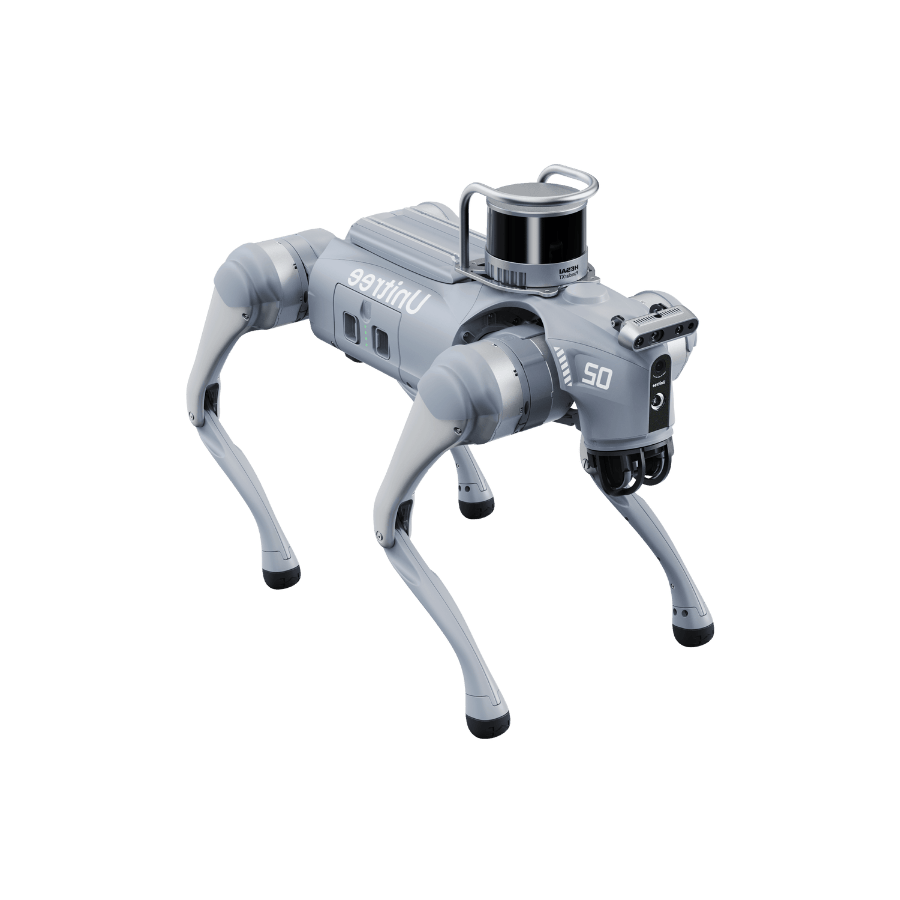
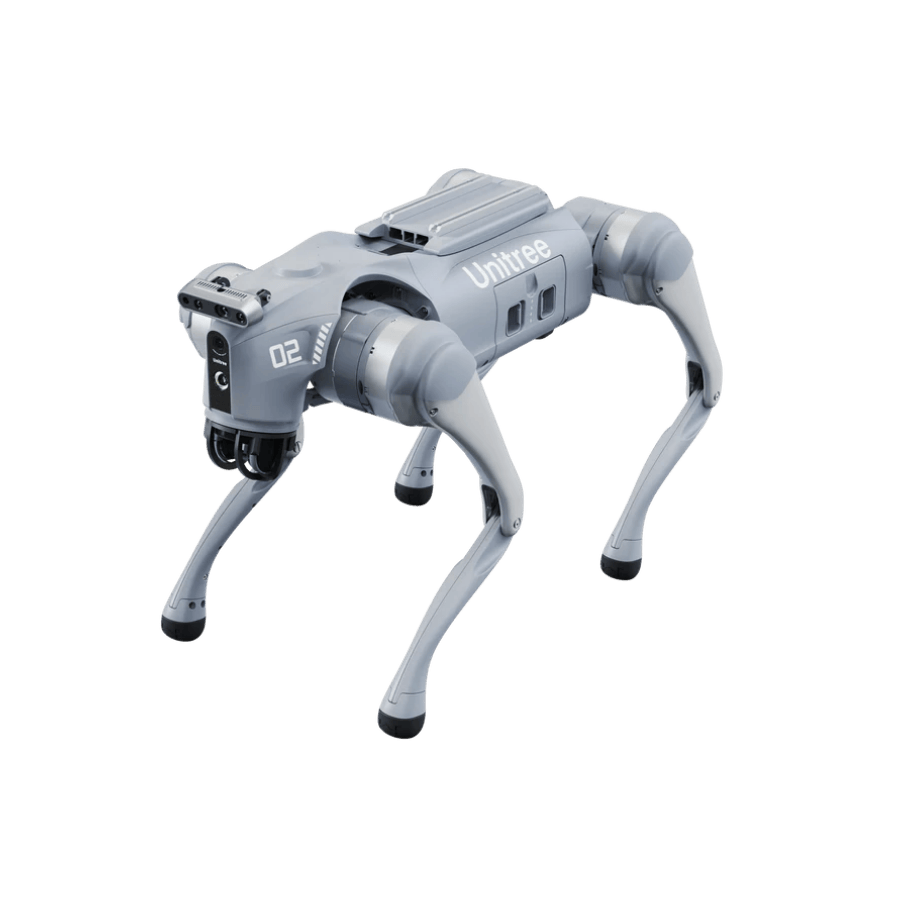
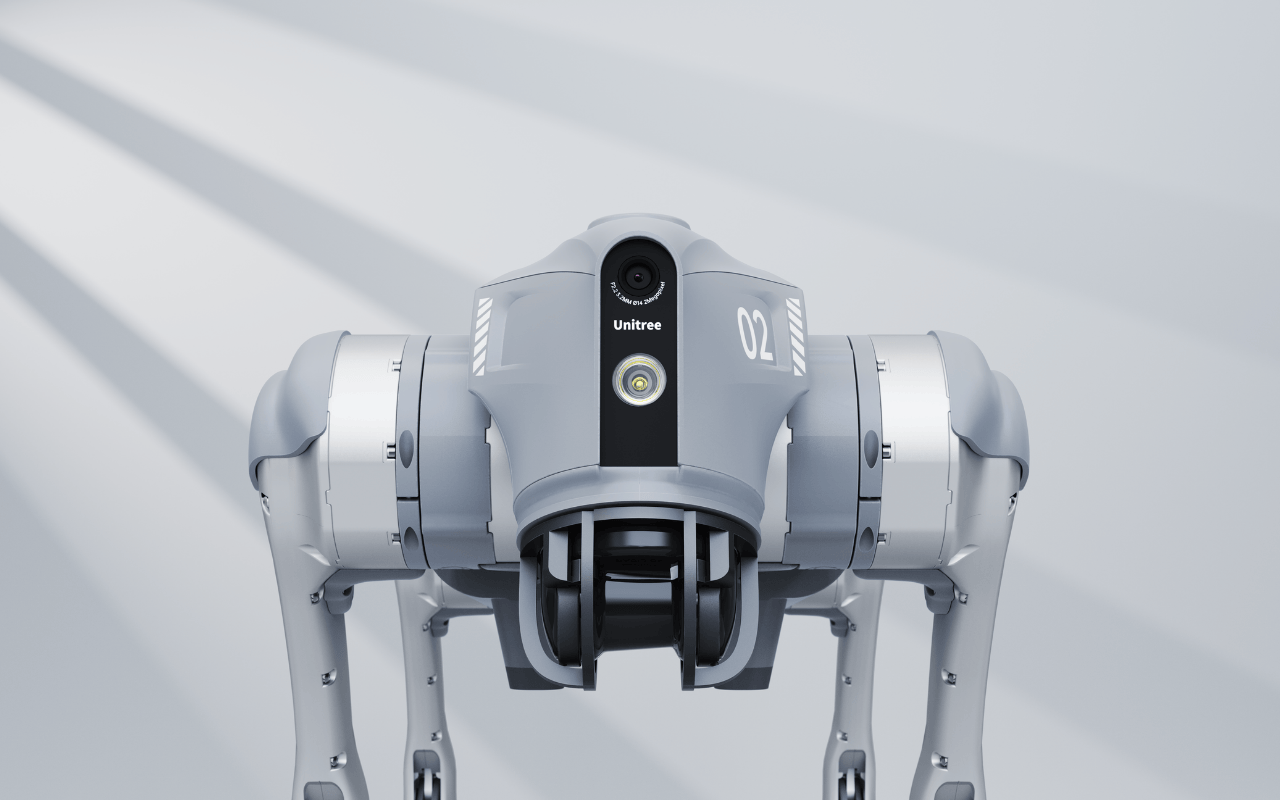
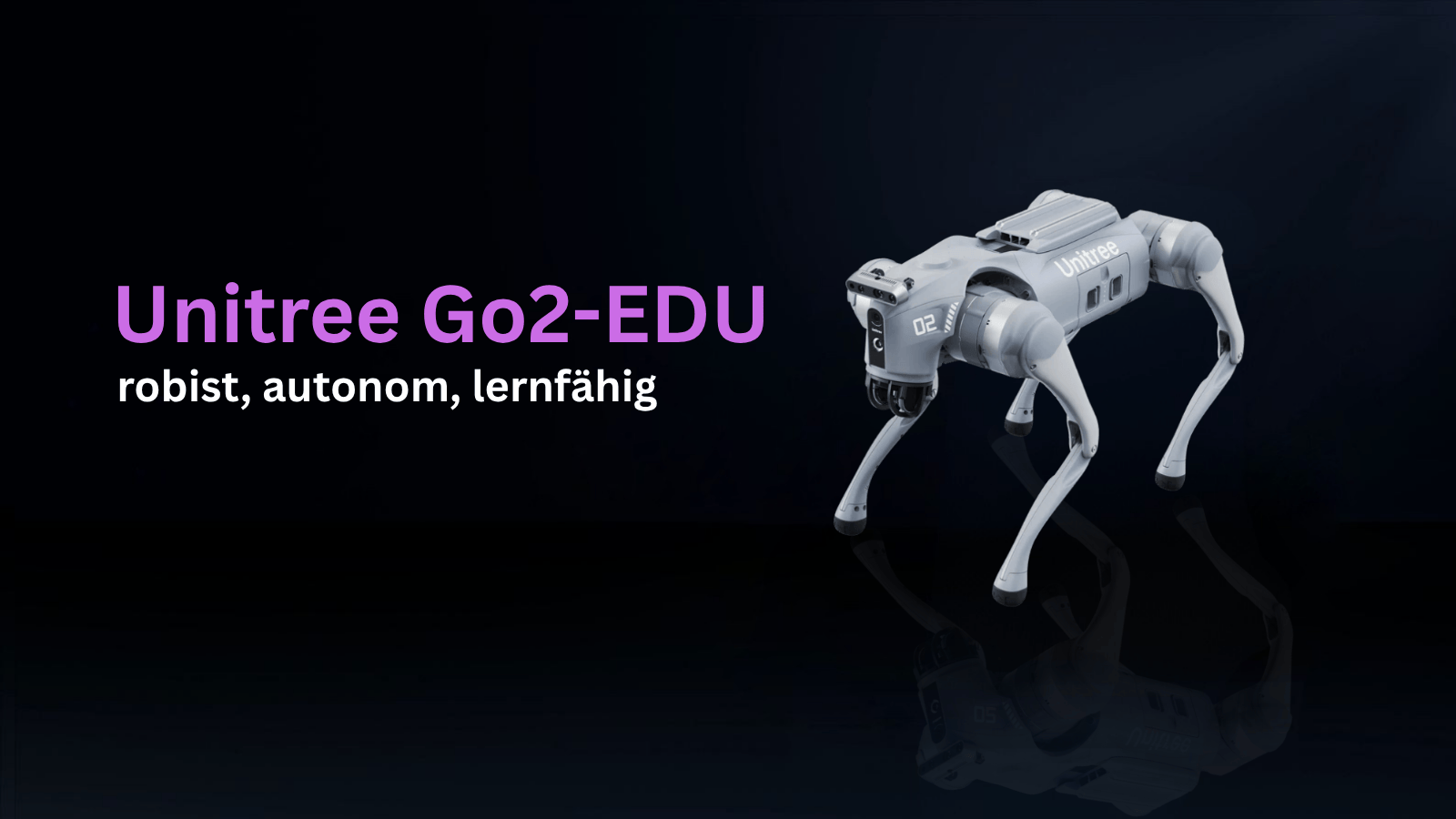
The Unitree Go2 EDU is a high-performance quadruped robot specifically designed for development-focused robotics projects. Compared to classic "demo robots," the Go2 EDU prioritizes full programmability: movement logic, sensor systems, autonomous navigation, and AI workflows can be tested, measured, and iteratively improved in a practical manner. This makes the Unitree Go2 EDU particularly suitable for universities, laboratories, start-ups, and companies looking to deploy a robot dog for research, education, or prototyping in the field of mobile autonomy.
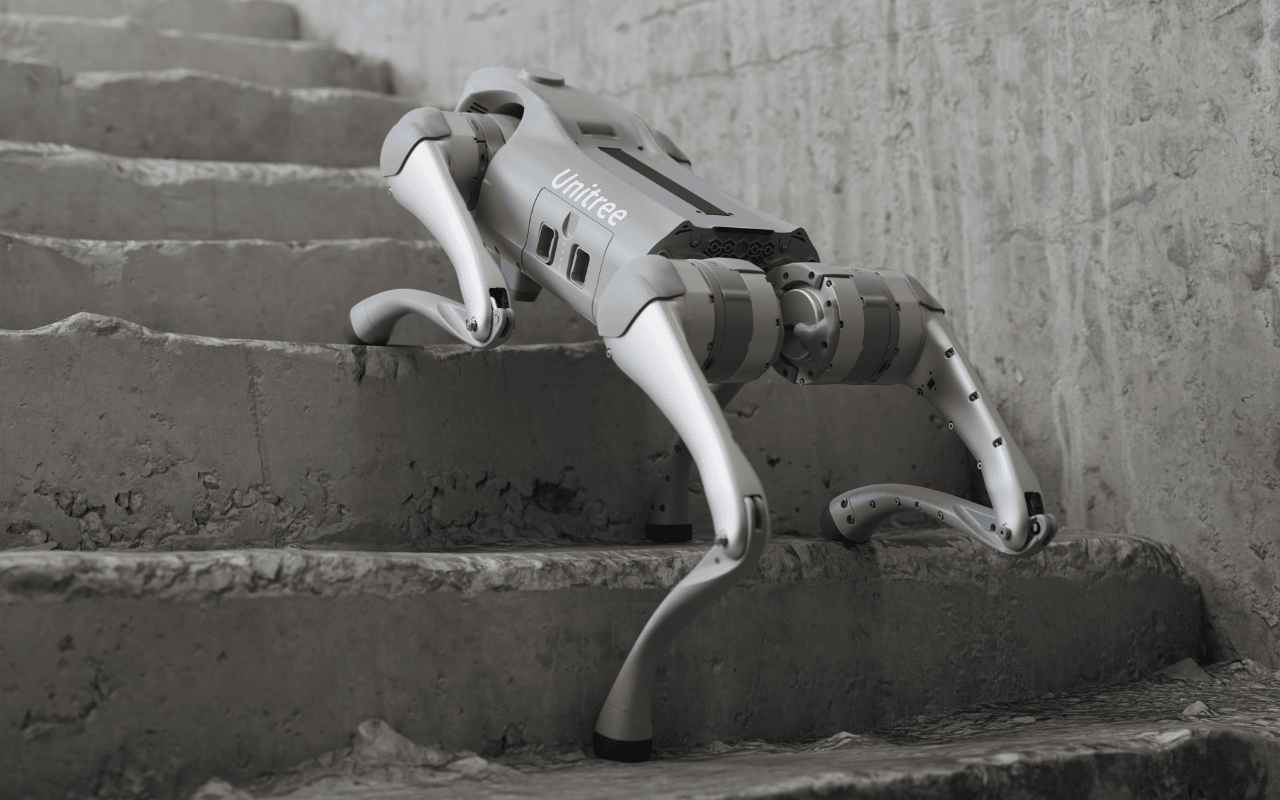
A four-legged robot offers advantages where wheels quickly reach their limits: varying surfaces, edges, gravel, grass, stairs, or cluttered indoor spaces. The Go2 EDU combines dynamic movement with advanced environmental perception and open interfaces, allowing you to generate real-world datasets and validate algorithms under actual conditions—a crucial step for reducing sim-to-real gaps and building robust systems.
Technical specifications for planning, research, and deployment scenarios
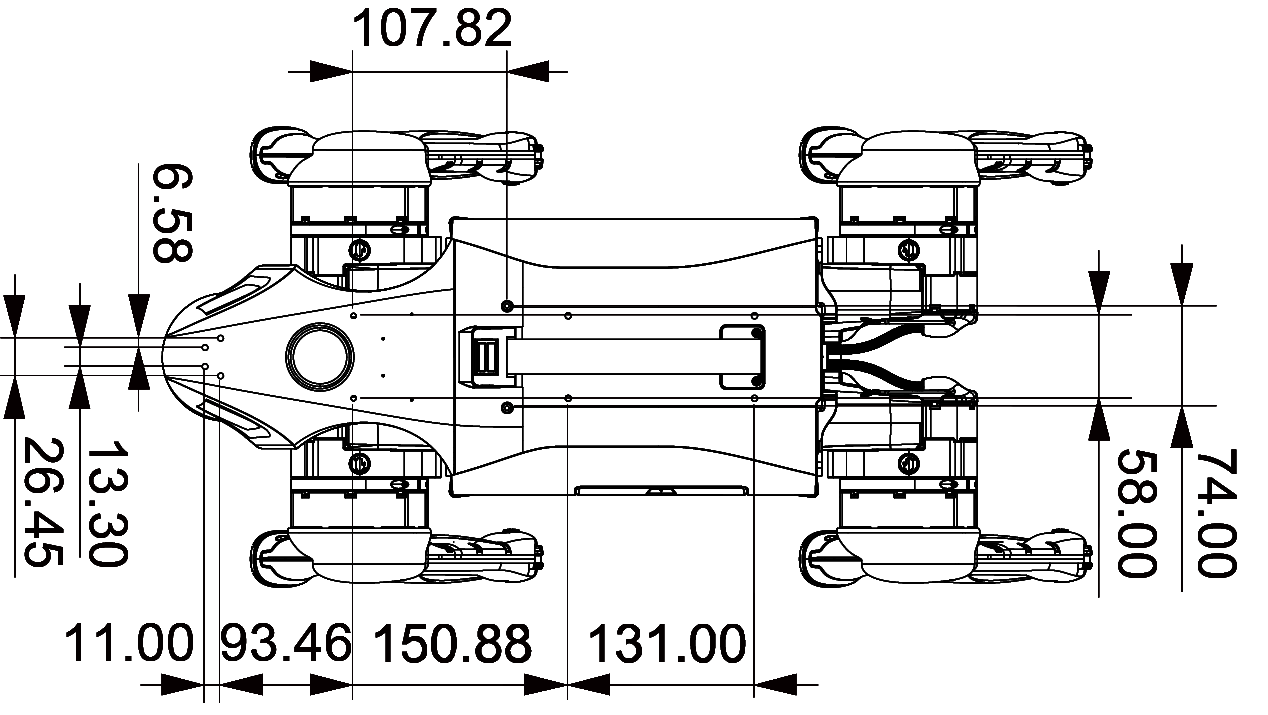
Predictability is essential for robotics research and education. The Unitree Go2 EDU offers compact dimensions and performance data relevant to practical use, making it easy to integrate into lab and test environments:
- Dimensions (standing): 70 × 31 × 40 cm
- Dimensions (crouching): 76 × 31 × 20 cm
- Weight (with battery): approx. 15 kg
- Maximum speed: up to 3.7 m/s
- Payload: up to 12 kg
- Battery (standard): 8,000 mAh / optional 15,000 mAh
- Operating time: 2–4 hours
- Voltage: 28–33.6 V
- Torque per joint: up to 45 N·m
- Sensors: 4D LiDAR L1, HD camera, optional force sensors
- Connectivity: Wi-Fi 6, Bluetooth, 4G / eSIM
- Climbing ability: up to 40°
- Software/Integration: ROS, Unitree SDK, Python, C++
- Updates: OTA / cloud-based
- Temperature range: −10 °C to +45 °C
Dynamic mobility: stability, precision, and terrain performance
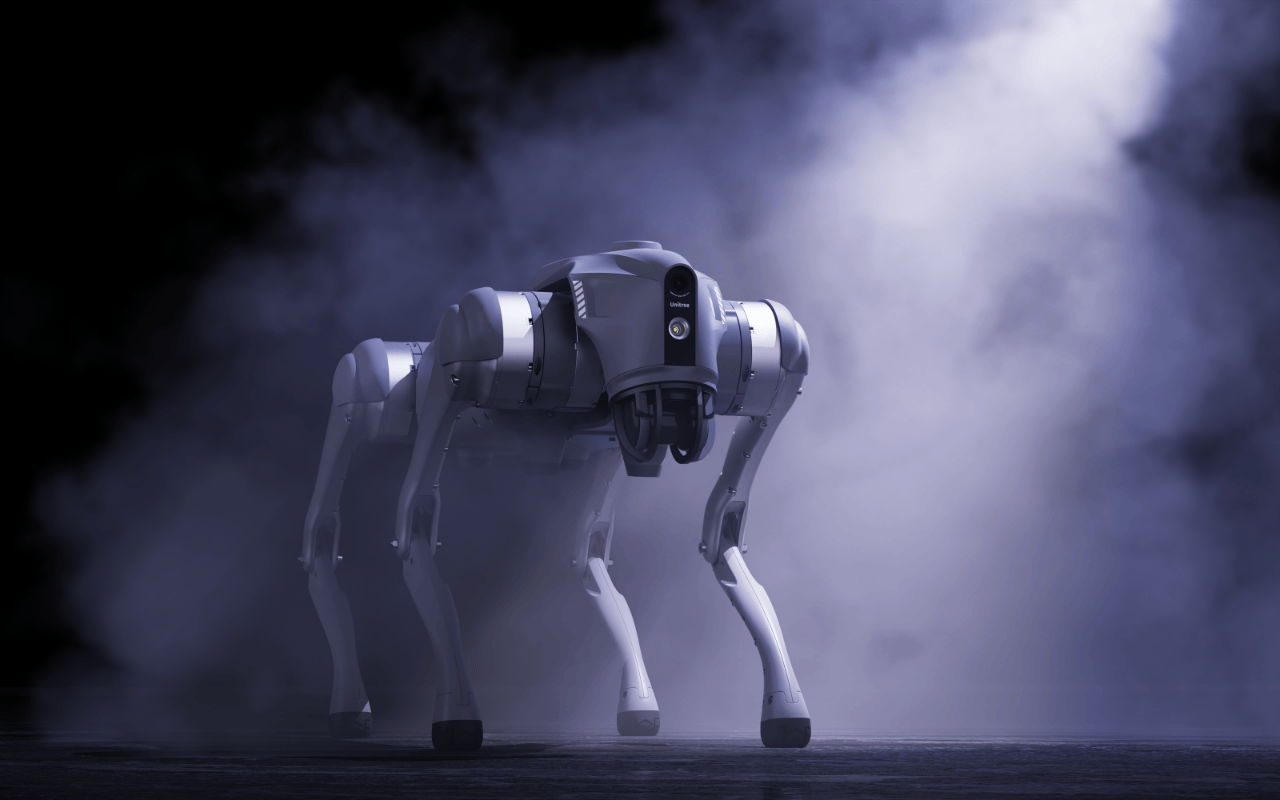
A robot dog must remain reliable while moving—not only on smooth floors, but in real-world scenarios with varying friction levels and small obstacles. The Unitree Go2 EDU is designed for fluid, stable movement and supports dynamic motion sequences suitable for tests in indoor and outdoor environments. With a maximum speed of up to 3.7 m/s, it can simulate scenarios where responsiveness and agile direction changes are relevant, such as security routes, inspection runs, or research into robust gaits.
For use in complex environments, the climbing ability of up to 40° is particularly interesting. This allows experiments on ramps, in test courses, or in industrial environments to be conducted more realistically. At the same time, the system remains manageable: a weight of approximately 15 kg facilitates transport, setup, and teardown, as well as use in lectures, internships, and laboratories.
Perception & navigation: 4D LiDAR L1 and HD camera for autonomous robotics
Modern AI robotics depends entirely on perception. The Unitree Go2 EDU utilizes 4D LiDAR L1 and an HD camera as a foundation for environmental awareness, obstacle avoidance, and autonomous navigation. In practice, you benefit from this when developing mapping, localization, or sensor-based decision logic: the robot dog provides the data you need for sensor fusion, SLAM-related workflows, and robust navigation strategies.
Especially in research and development, it is crucial that models function under more than just ideal conditions. With LiDAR and camera data, you can generate datasets in real-world environments and then test how stably your algorithms react to changes: different lighting conditions, moving people, new obstacles, or changing surfaces. This supports organically relevant topics such as "robot dog autonomous navigation," "LiDAR mapping robot," "sensor fusion robotics," and "robotics data acquisition."
Side-Follow and interaction: following people, accompanying routes, simulating scenarios
A common practical use case in the robot dog field is accompanying people or providing mobile support to teams—for example, during demos, in large halls, or during test runs. The Unitree Go2 EDU features a Side-Follow System 2.0 that detects human movement and can follow the target precisely. This allows for the creation of follow-me scenarios, assistance routes, and interaction experiments without having to manually control every movement.
For development teams, this is particularly valuable because it serves as a foundation: tracking, safety distances, zone logic, dynamic route adjustment, or the interplay between navigation and interaction. This turns "robot dog follows person" into a robust, measurable function that can be transferred to more demanding pilot projects.
Open development platform: ROS, Unitree SDK, Python, and C++ for real project work
The core benefit of the EDU version lies in its development capability. The Unitree Go2 EDU is fully programmable and supports ROS, the Unitree SDK, and Python and C++ integration. This allows the robot dog to be integrated into modern robotics stacks—from modular node architectures to data collection and reproducible test series.
For AI teams, it is also important that the platform is expandable. The Go2 EDU mentions expandability with Jetson Orin modules, as well as options like a docking station and WebRTC streaming. Depending on your project goal, you can implement edge inference, remote operation, or low-latency streaming setups—relevant for search terms such as "Jetson Orin robotics," "ROS2 robot dog," "WebRTC robot streaming," or "AI robot dog development platform."
Data analysis is also central in the EDU context: via APIs and interfaces, sensor data, movement parameters, and LiDAR information can be exported. This supports research projects based on evaluation, simulation, training, or benchmarking—and turns the robot dog into a real data generator for Embodied AI.