Skip to product information
1 of 14

SKU: 50981 | HAN: 10310-000012 | GTIN: 10310-000002

Pudu Robotics

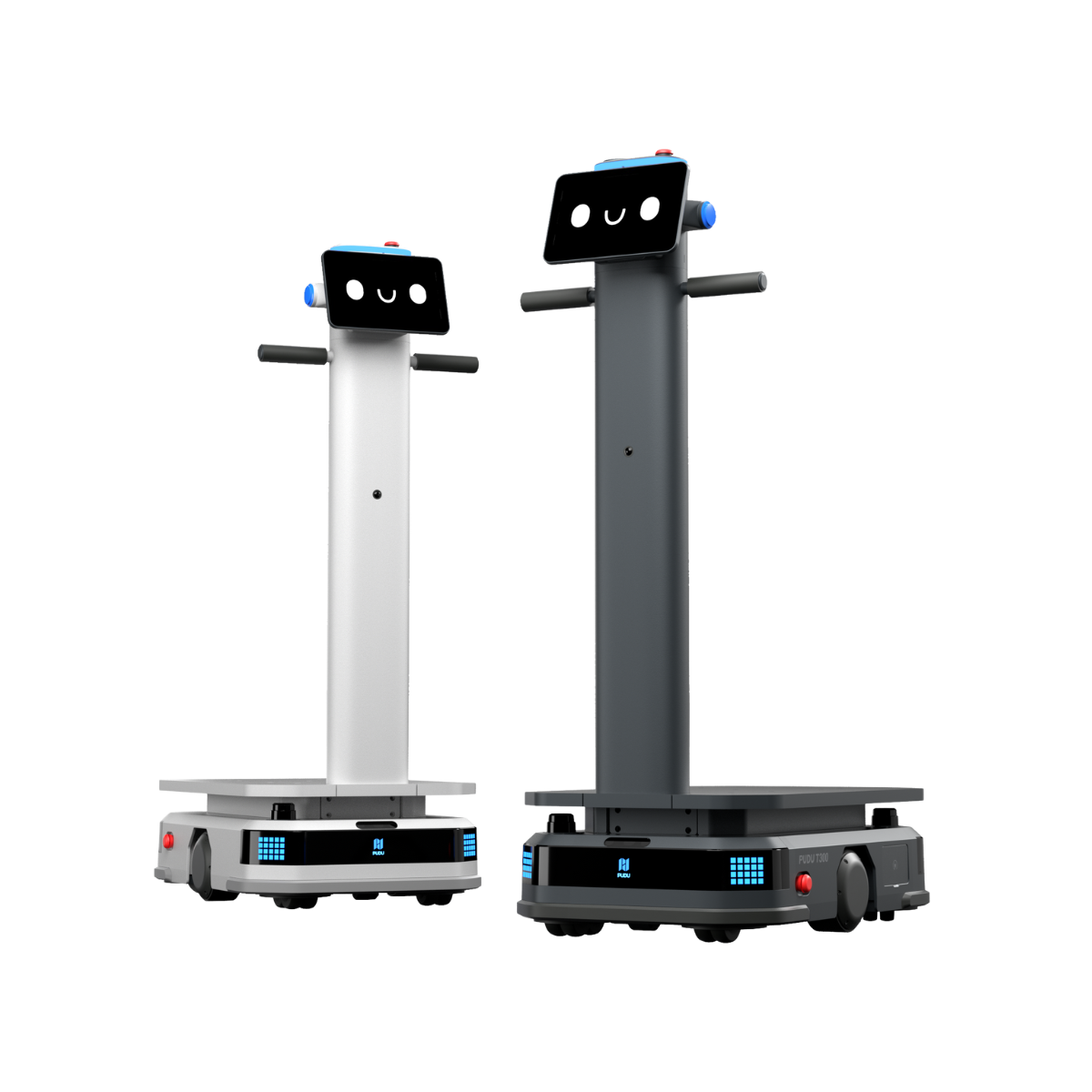
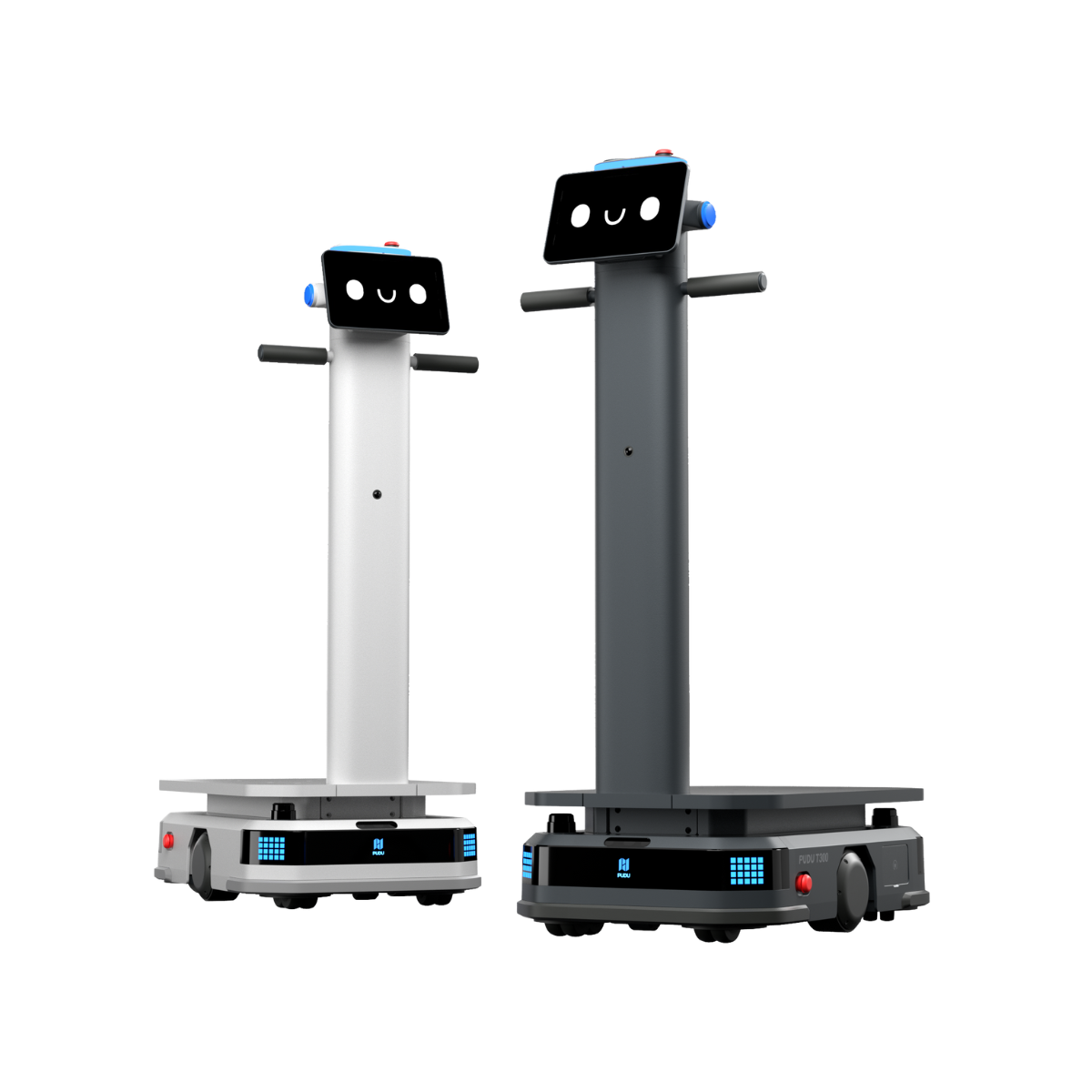
PUDU T600 delivery robot

PUDU T600 delivery robot

RRP
Regular price €23.000,00 EUR
Regular price €23.000,00 EUR Sale price €23.000,00 EUR
Sale Sold out

excl. VAT

Leasing enquiry

Company details

Contact person

Downloads & Documents

Maintenance Agreement

Warranty

Data security

Product Safety Information

Terra Connect GmbH
https://www.terra-connect.de
mail@terra-connect.de

Zeiss Street 10
32584, Wages
Germany

View full details

Pricing Models

Select the appropriate model

Compare options clearly, quickly, and without the fine print. Our recommendation is highlighted.

Leasing

from €14 per day

Flexible financing

Inclusive

  • Implementation consulting
  • Flexible terms available
  • Personalized leasing consultation
  • Liquidity is maintained
  • Including technical support
  • Maintenance contract available as an add-on
  • Training for your team
  • On-site installation available
  • Predictable monthly installments
  • Minimum contract period 3 years
Our recommendation

Purchase

€23.000

Lowest price

Inclusive

  • Implementation consulting
  • Personal contact person
  • Robot becomes your property
  • Technical support available
  • Staff training
  • Maintenance contract available as an add-on
  • Manufacturer's warranty
  • Short delivery times

Project Request

Price on request

Flexible terms

Inclusive

  • Implementation consulting
  • Full service mandatory
  • Personal consultation included
  • Flexible Payment Models
  • Technical support available
  • Planning security for projects
  • On-site staff training
  • Short delivery times
  • Efficiency increase
  • Scalable

ㅤ

Product details

Switch between the tabs to view content.

Areas of application
PUDU T600 transport robot supports picking and autonomous transport of goods in the logistics center.

Order picking

Autonomous support for order picking, relieving employees of heavy loads and optimizing picking speed.

PUDU T600 autonomous transport robot in goods receiving to accelerate goods receipt and logistics processes.

Goods Receipt & Incoming Goods

Automated handling of goods immediately upon delivery accelerates storage and provides lasting relief to the loading dock areas.

Autonomous warehouse robot PUDU T600 navigates through rows of shelves to optimize internal warehouse logistics and goods movement.

Warehouse & Inventory Management

Reliable transport between shelving systems and staging areas, ensuring order and a constant material flow throughout the entire warehouse.

PUDU T600 automated guided vehicle for cross-docking in a transshipment warehouse for rapid goods flow without intermediate storage.

Cross-Docking

Rapid goods turnover directly from the ramp to the dispatch area, for minimized downtimes and highly efficient, time-critical logistics processes.

PUDU T600 in use at a modern logistics center for automated material transport and efficient intralogistics.

Logistics centers & shipping hubs

Intelligent networking of large areas with autonomous transport routes, ideal for the high volume in modern logistics hubs.

PUDU T600 transport robot for automated production supply for the efficient provisioning of production lines.

Production supply

Just-in-time supply of production lines with components guarantees smooth production processes without manual transport routes.

  • T600 Series

  • T600 Underride

Product Specification

T600 Series

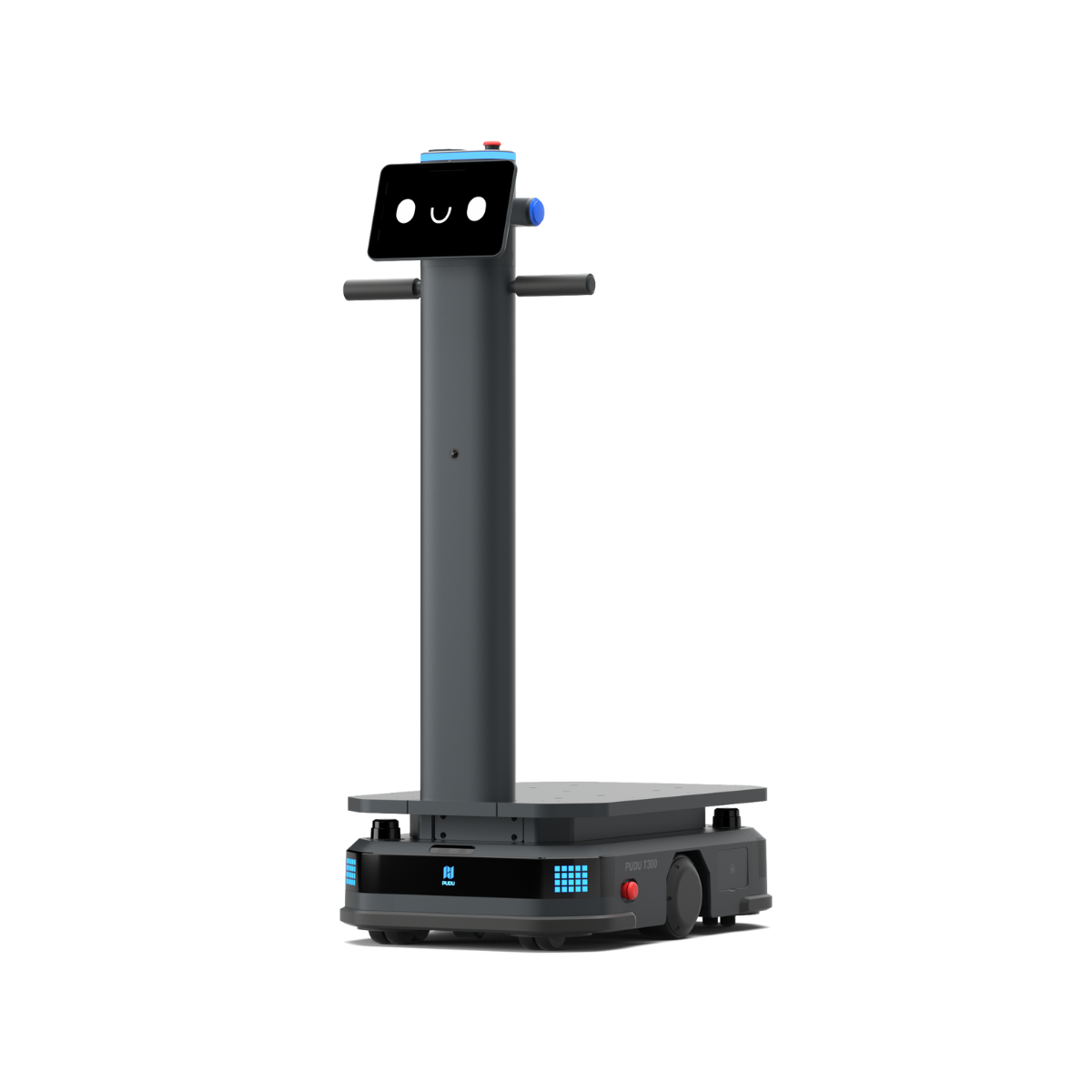
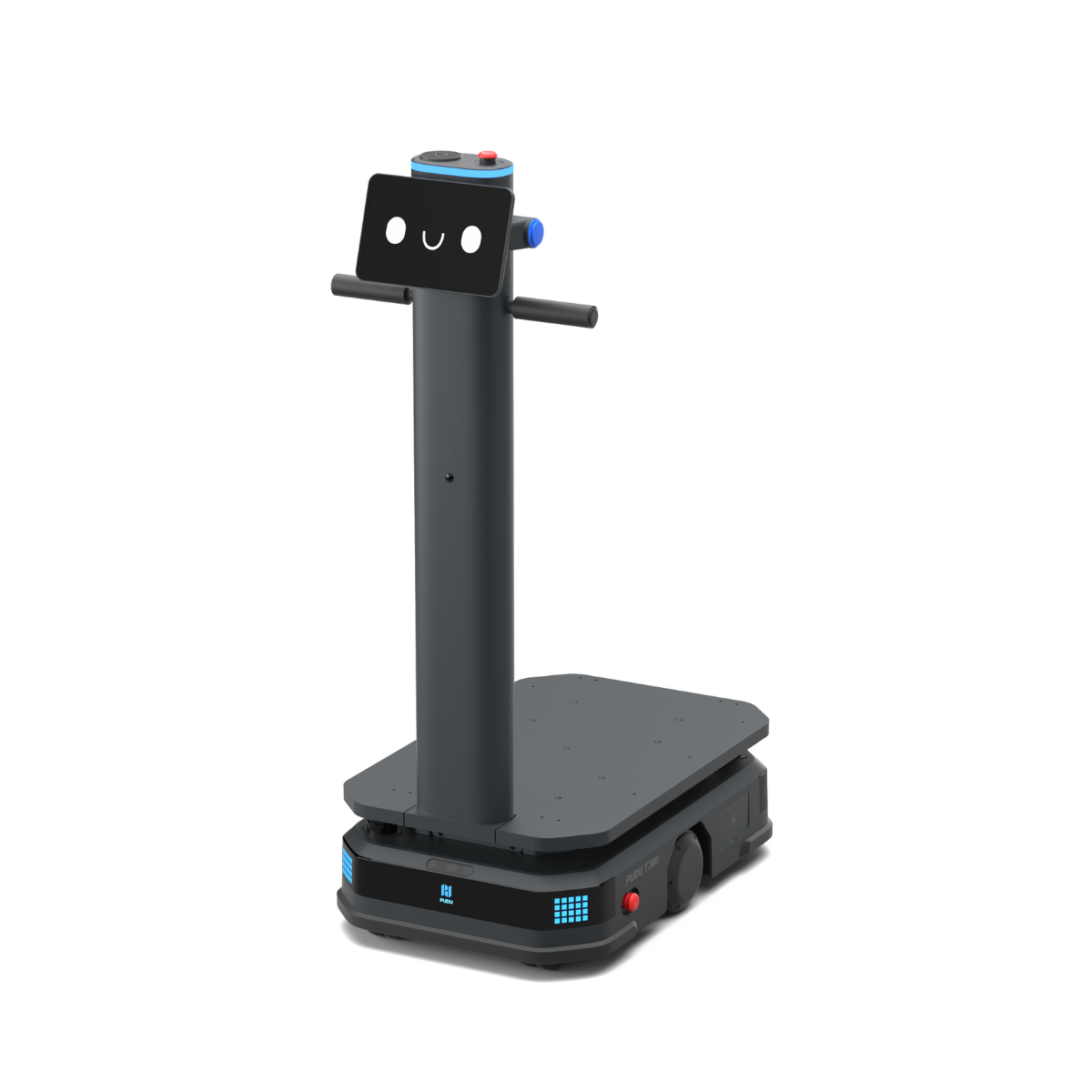
Dimensions 960 × 500 × 1350 mm.
Weight 112 kg. Payload 600 kg.
Speed 0.2–1.2 m/s. Minimum passage width 70 cm.
Runtime up to 12 h without load.
Fast charging approx. 2 h from 0 to 90%. Battery 30 Ah.
Navigation VSLAM plus LiDAR SLAM.
Overcomes 10 mm steps and 35 mm gaps.
Operating temperature 0–40 °C.
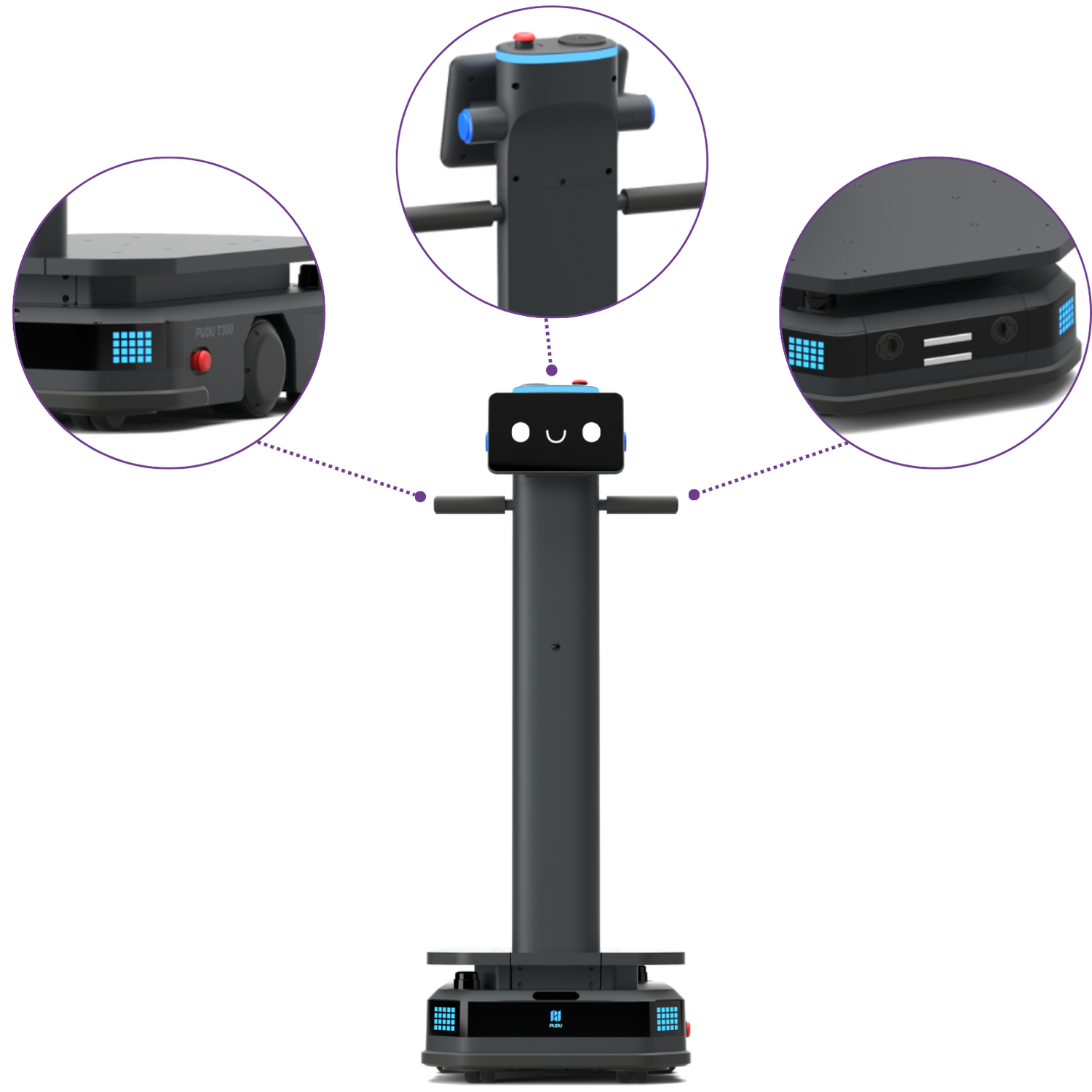
Operation via 10.1-inch touchscreen with handle, power-assist switch, and quick-access buttons.
Supports VDA5050, rack group recognition, elevator prioritization, as well as auto-recharge and battery swapping.

T600 Underride Guard

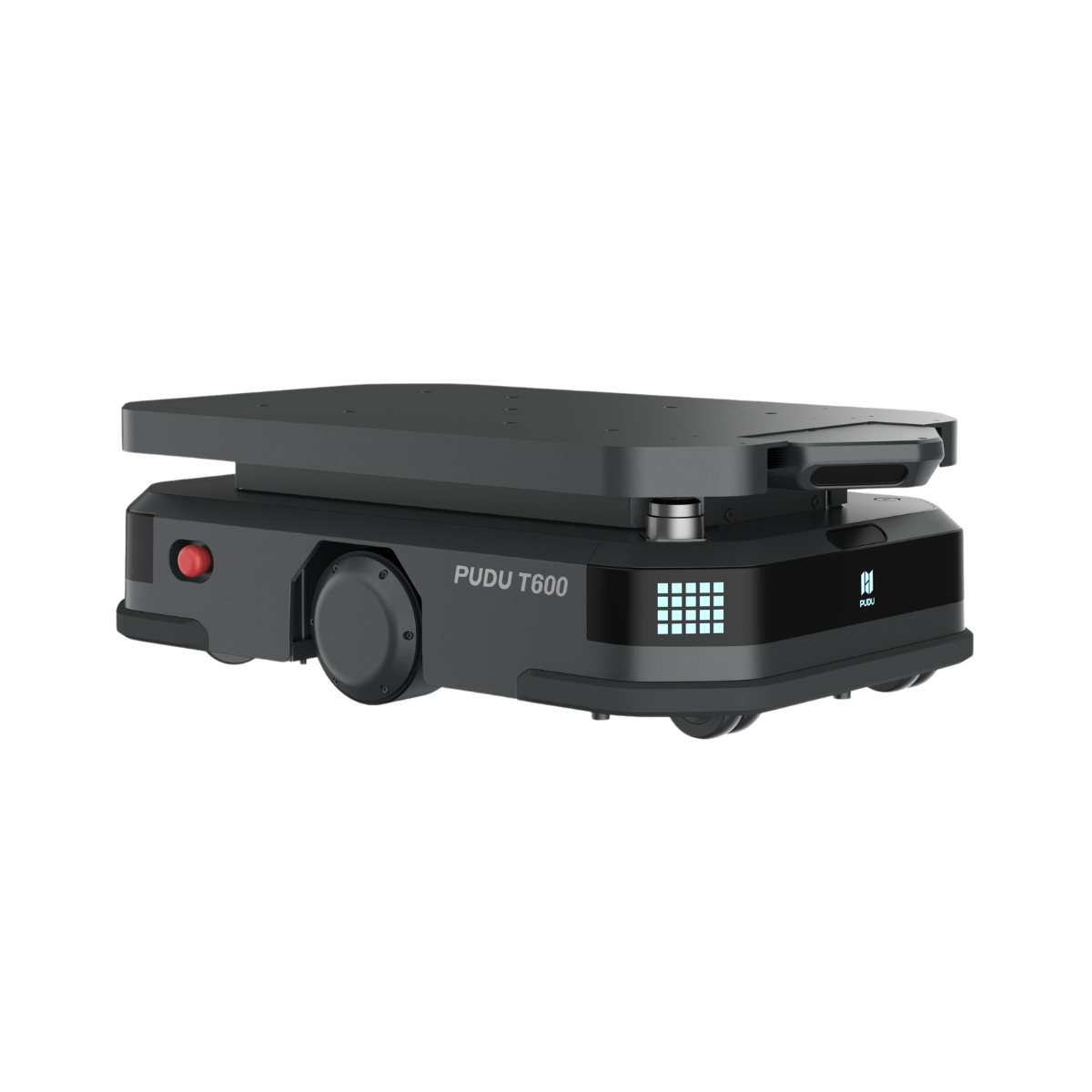
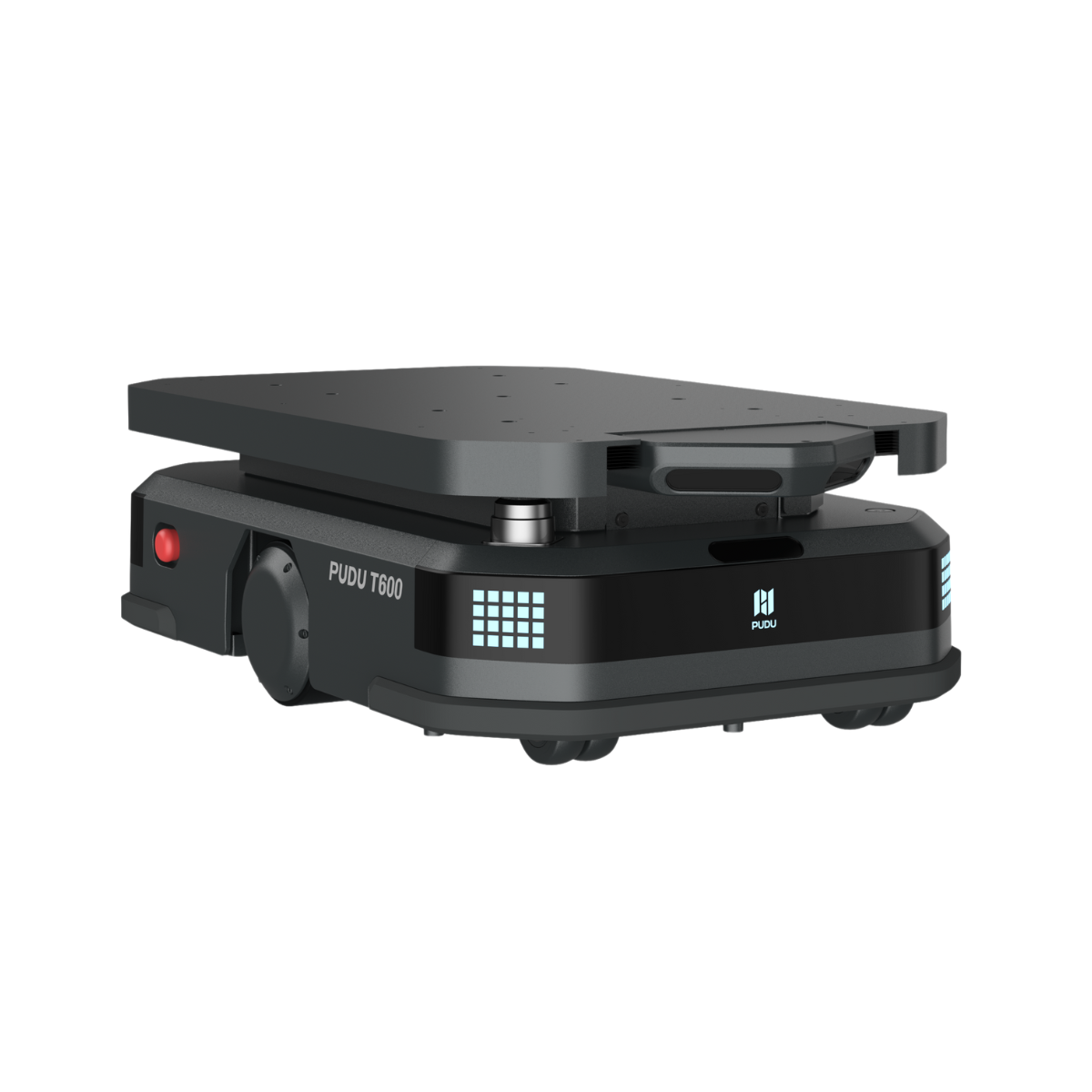
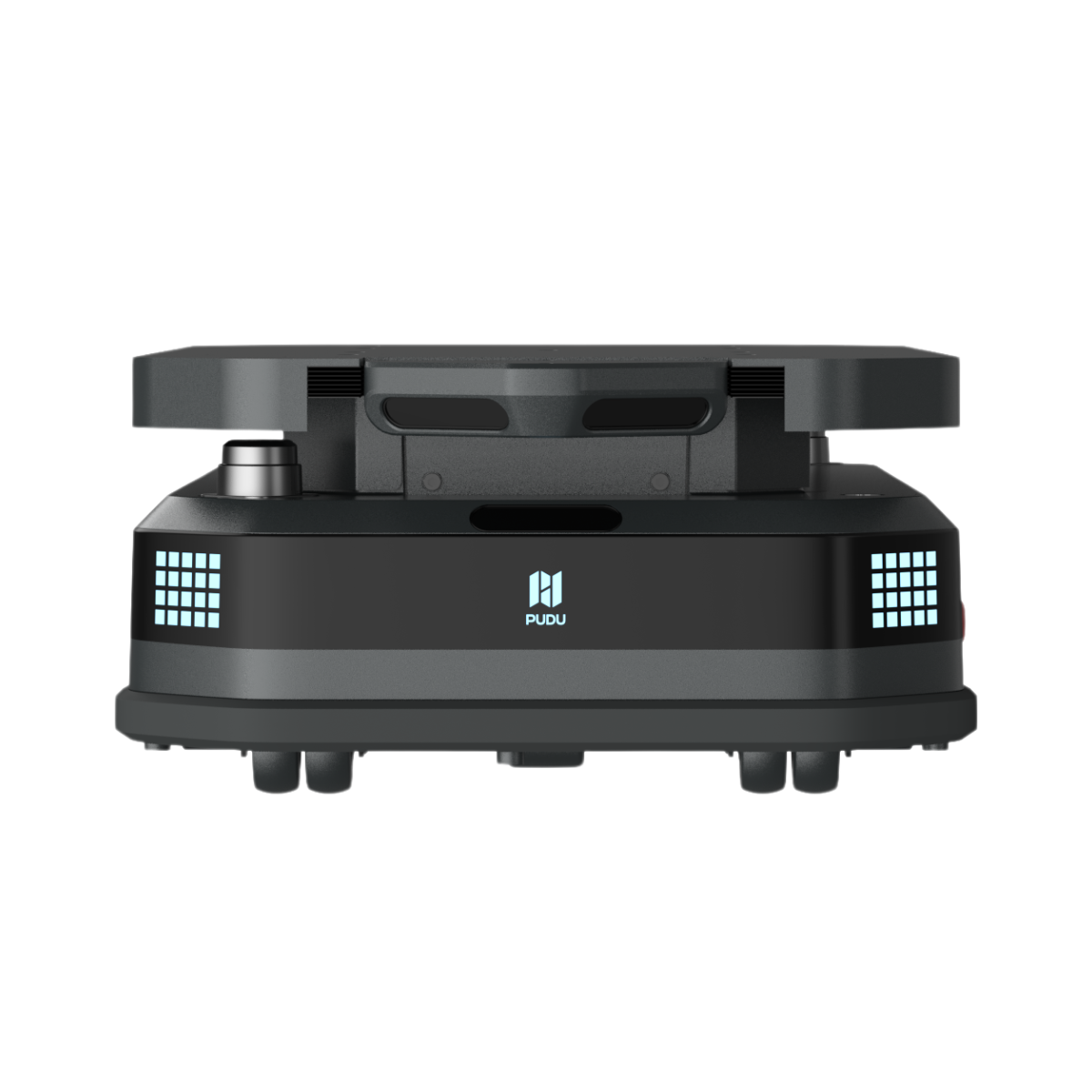
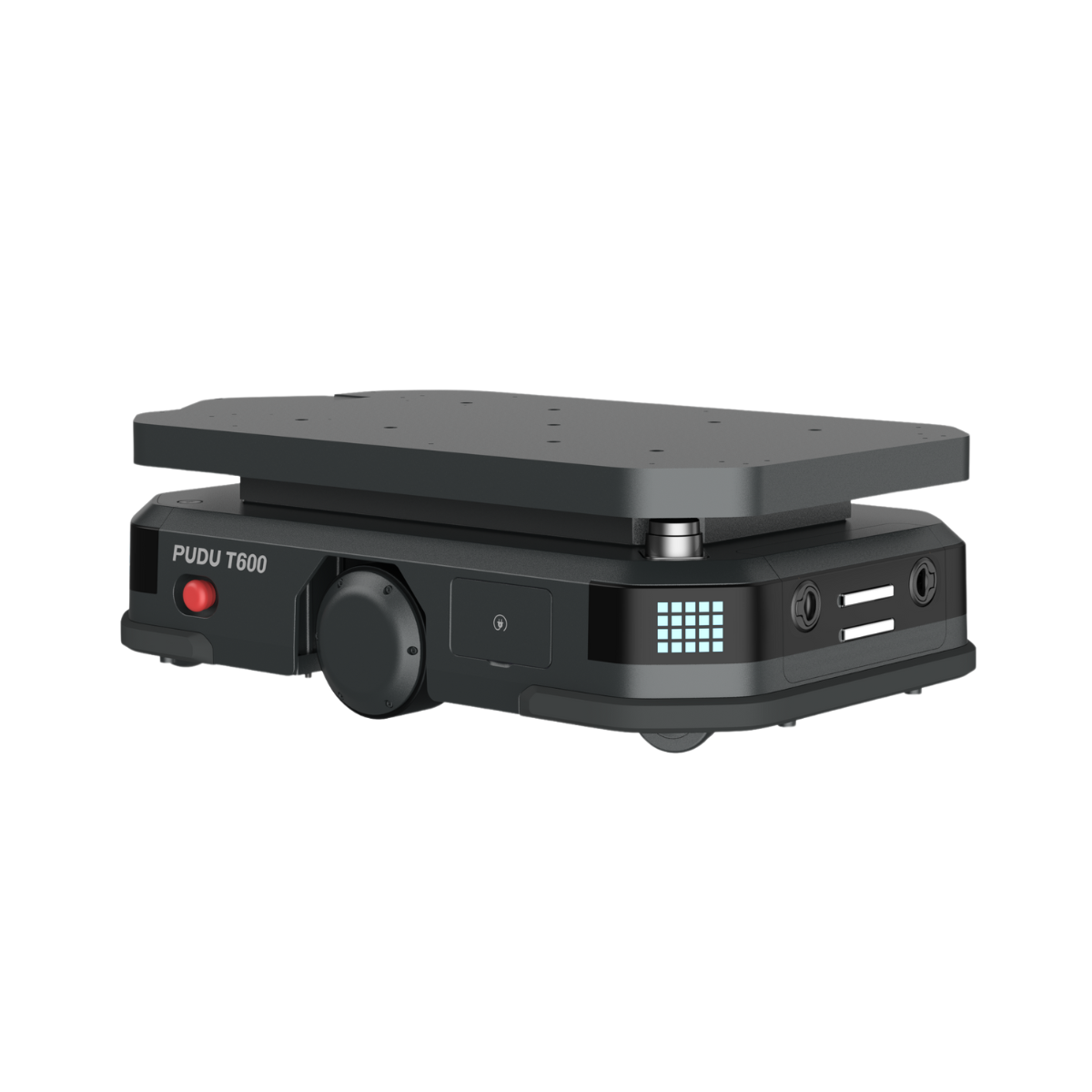
Dimensions 845 × 500 × 255 mm.
Weight 94 kg. Payload 600 kg.
Speed 0.2–1.2 m/s. Minimum passage width 65 cm.
Height 25.5 cm for driving under racks.
Runtime up to 12 h without load.
Fast charging in approx. 2 h from 0 to 90%.
Battery 30 Ah.
Navigation LiDAR SLAM.
Overcomes 10 mm steps and 35 mm gaps.
Operating temperature 0–40 °C.
(Designed for driving under and lifting shelves for autonomous pick-and-place operations)

On-demand transport

The series moves loads of up to six hundred kilograms to where they are needed. The T600 takes over carts, pallets, or platforms and allows direct interaction via handle, quick-select buttons, and touchscreen. The underride drives under shelves, lifts them, and brings entire racks to the line, buffer, or shipping area. Orders come from the control center, ERP, or MES, with feedback transmitted in a standardized manner via VDA 5050. Elevators, gates, and call systems are controlled, priorities are assigned, and waiting times are reduced. Material flow thus becomes predictable and reacts to demand in real time.

Smart Navigation

The T600 and T600 Underride navigate using LiDAR SLAM, with the T600 additionally utilizing VSLAM. The robots maintain their position with centimeter-level accuracy and dock at transfer points with a precision of approximately one centimeter. Narrow aisles are no obstacle. The T600 navigates safely through passageways as narrow as seventy centimeters, while the Underride handles widths as small as sixty-five centimeters. Steps of up to ten millimeters and gaps of up to thirty-five millimeters are reliably overcome. This ensures stable operation, even when floor markings are missing or lighting and surroundings change frequently.

Fleet coordination in narrow aisles

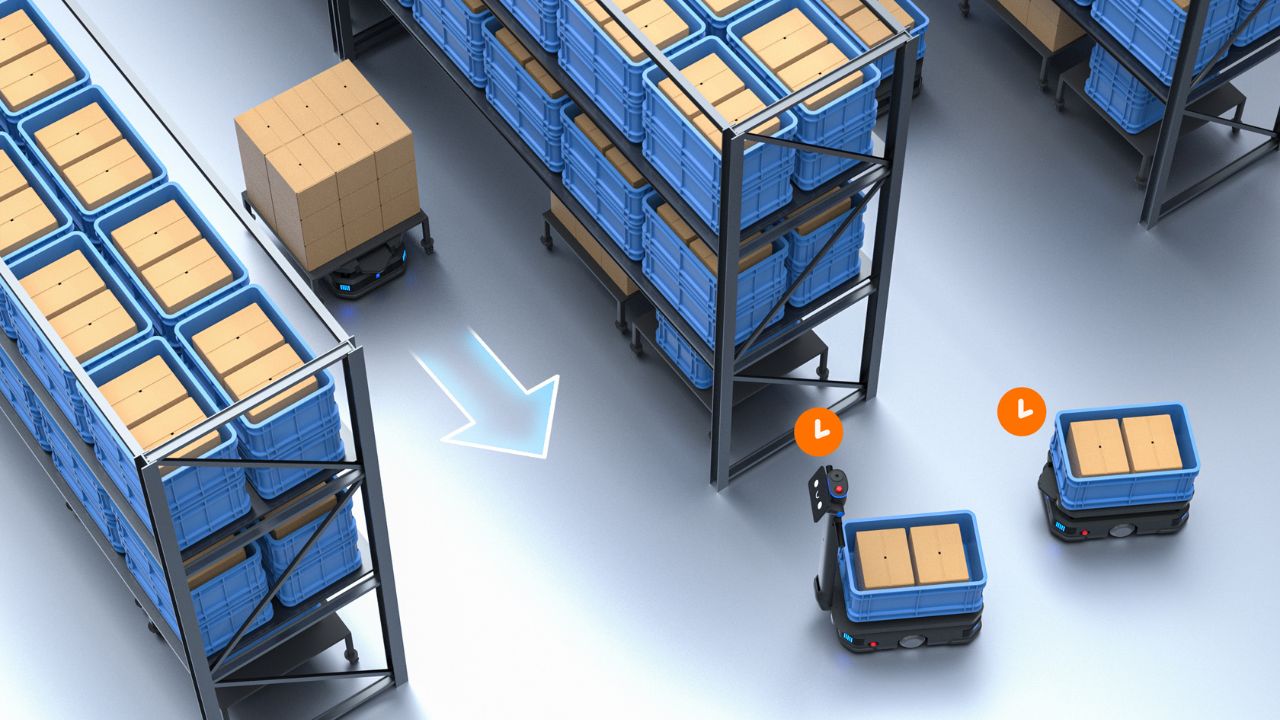
The T600 series manages traffic intelligently. The software detects bottlenecks, controls intersections, and assigns right-of-way, ensuring that blockages rarely occur. In narrow zones, the units operate in single-file mode and switch to parallel paths in open areas. Encounters between robots, employees, and industrial trucks remain predictable. This coordination increases net travel time, reduces maneuvering, and ensures consistent throughput times, even during peak hours or with changing routes.

Autonomy & Security

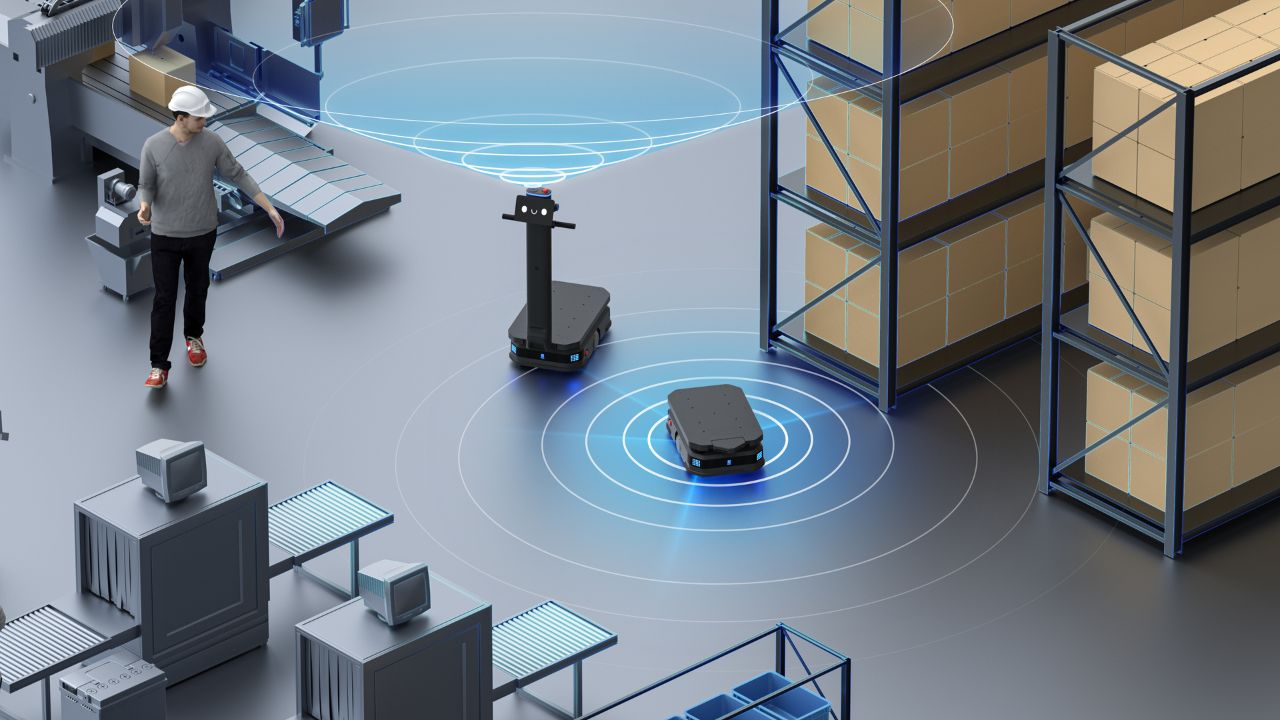
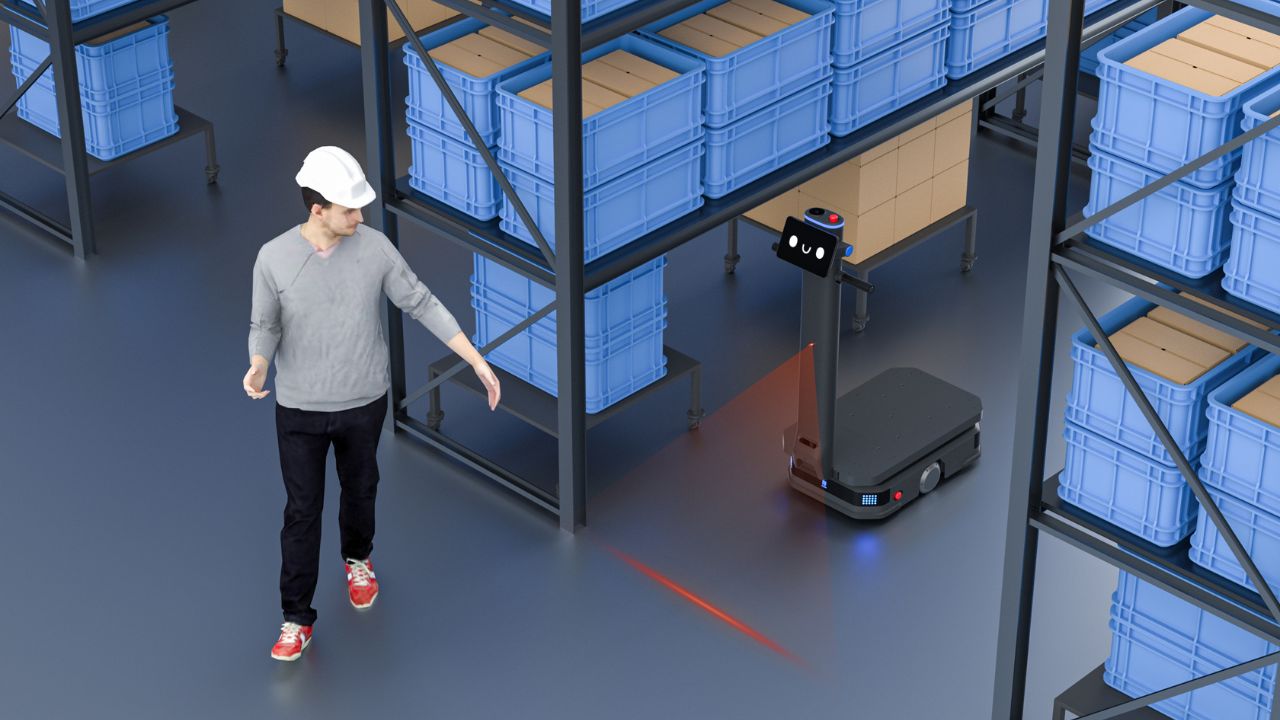
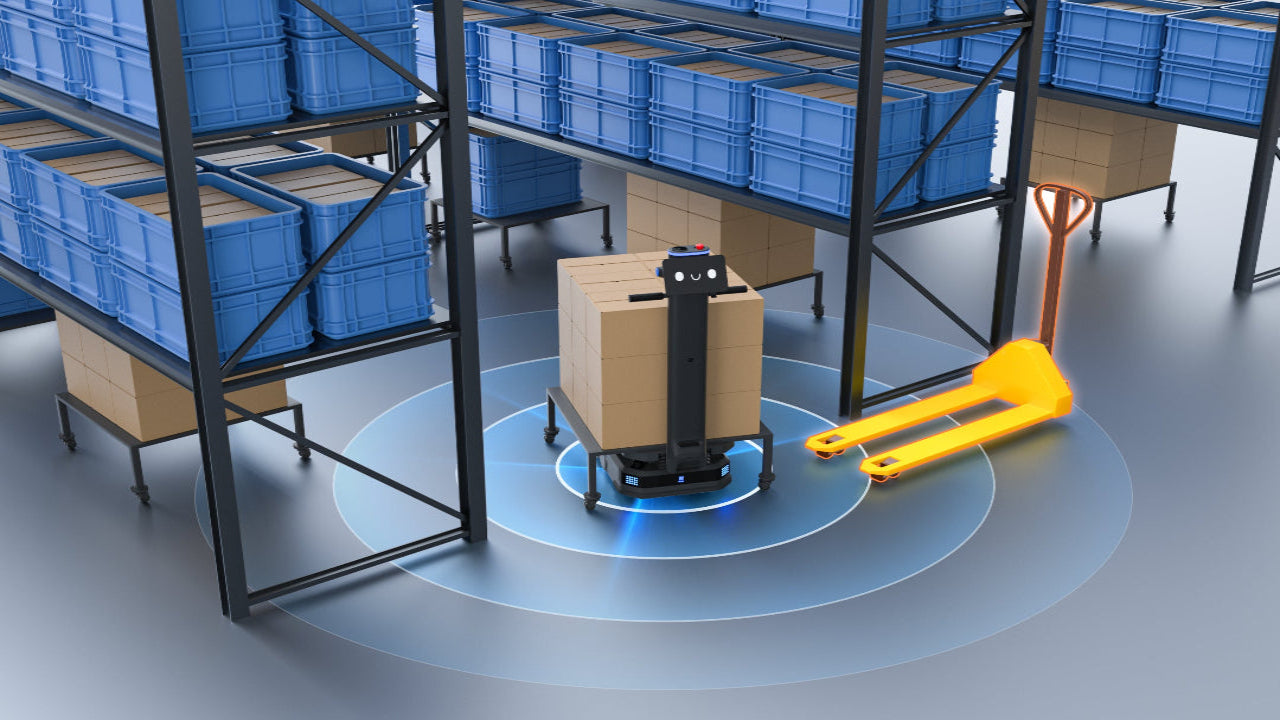
Both variants are designed for long shifts. Runtime without a load is up to twelve hours, and automatic docking charges the unit to ninety percent in about two hours. Status information such as battery level, position, and job progress is continuously monitored and reported to the fleet management system. Sensors with all-around visibility and a highly visible floor projection make movements recognizable to employees. Defined obstacle clearance and precise docking technology reduce downtime. Overall, this creates robust operation that minimizes failures and measurably increases productivity in production and logistics.

  • Adaptive Route Planning
    Detects obstacles in real time and dynamically plans detours for stable, collision-free travel.

  • Omni-Sense-Safety
    360° sensor technology with safety stop logic, zone profiles, and speed control for mixed traffic.

  • Underride handling
    Centering and lifting mechanism for the safe engagement of standardized trolleys and transfer stations.

  • Series configuration (Series)
    Modular top structure with shelves/trays for multi-compartment transport and clear compartment separation.

  • Precise docking
    Repeatable docking at transfer points, charging stations, and optionally at elevator/auto-door interfaces.

  • Industrial-grade design
    Robust, easy-to-maintain chassis with service-friendly modules for high availability in shift operations.

T600 Series

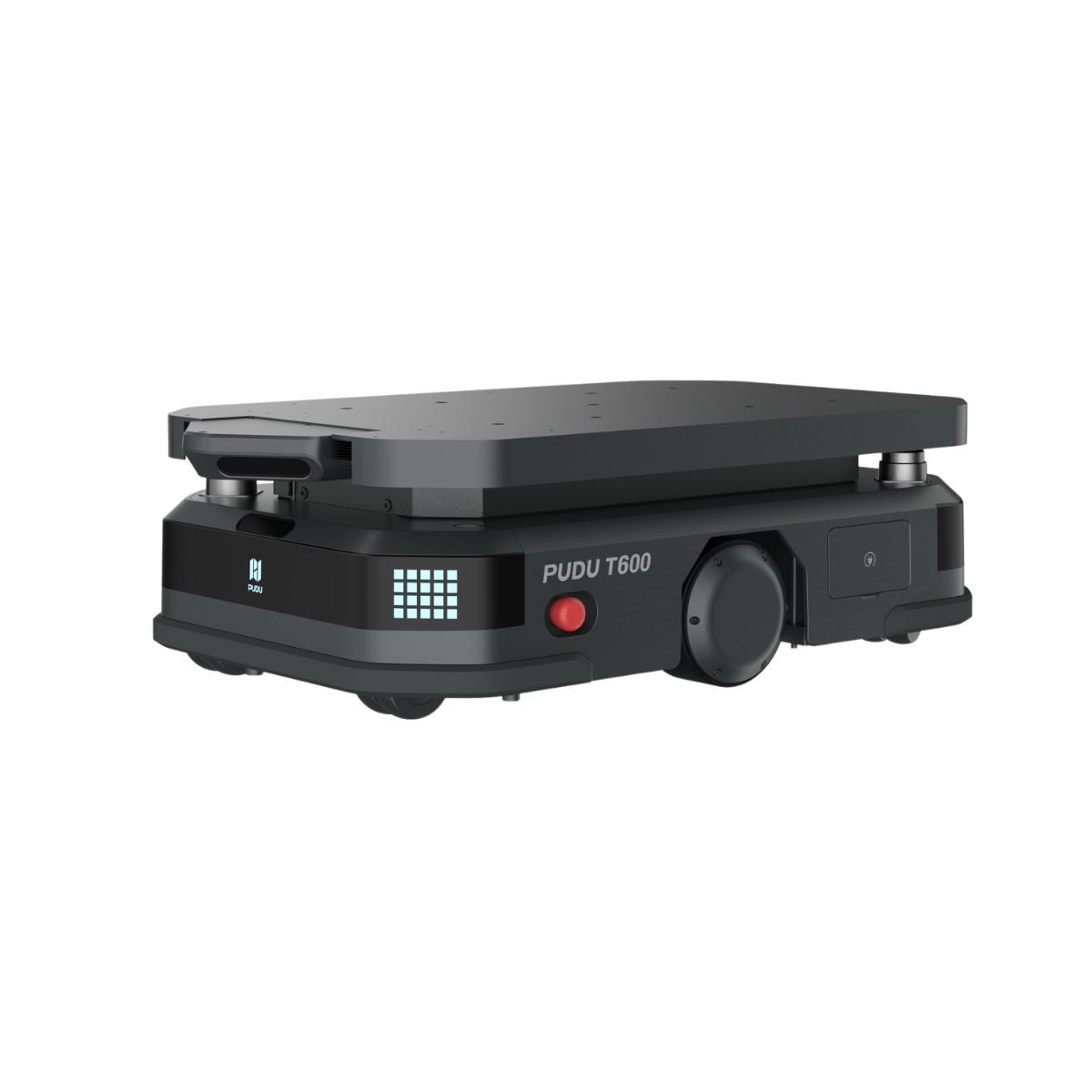
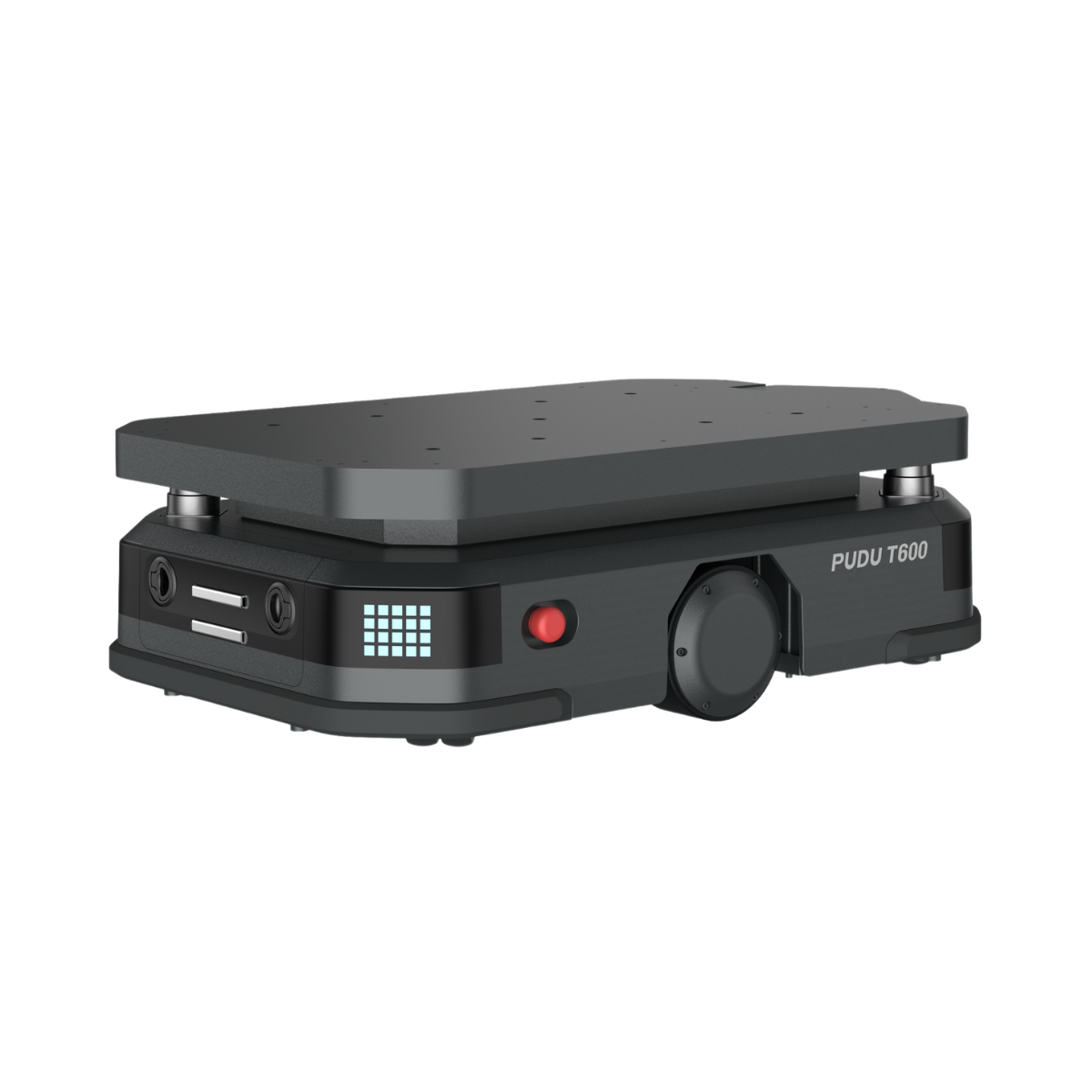
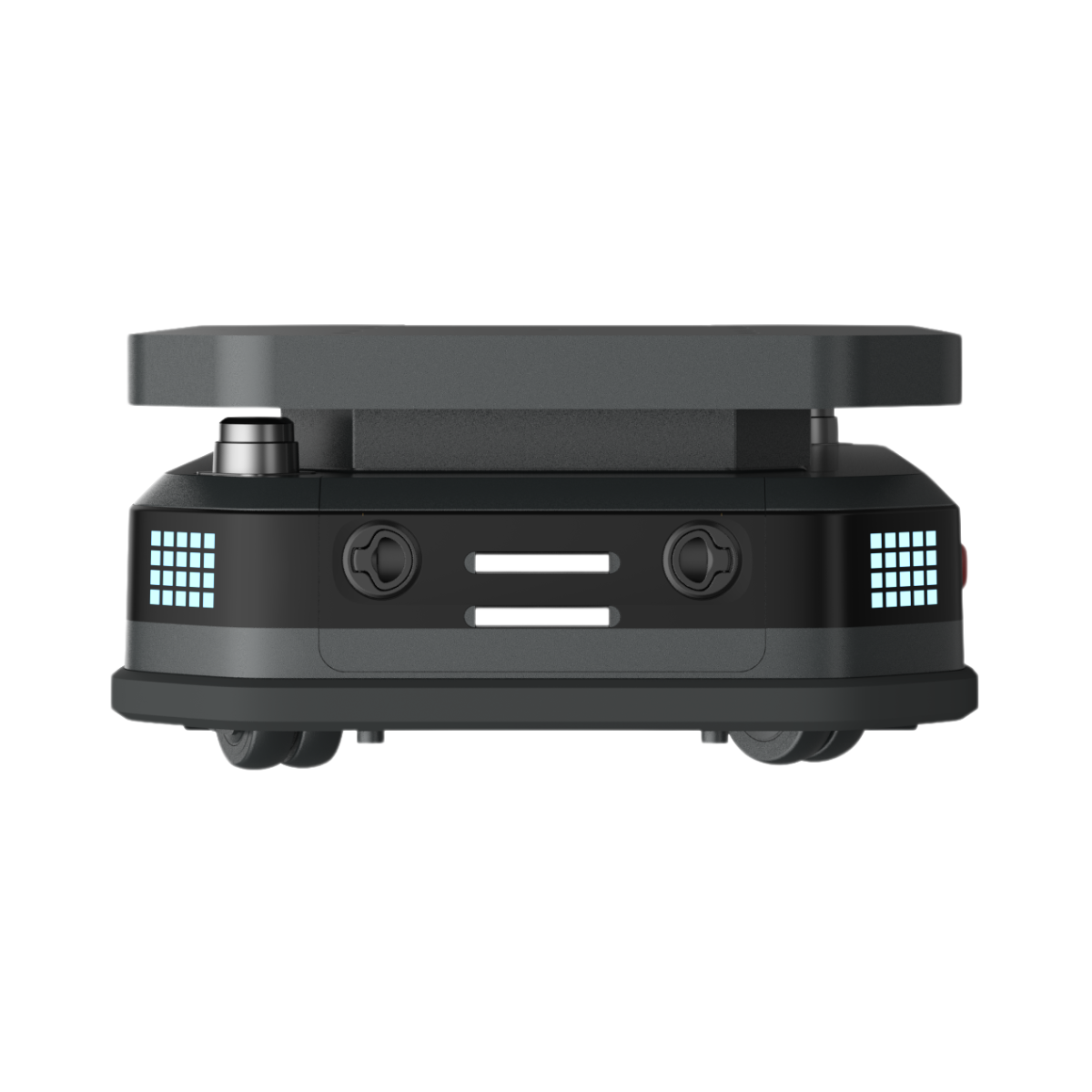
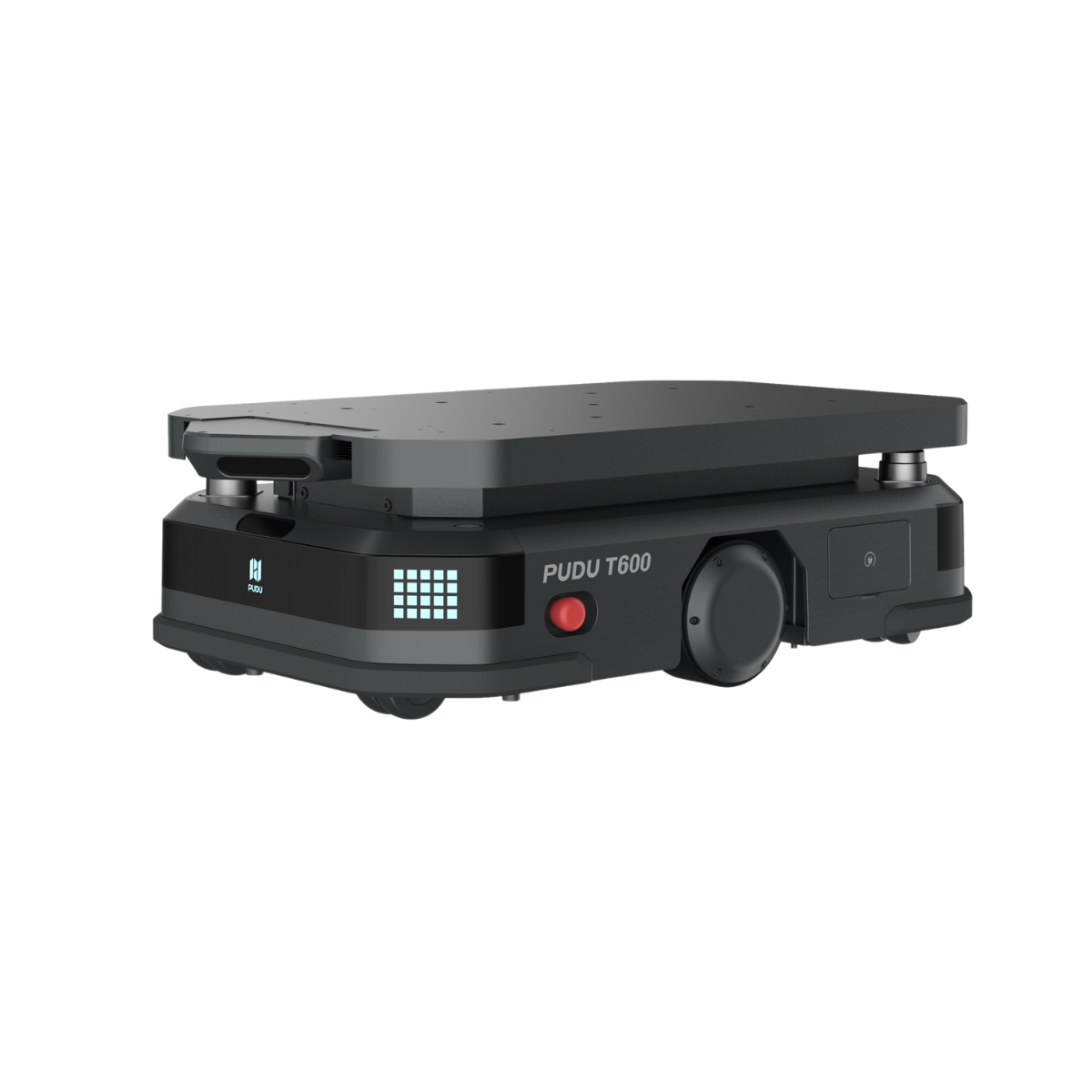
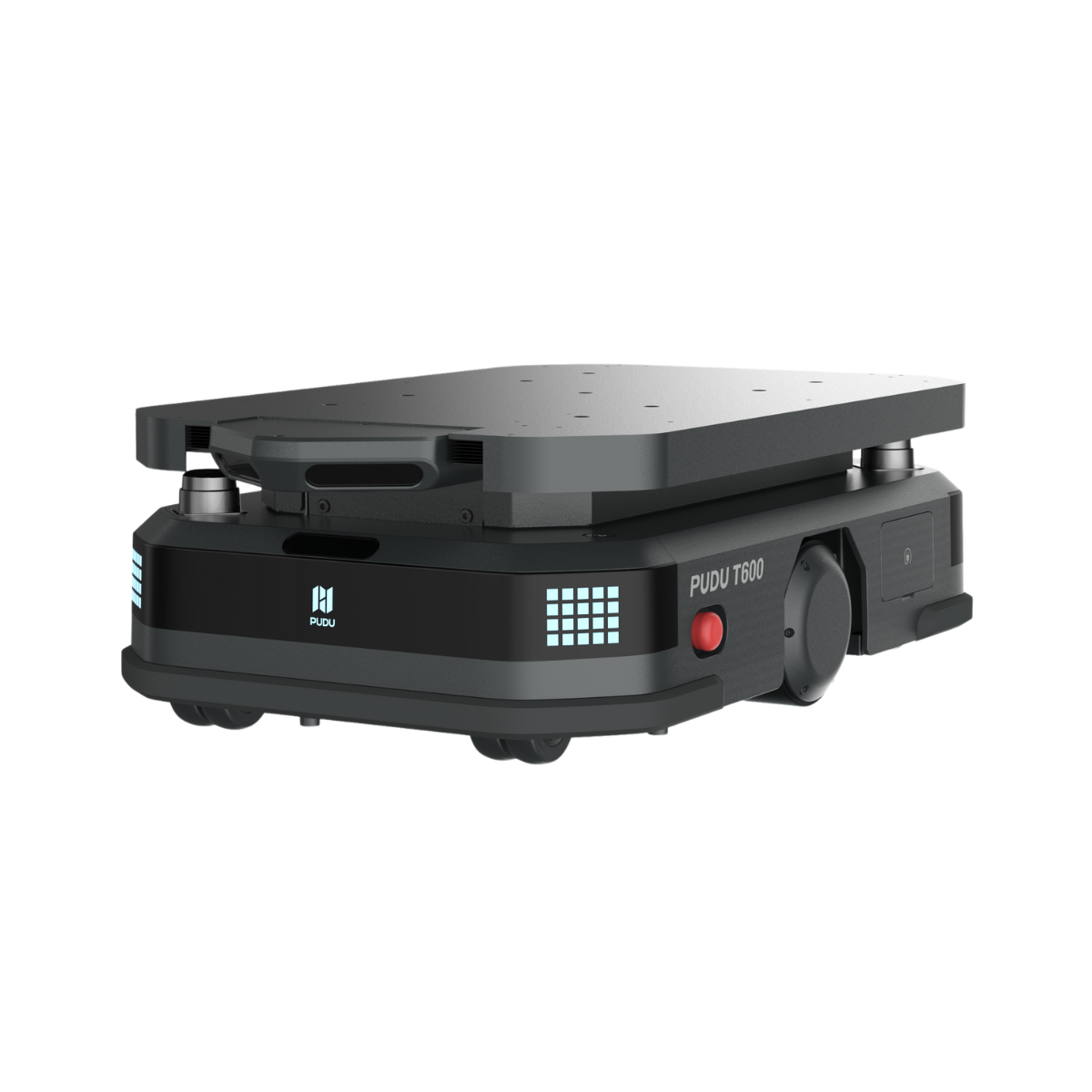
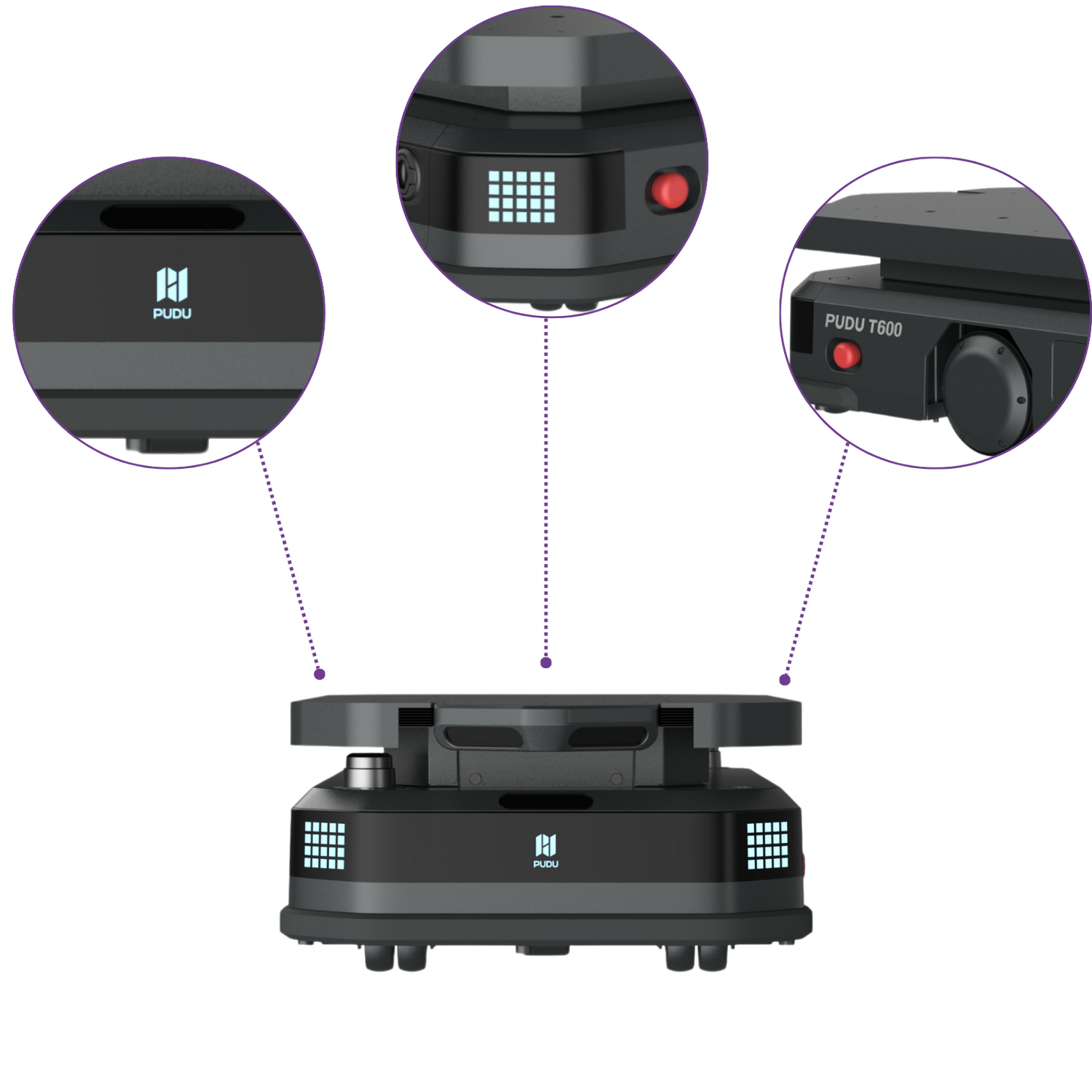
The PUDU T600 Underride is a low-profile AMR for densely packed warehouses. Measuring 845 × 500 × 255 mm, it drives under racks, lifts them, and transports complete modules weighing up to 600 kg through aisles as narrow as 65 cm. LiDAR SLAM keeps its position secure, even in changing lighting conditions. The travel speed is 0.2–1.2 m/s, the operating time is up to twelve hours, and fast charging provides 90% capacity in about two hours. Via VDA5050, WMS and ERP integration, as well as elevator and gate control, the Underride enables efficient shelf-to-line processes, reduces relocation times, and maximizes space utilization in existing buildings.

T600 Underride Guard

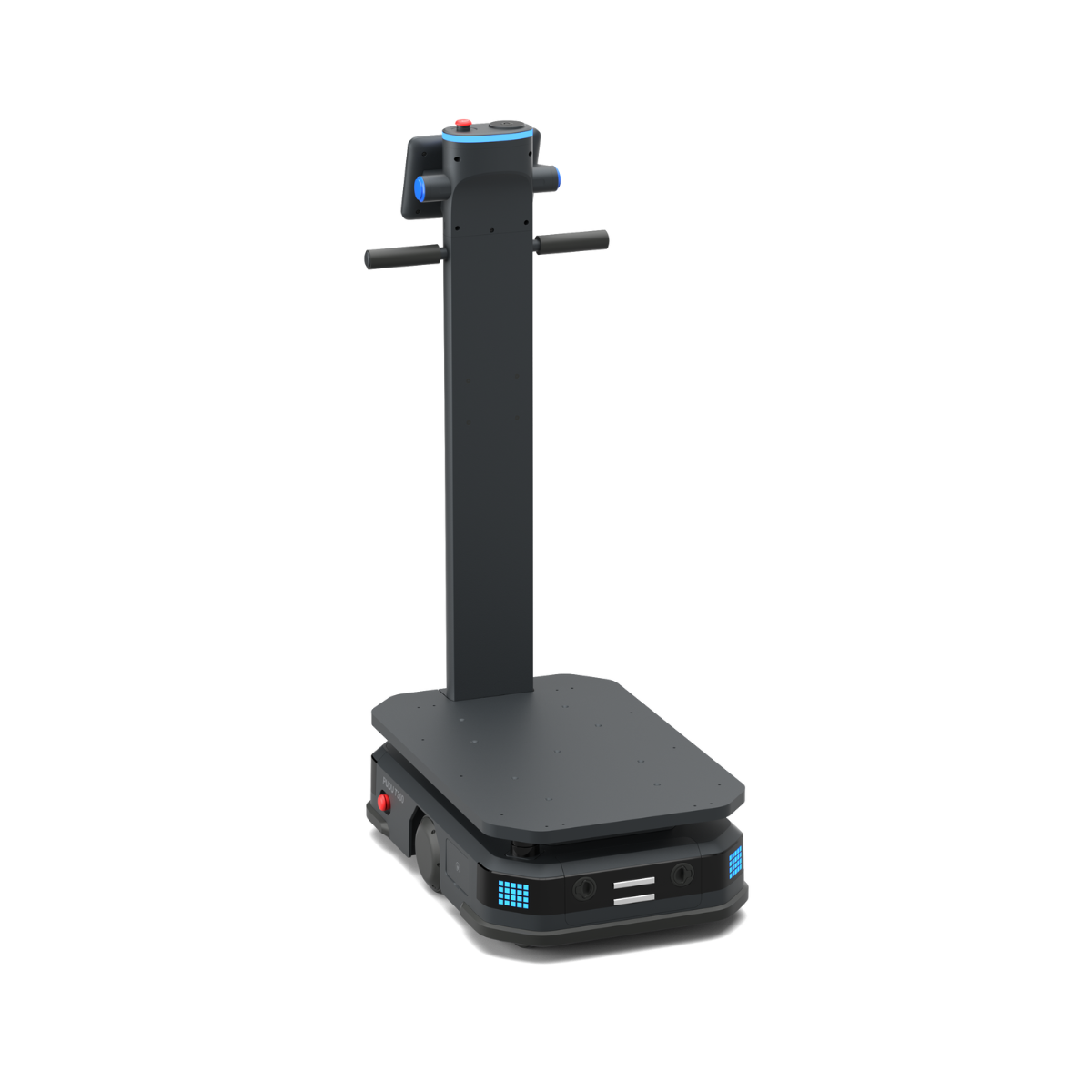
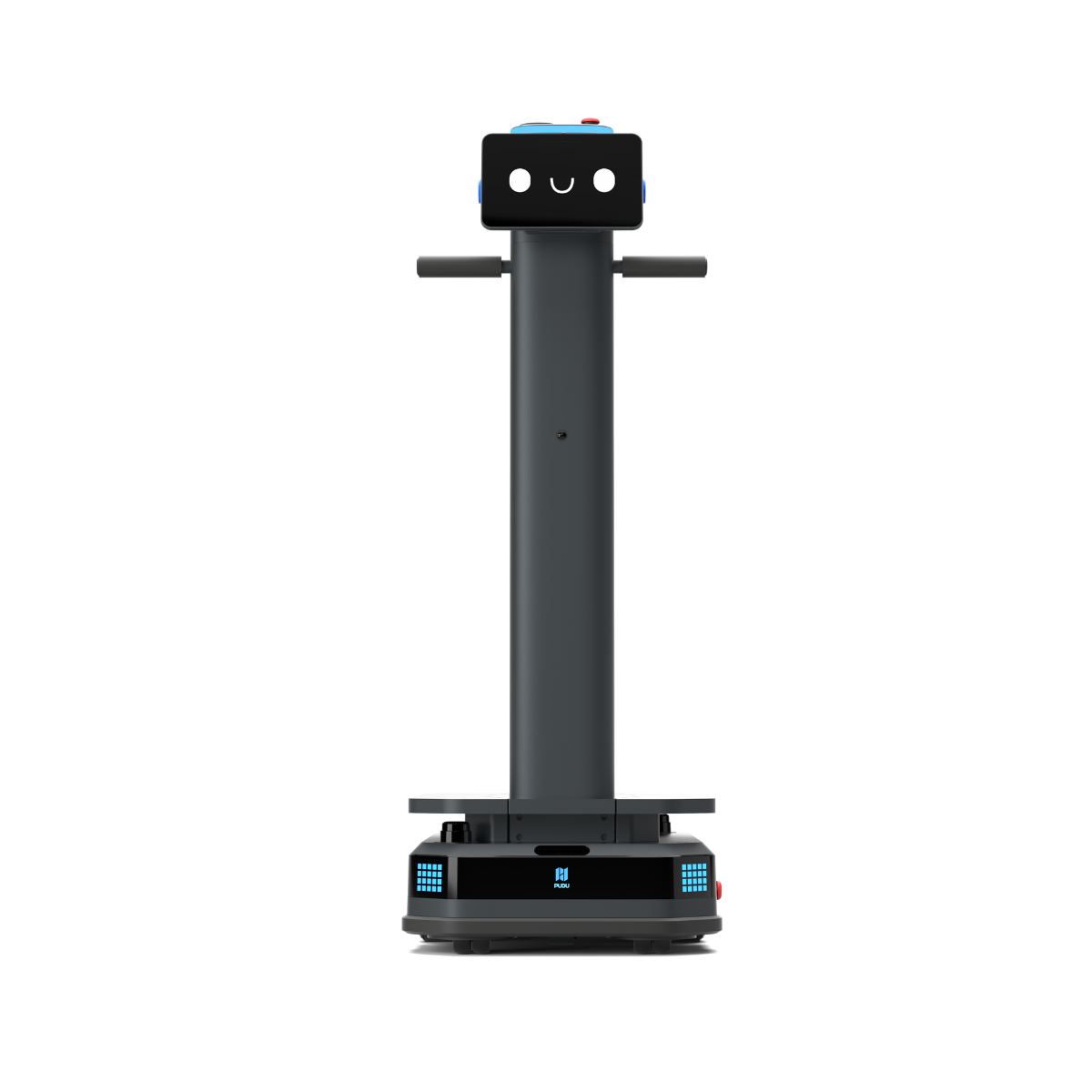
The PUDU T600 is an autonomous delivery robot for intralogistics with a 600 kg payload. It navigates precisely through aisles as narrow as 70 cm using LiDAR SLAM and VSLAM, docks at transfer points with millimeter precision, and travels at 0.2–1.2 m/s. The operating concept, featuring a handle, quick-select buttons, and a 10.1-inch touchscreen, supports hybrid workflows between AMRs and personnel. A twelve-hour runtime and fast charging to 90% in around two hours ensure multi-shift operation. Via VDA5050, fleet management, and elevator control, the T600 integrates seamlessly into ERP, MES, and building systems, stabilizing material flow between incoming goods, buffers, picking, and the production line.

Frequently Asked Questions

For which areas of application is the PUDU T600 delivery robot suitable?

The PUDU T600 delivery robot is suitable for industrial intralogistics, picking, goods receipt, warehouse and inventory management, cross-docking, logistics centers, shipping hubs, and production supply. Terra Robotics positions the PUDU T600 specifically for companies looking to automate heavy internal transport and relieve employees of manual transport tasks.

How much payload can the PUDU T600 carry?

According to Terra Robotics, the PUDU T600 is designed for a maximum payload of up to 600 kg. This makes Pudu Robotics' autonomous delivery robot suitable for heavy carts, platforms, container modules, pallets with heavy parts, and internal material transport in industry, production, and logistics.

What is the difference between PUDU T600 Series and PUDU T600 Underride?

The PUDU T600 Series is the classic version for direct material transport, featuring a control handle, quick-select buttons, and a 10.1-inch touchscreen. The PUDU T600 Underride is a low-profile model designed to drive under racks or shelving systems, lift them, and move entire modules autonomously. The choice depends primarily on whether carts, platforms, and pallets are to be transported directly or if shelving systems are to be moved automatically.

Which navigation technology does the PUDU T600 use?

The PUDU T600 uses LiDAR SLAM and, in the standard version, additional VSLAM for precise navigation in industrial environments. The PUDU T600 Underride relies on LiDAR SLAM. This allows the robots to navigate reliably even in narrow aisles, dynamic warehouse areas, and environments without fixed floor markings.

Is the PUDU T600 suitable for narrow warehouse aisles?

Yes, the PUDU T600 is designed for tight industrial environments. According to Terra Robotics, the standard version requires a minimum passage width of 70 cm, while the PUDU T600 Underride can manage with as little as 65 cm. This makes the T600 series suitable for existing warehouses, dense shelving areas, and intralogistics processes with limited maneuvering space.

PUDU T600 and T600 Underride for heavy-duty logistics: data, benefits, application

Classification in the niche of industrial AMRs and delivery robots

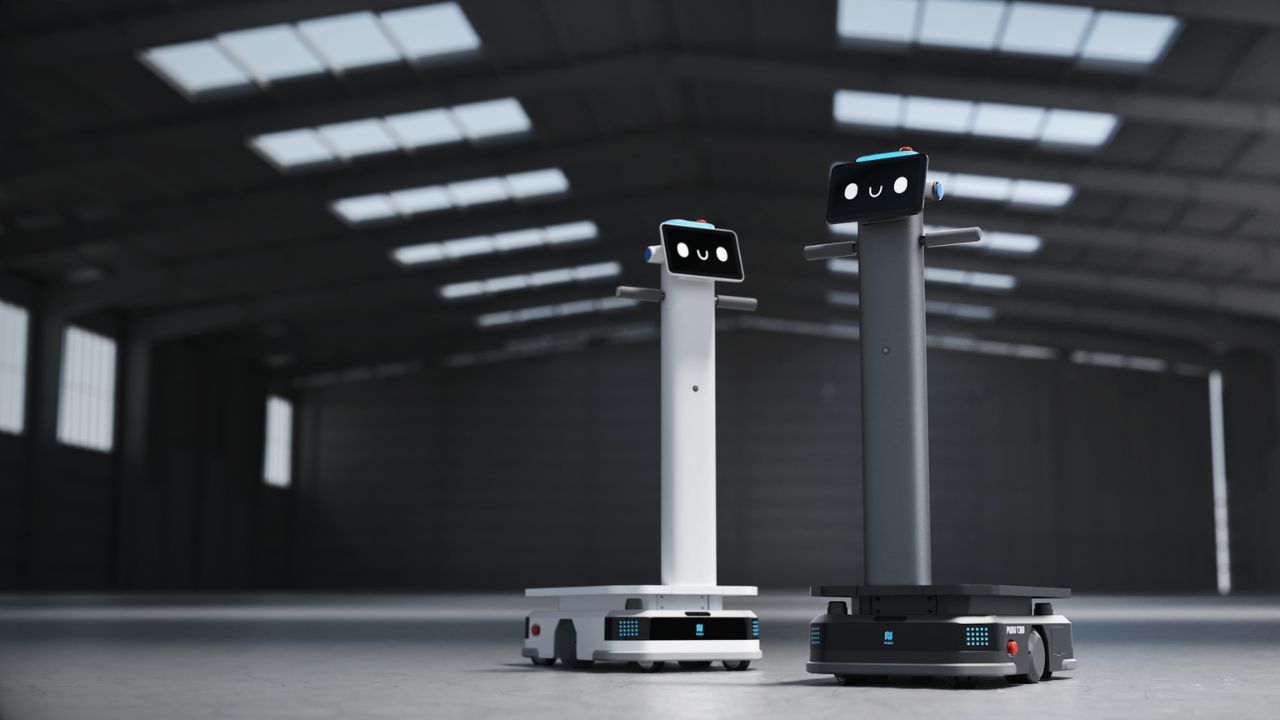
Autonomous mobile robots for intralogistics handle recurring transport tasks, reduce lead times, and increase process stability. In this category, the T600 series from Pudu Robotics addresses the transport of heavy loads of up to 600 kilograms. Two variants cover different layouts. The T600 is the system with a control handle and touchscreen for workflows with occasional manual interaction. The T600 Underride is a low-profile chassis robot that drives under racks and lifts them independently. Both variants are designed as industrial delivery robots and can be integrated into existing IT and building technology systems. The series is designed for multi-shift operations and dense warehouse environments.

Technical platform and navigation systems

The series utilizes lidar-based environment sensing and simultaneous localization and mapping (SLAM). The T600 combines VSLAM and LiDAR SLAM, while the T600 Underride relies on LiDAR SLAM. Positioning accuracy is plus or minus five centimeters in the default setting and plus or minus one centimeter in the precise docking mode. Both versions travel at a cruising speed of 0.2 to 1.2 meters per second and are designed for 24-hour operation. Runtime without a load is twelve hours. Rapid charging brings the battery from zero to ninety percent in approximately two hours. This makes multiple cycles per day possible without manual handling.

Dimensions, passageways, and obstacles

The T600 measures 960 by 500 by 1350 millimeters. The minimum passage width for safe operation is 70 centimeters. The T600 Underride is significantly lower, measuring 845 by 500 by 255 millimeters. It requires 65 centimeters of clear width and, due to its height, can navigate under shelving units. Both versions are designed for a maximum payload of 600 kilograms. Obstacle traversal is clearly defined. The T600 handles step heights of up to 10 millimeters and gaps up to 35 millimeters. The Underride meets the same specifications. These key figures are crucial for route planning in existing buildings with thresholds, joints, and transitions.

Intelligent traffic strategy and narrow aisles

The series is designed for dense warehouse aisles and mixed operation. Depending on the aisle width and current load, the system automatically chooses between single-lane and dual-lane travel, managing the robot fleet to minimize congestion even during peak times. This aisle management contributes to net floor space efficiency and safety in multi-robot operations.

Safety, projection, and standards

Safety functions address industrial requirements. Documented features include a floor projection element that makes the movement area in front of the robot visible, as well as a multi-stage safety concept consisting of sensor technology and status monitoring. For fleet management and control center integration, the series supports the VDA5050 standard. This compatibility facilitates collaboration with existing systems and third-party robots, reducing integration risks.

Elevator control, prioritization, and building integration

In multi-level buildings, elevator logic is a bottleneck. The series communicates with elevators, monitors their status in real-time, and prioritizes available units. This reduces waiting times at junctions and smoothes the material flow. Additionally, interfaces to electric doors, call buttons, conveyor systems, and dashboards are available. This allows for the automation of transfer points, gate transits, and line connections.

PUDU T600 in detail

The T600 is the heavy-duty delivery robot for standardized transport routes between goods receipt, buffering, picking, and the production line. The control concept consists of a handle, power assist switch, quick-access buttons, and a 10.1-inch touchscreen. This allows tasks to be started, paused, or adjusted directly at the device. This is helpful in hybrid processes where employees occasionally intervene or need to reschedule a rack on short notice. The dimensions allow for use in typical warehouse aisles. The minimum width of 70 centimeters creates space for oncoming traffic and for overtaking maneuvers with coordinated traffic strategies. The maximum payload of 600 kilograms covers Euro pallets with heavy parts, container modules, and picking carts. The travel speed of up to 1.2 meters per second is sufficient to bridge long distances efficiently without compromising work safety. In practice, the T600 accelerates on clear sections, reduces speed in curves, and approaches transfer stations in a controlled manner for millimeter-accurate docking. The documented accuracy in precise mode of plus or minus one centimeter allows for mechanical coupling to conveyors, transfer carts, or docking rails. The power supply is designed for continuity. Twelve hours of runtime without a load, automatic docking, and the option for battery swapping eliminate shift changes without long downtimes. With an empty battery, approximately two hours are sufficient to reach a ninety percent charge level to cover the rest of the day.

PUDU T600 Underride in detail

The Underride addresses areas with high density and shelf blocks. Its height of 25.5 centimeters allows it to drive under racks. The robot positions itself centrally, lifts the target module, and handles its transport to the line, packaging, or buffer. The minimum passage width of 65 centimeters opens up narrow aisles and older buildings. In automated shelf-to-line scenarios, the Underride delivers the racks directly to the workstation. The combination of a low-profile design and a 600-kilogram payload makes this variant an alternative to floor-guided transport systems when layouts change frequently. Using LiDAR SLAM, the robot maintains its position steadily, even if markings, covered floors, or changing lighting conditions make other methods less reliable. The series specifications confirm identical runtime, charging strategy, and travel speed as the T600. This reduces the burden on mixed fleets.

Comparison and selection decision

The choice between T600 and Underride begins with the question of the load carrier. If pallets or heavy carts are the focus and human interaction is part of the process, the T600 plays to its strengths. The control panel facilitates quick ad-hoc changes, and the minimum aisle width of 70 centimeters fits many existing warehouses. If, however, modular racks, FIFO shelving, or rack islands are to be moved and floor density is high, the Underride provides advantages due to its height. It drives under the rack, lifts centrally, and requires little maneuvering space. The documented differences in navigation and passageway width are the guiding criteria here.

Integration into existing IT landscapes

An industrial delivery robot only unfolds its full benefit with clean integration. The T600 series supports VDA5050, an interface widely used by control systems in production environments. This allows order data from ERP or MES to be transmitted to the fleet and enables standardized processing of feedback such as order status, position, or battery condition. Functions for elevators, electric doors, and call buttons are available for building technology. This simplifies cross-departmental workflows between goods receipt, the production line, and shipping. The flexible deployment documented on the product page facilitates layout changes without time-consuming re-planning.
Safety in mixed operations

In warehouses, people, industrial trucks, and AMRs work in close quarters. The T600 series brings a sensor architecture with all-around visibility and defined safety zones for this purpose. The floor projection visualizes the working area and improves communication with employees. The documented obstacle crossing and defined gap bridging help to assess the infrastructure. From an operational perspective, the strategies for narrow aisles reduce conflicts between robots. Elevator prioritization prevents congestion at vertical bottlenecks. Taken together, this results in system behavior that remains predictable, thereby increasing acceptance and safety.

Operating concepts and ROI

The technical data allows for reliable scenarios. With twelve hours of runtime without a load and a travel speed of up to 1.2 meters per second, large distances can be covered with few units in a three-shift operation. Rapid charging to ninety percent in two hours reduces downtime and, together with auto-docking and battery swapping, forms a robust energy management system. In multi-robot fleets, the traffic strategy smoothes capacity utilization. In buildings with multiple levels, elevator control acts as a multiplier. Overall, order lead times decrease, personnel transit times decline, and process quality increases because transport times become reproducible. Exactly these effects contribute to the return on investment. The combination of high payload, dense aisles, and standard integration creates advantages over manually guided transporters or fixed conveyor technology, especially when layouts remain dynamic.
Introduction, mapping, and change management

The path to regular operation follows a set process. First, production areas are measured and stored in the system as a digital map. Relevant aisles, transfer points, safety zones, and restricted areas are defined. Subsequently, the system creates the initial schedules, optimizes speed profiles, and tests bottlenecks. With the documented accuracy, docking situations can be planned in a standardized manner. After commissioning, fleet management monitors battery status, order progress, and potential sources of interference. Layout changes can be implemented without extensive remodeling, as the system reacts flexibly to new route guidance. The fleet strategy for narrow aisles scales accordingly. During the introductory phase, a clear distribution of roles between production, maintenance, and IT is advisable, as topics such as VDA5050 integration, network quality, and elevator control affect multiple areas.

Summary for decision-makers

The PUDU T600 series addresses heavy-duty logistics in production and distribution environments. The T600 combines high payload with a control concept for hybrid processes and uses VSLAM and LiDAR SLAM for robust navigation. The T600 Underride utilizes its low-profile design to access dense shelf blocks and automates the transport of entire racks. Both variants offer twelve hours of runtime, a travel speed of up to 1.2 meters per second, and two-hour rapid charging to ninety percent. The documented dimensions, minimum widths, and obstacle limits facilitate planning in existing buildings. Intelligent traffic management, elevator prioritization, and VDA5050 compatibility round off its industrial suitability. Companies receive a scalable platform for autonomous material transport with reliable technical specifications and a clear path to integration into existing control systems and building technology.