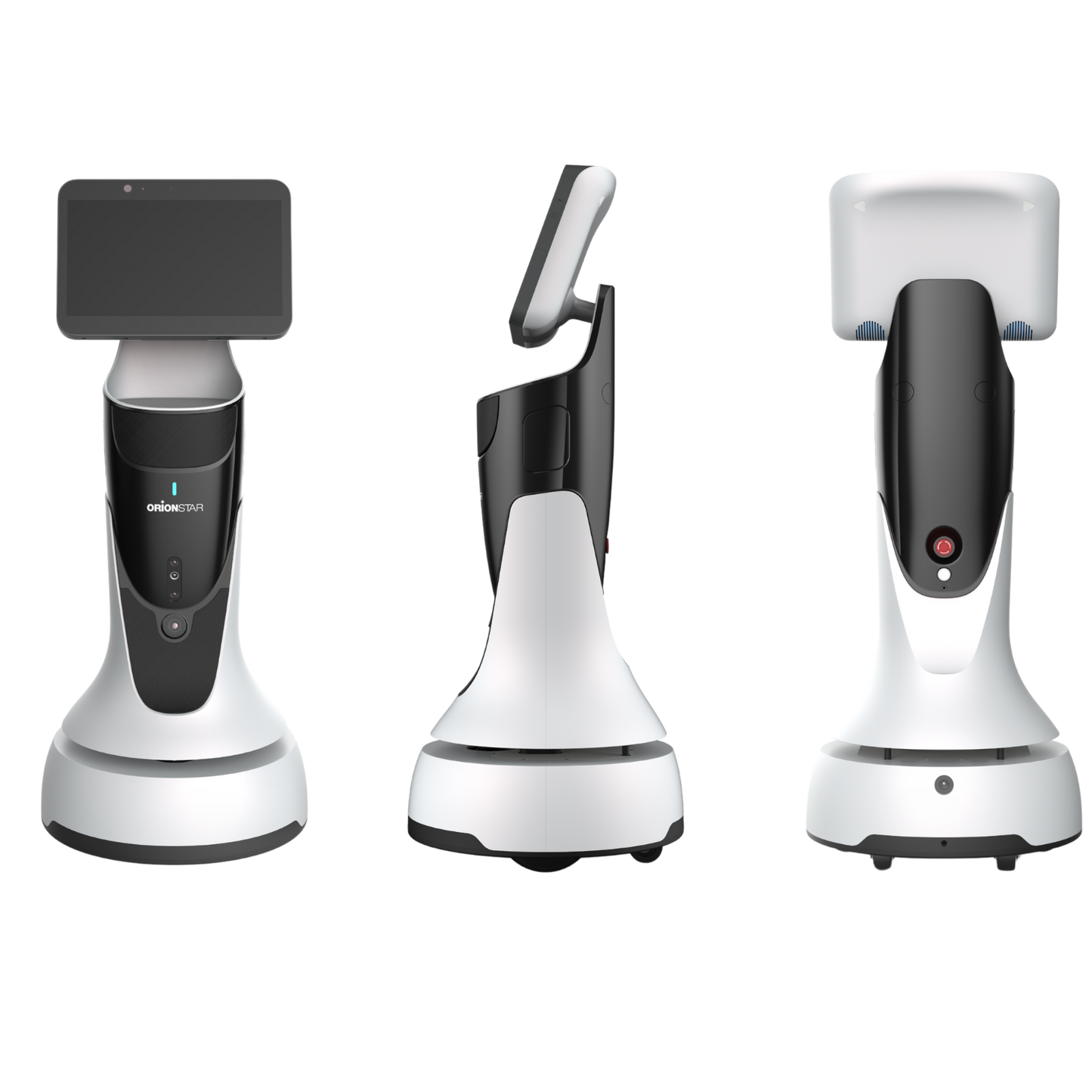
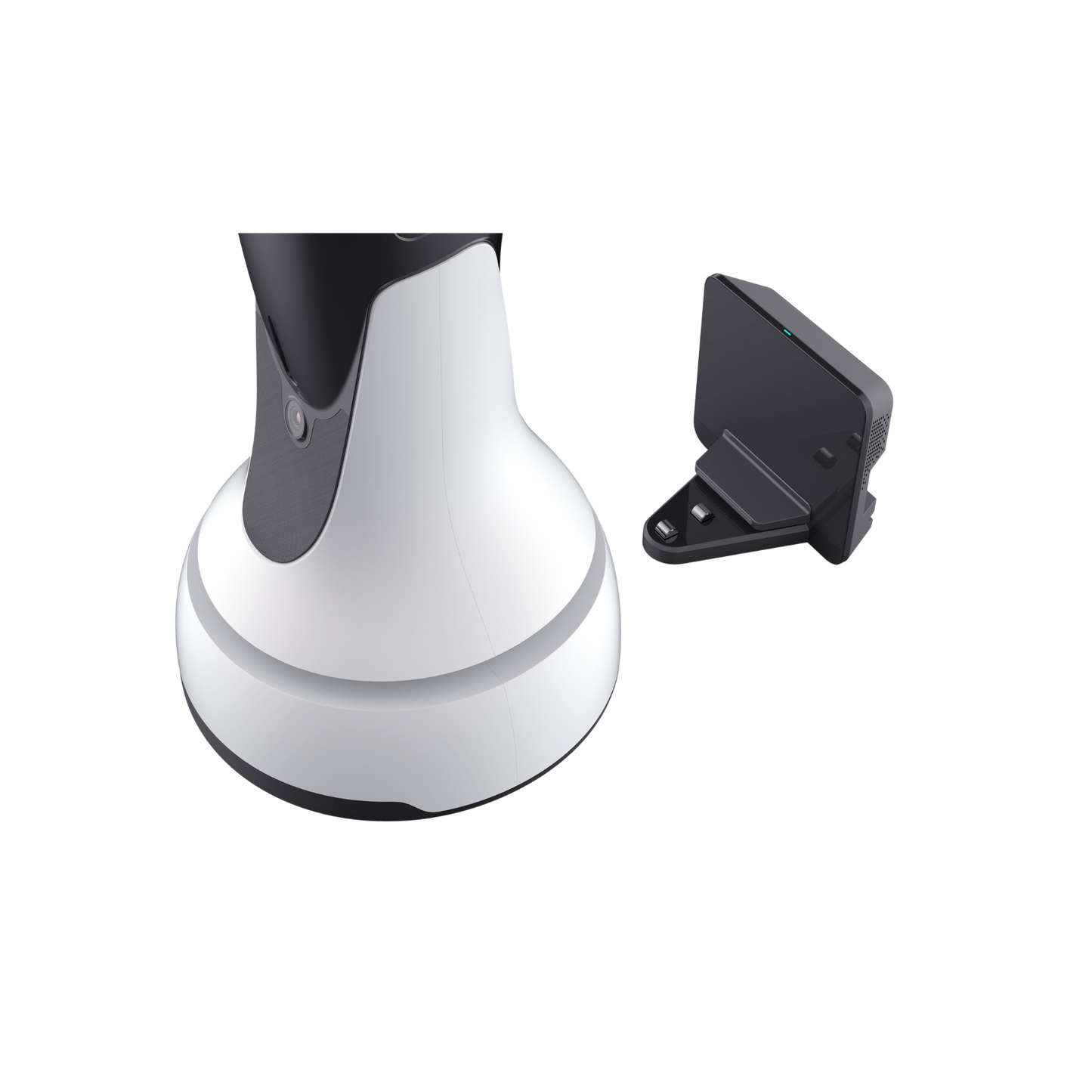
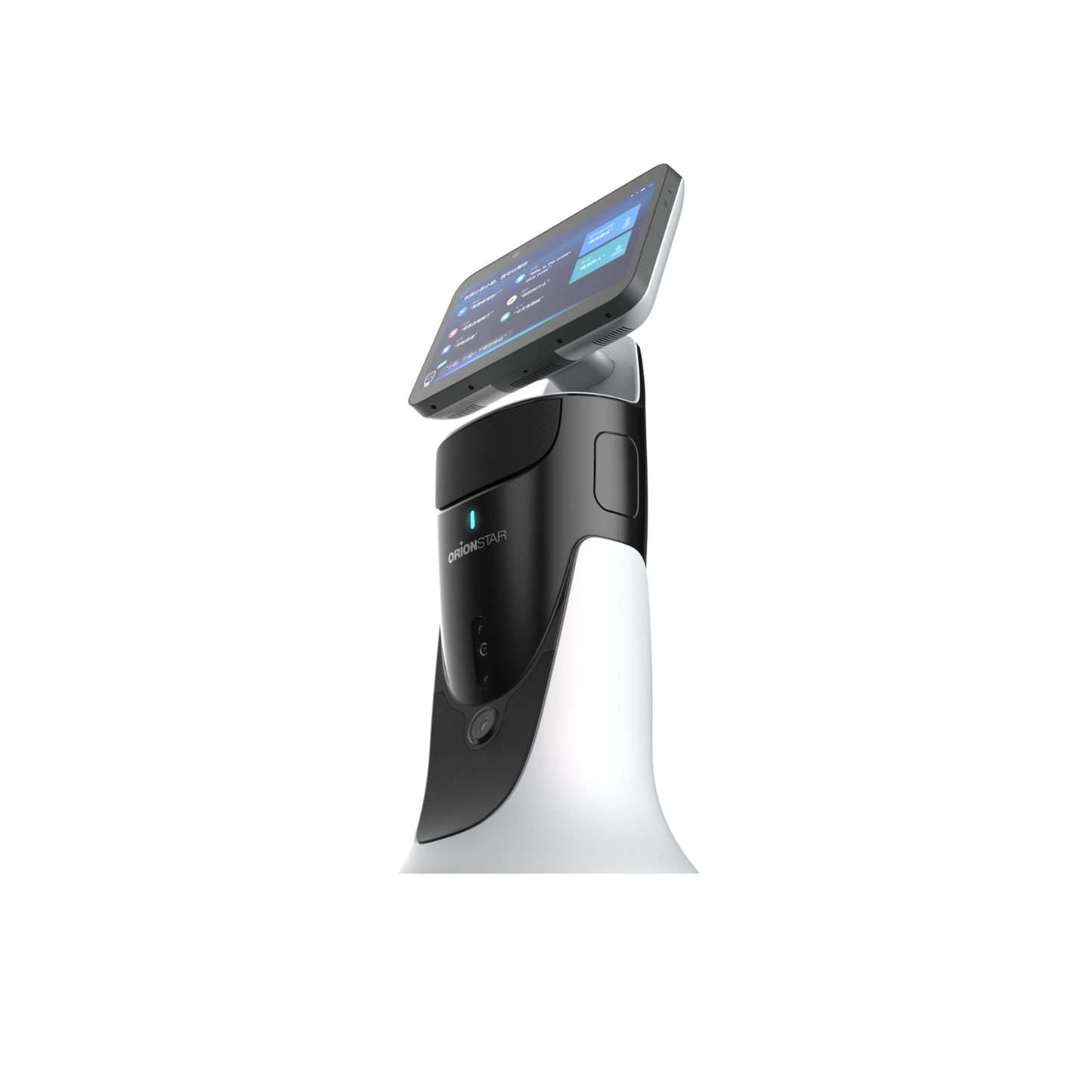
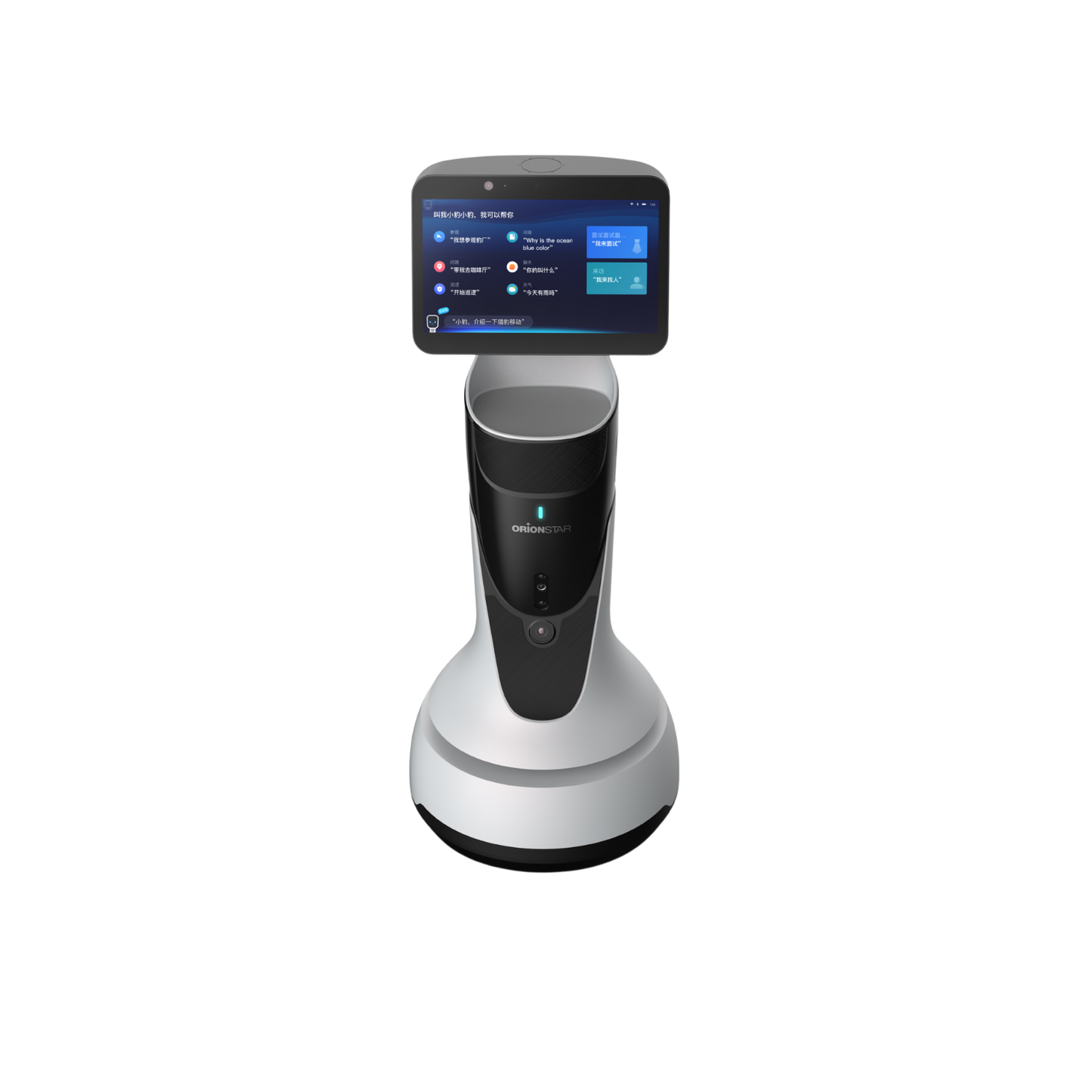
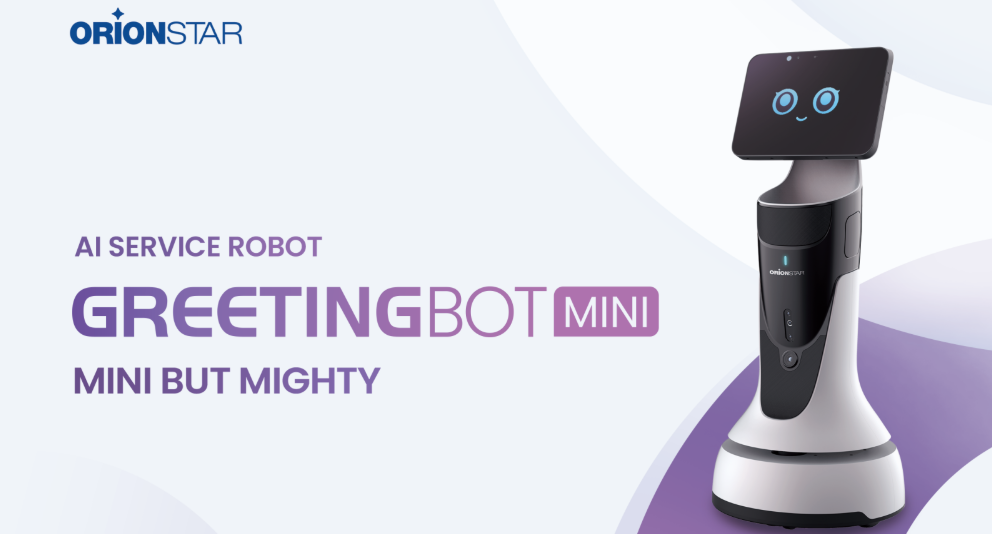
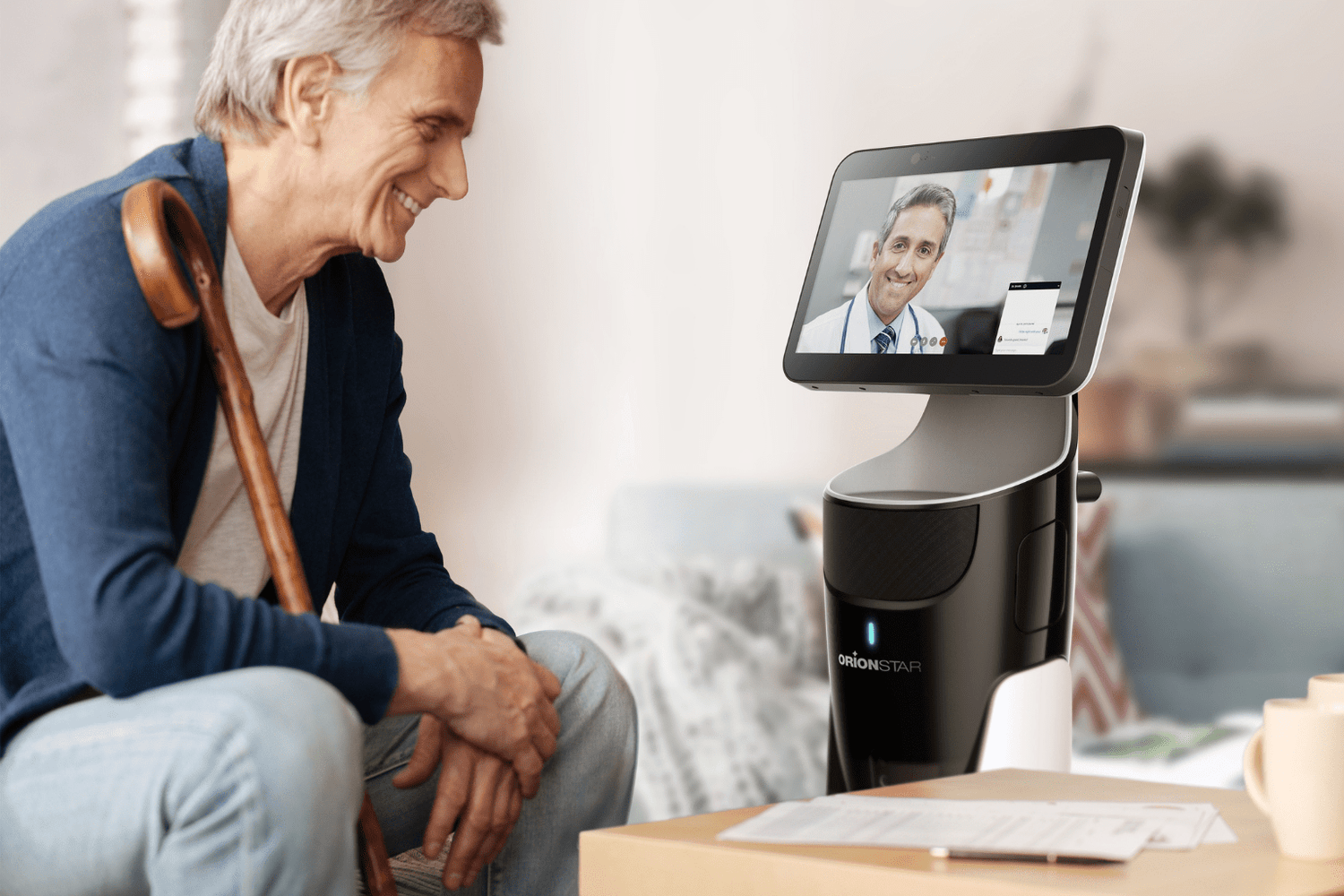
The Orionstar GreetingBot Mini is a compact AI service robot for businesses looking to modernize their reception, customer engagement, visitor guidance, and digital information services. It was developed for professional indoor areas where guests, customers, patients, residents, or visitors require quick orientation and basic information. Thanks to its compact design, the GreetingBot Mini is particularly suitable for smaller reception areas, hotels, restaurants, care facilities, hospitals, retail stores, shopping malls, exhibitions, showrooms, museums, trade fairs, and event spaces.
The focus is not on replacing personal support, but on targeted relief from recurring tasks. The robot can greet visitors, display information, start conversations, guide people to defined destinations, and play promotional or notification messages on its screen. In this way, the GreetingBot Mini combines service, orientation, and marketing into one system. OrionStar describes it as an AI service robot for greeting and guidance; according to the manufacturer, it supports over 30 languages and is specially designed for reception scenarios involving speech and screen interaction.
Why the GreetingBot Mini is impressive at reception
Many companies face similar challenges in their reception area: visitors do not immediately know where to go, employees frequently answer the same questions, and wait times arise during peak hours. At the same time, the first point of contact should appear professional, modern, and friendly. This is exactly where the Orionstar GreetingBot Mini comes in. It can standardize recurring greeting, information, and orientation tasks, thereby taking the pressure off reception or service teams.
The GreetingBot Mini is particularly useful when the same questions are asked frequently: Where is the reception? Where can I find the conference room? Where is the waiting area? What promotion is currently running? When does the event start? Where is a specific exhibition area located? Such information can be provided via voice, display, or defined guidance scenarios. This creates a consistent first contact without employees having to manually handle every standard situation.
Especially compared to larger reception robots, the Mini is attractive for areas with limited space. Its chassis is designed for flexible movement in smaller areas; OrionStar specifies a required width of 21.6 inches (55 cm). This makes it suitable for entrance areas, hallways, retail spaces, and service zones where a larger robot would be too intrusive or space-consuming.
Compact design for small to medium-sized indoor areas
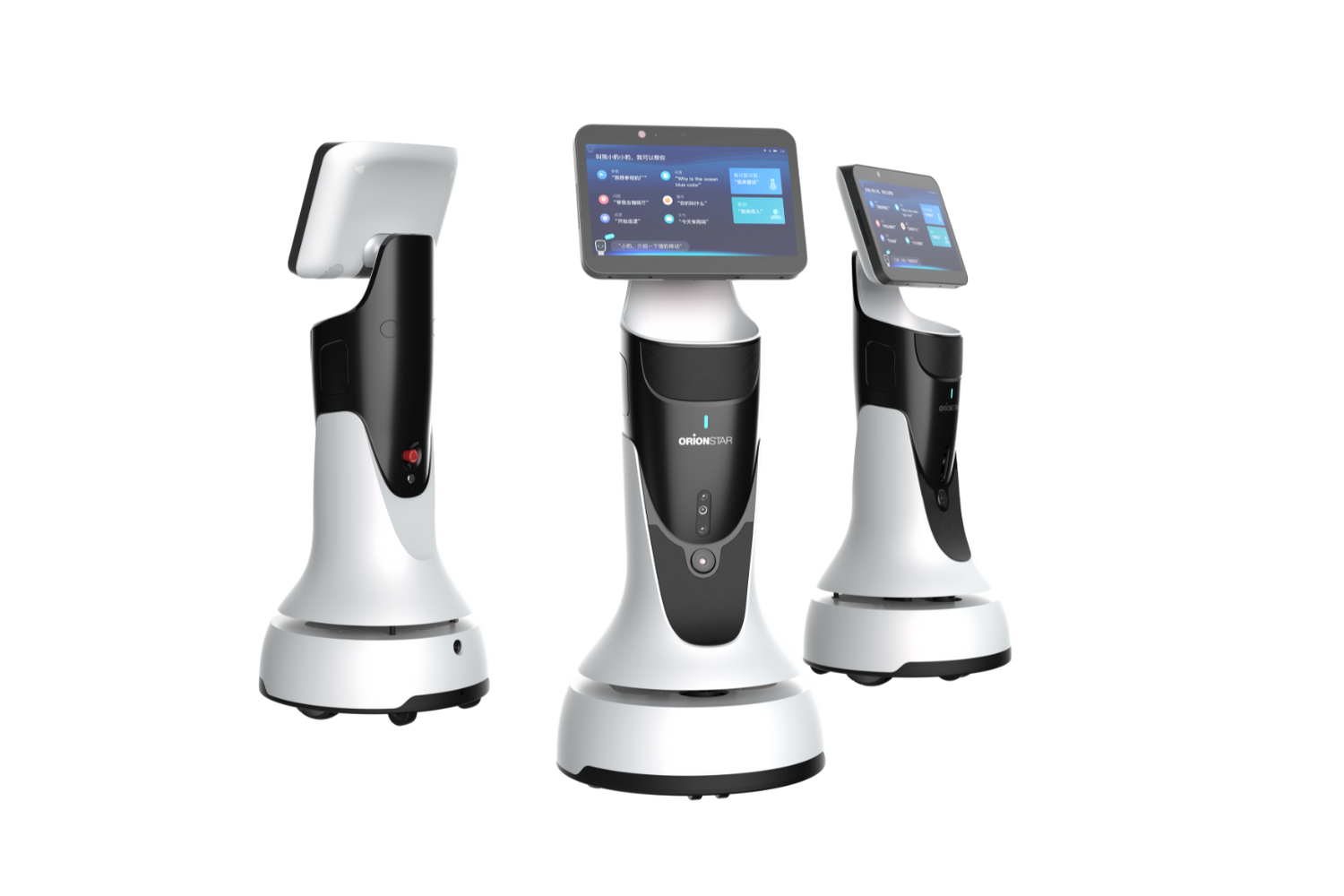
According to the manufacturer, the GreetingBot Mini measures 410 × 410 × 1000 mm and weighs 21 kg. This makes it significantly more compact than many larger reception or service robots and easier to integrate into existing indoor environments. The compact design is an important SEO and sales angle, because many potential customers are not looking for a large robot for a sprawling lobby, but a flexible solution for real-world everyday areas: reception, hotel lobby, medical practice, shop entrance, trade fair aisle, showroom, or care facility.
In practice, this means: The Mini can be used where visibility and interaction are desired, but space is limited. In a hotel, it can greet guests in the entrance area and point out services. In retail, it can promote promotions or product areas. In a care facility, it can support general orientation. At a trade fair, it can engage visitors, display information, or lead them to a booth area.
Despite its compact size, the area should be checked in advance. Flooring, bottlenecks, foot traffic, lighting conditions, network conditions, and defined target points influence how well a service robot functions in everyday life. Professional installation and instruction are therefore crucial.
Interaction via voice, display, camera, and microphone array
A key advantage of the Orionstar GreetingBot Mini is the combination of voice, image, display, and movement. According to the manufacturer, the robot features a 6-microphone array with 360° sound source localization. This allows it to detect the direction of a speaker and focus the interaction more on the person. OrionStar also mentions voice recognition accuracy of more than 97% even in noisy environments with 75 dB; this should be understood as a manufacturer value rather than a general guarantee for every environment.
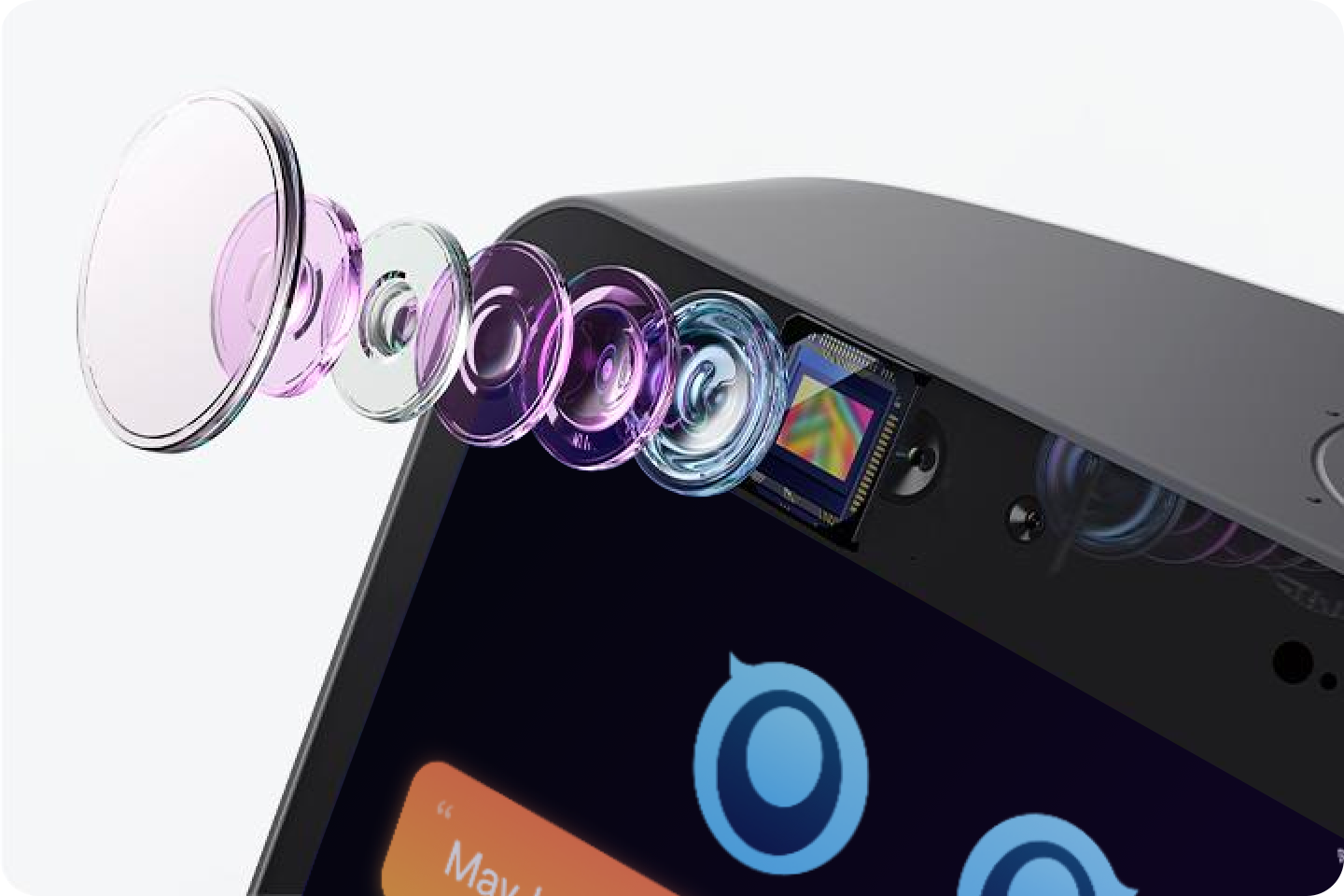
The 14-inch display with FHD resolution can show information, greeting texts, advertising, notifications, menus, directions, or promotional content. It is complemented by a 13-MP HD camera, which supports photo and video calls according to the specifications. This turns the GreetingBot Mini into an interactive contact point that can do more than a static display at the entrance.
It is important to have the right expectations: The robot should not be used as an uncontrolled source of information. Especially in sensitive industries such as healthcare, care, administration, or corporate internal areas, content must be clearly defined, checked, and limited. When configured correctly, however, the GreetingBot Mini can answer recurring questions, guide visitors, and provide information in a uniform manner.
Greeting, promotion, and customer engagement
OrionStar describes an advertising or promotion mode for the GreetingBot Mini. The robot can greet from a fixed location or move around to approach customers. When people approach, it can display advertisements and start a conversation through voice interaction.
This is particularly interesting for the retail sector. The GreetingBot Mini can draw attention to promotions, new products, consultation areas, services, or seasonal campaigns. In shopping malls, it can serve as a mobile orientation point. In restaurants or hotels, it can make offers, opening hours, services, or events visible. At trade fairs, it can actively draw visitors' attention to the booth and present initial information.
The advantage lies in the combination of movement, sound, display, and interaction. A classic sign is easily overlooked. A static display stands at a fixed point. The GreetingBot Mini, on the other hand, can stand out, actively address visitors, and place information where attention is created. Sales or lead increases should not be promised as a blanket statement; however, it is realistic that the robot can improve visibility, interaction, and orientation in a space.
Visitor guidance and orientation in indoor areas
In addition to greeting, guidance is a key area of application. OrionStar describes the GreetingBot Mini as small, easy to navigate, and designed to lead customers to target positions. In doing so, it can avoid obstacles and accompany visitors with background music.
In practice, this function can be used in many industries. In office buildings, the robot can lead visitors to meeting rooms. In hotels, it can point out breakfast areas, conference rooms, or service points. In care facilities or hospitals, it can support general orientation. In museums and exhibitions, it can guide visitors through defined areas. At trade fairs, it can lead people to product zones, demonstration areas, or contacts.
Again, the following applies: navigation works best when target points, paths, and the environment are set up properly. The GreetingBot Mini is not a replacement for security or specialist personnel, but a digital assistant for structured orientation in suitable indoor areas.
Navigation, chassis, and multi-robot operation
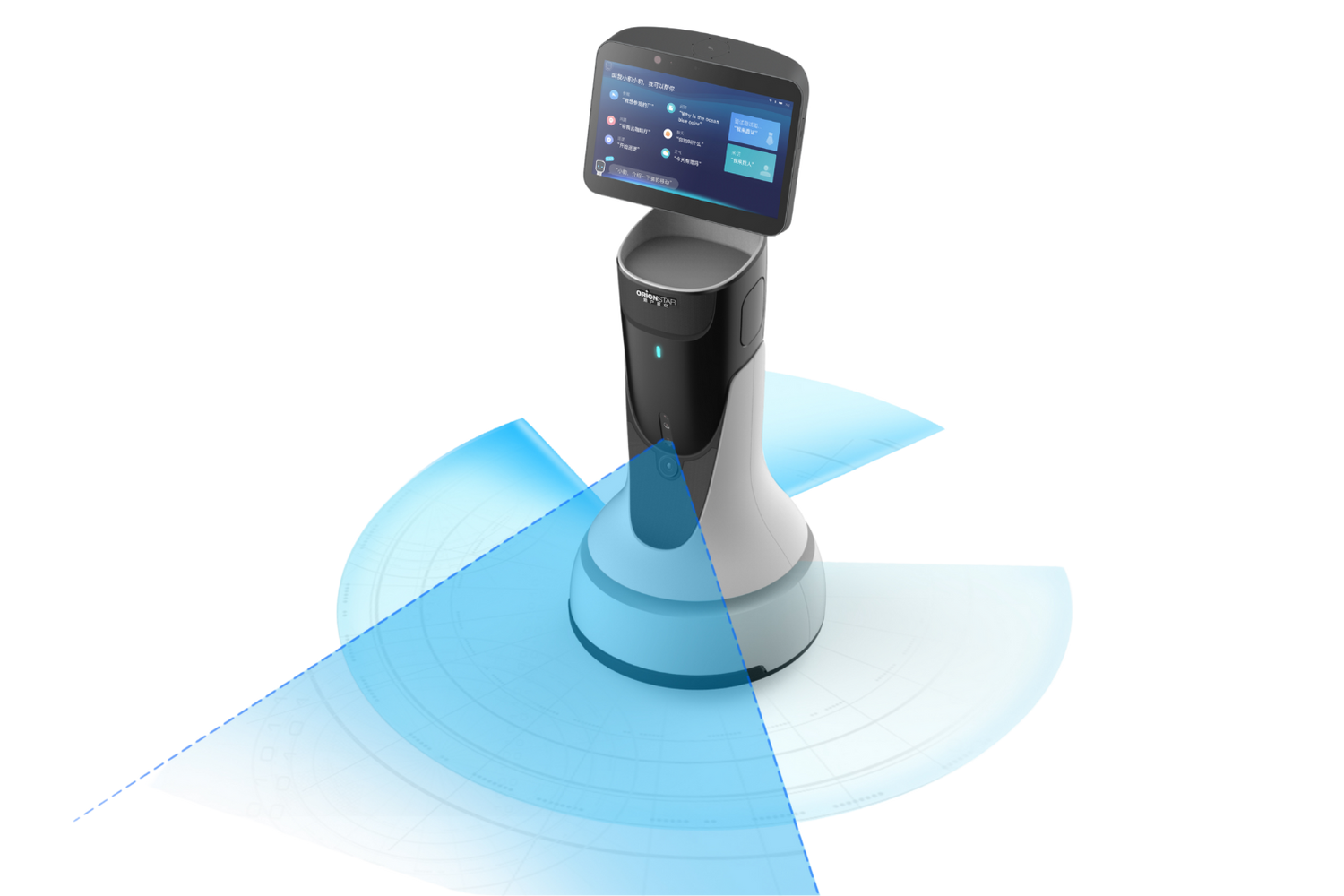
According to OrionStar, the GreetingBot Mini uses a mobile chassis with a combination of LiDAR and a depth camera for precise route navigation and intelligent close-tracking functions. This technical foundation is important because the robot should not just stand at one point, but move around in set-up areas.
Multi-robot cooperation is also interesting. OrionStar describes that multiple GreetingBot Minis can coordinate via intelligent prioritization when paths cross in order to avoid collisions. This can be relevant for larger projects, such as in exhibitions, shopping malls, trade fair environments, or large service areas. For the PDP, however, this point should be phrased carefully: multi-robot operation is a project-specific scenario and should be planned, tested, and set up properly in advance.
Audio, sound, and clarity
According to the manufacturer, the GreetingBot Mini features a 30W audio system with 5 separate sound modules and Harman Kardon sound effects. For reception and promotion scenarios, this is a relevant advantage because speech must not only be recognized but also output in an understandable way. Especially in environments with public traffic, background music, or trade fair noise, clear audio output is crucial.
In practice, the robot can output greetings, notifications, product information, directions, or short presentations. Especially in retail, event, and exhibition environments, the combination of sound, display, and movement can generate attention. However, volume and content should always be adjusted to the location so that the robot is perceived as helpful rather than annoying.
Areas of application: hotel, retail, care, health, gastronomy, and trade fair
Hotel and reception
In hotels, the GreetingBot Mini can greet guests, display information about check-in, breakfast, conference rooms, or services, and provide general orientation. Its compact design is an advantage, especially in smaller lobbies.
Retail and shopping center
In retail, the Mini can be used as a marketing robot with a display. It can draw customers' attention to promotions, product areas, services, or new products, thus serving as an additional digital touchpoint on the floor.
Care and health
In care facilities, doctor's offices, or hospitals, the robot can provide general information and orientation. It is important to draw a clear line: it should not provide medical advice, diagnoses, or sensitive information, but should support reception, wayfinding, and general service communication.
Gastronomy and restaurant
In restaurants or cafes, the GreetingBot Mini can greet guests, point out daily specials, assist with waiting situations, or provide orientation. It is more of a reception and information robot than a classic delivery robot.
Trade fair, exhibition, and museum
At trade fairs, in exhibitions, or museums, the Mini can engage visitors, present content, explain paths, and lead to defined areas. Especially here, the combination of attention, display, speech, and movement is particularly valuable.
Profitability and ROI in operation
The profitability of the Orionstar GreetingBot Mini does not come from a single function, but from the combination of several effects: relief from recurring questions, better orientation, visible digital communication, marketing impulses, and a modern first contact. The Mini is particularly useful where many visitors require the same information or where companies want to improve attention and orientation in a limited space.
For evaluation, companies should check how often visitor questions arise, how heavily the reception is burdened, which languages are needed, which content is communicated regularly, and whether the robot can also be used for promotions or events. The more application scenarios there are, the better the business case can be justified.
Terra-Robotics offers the GreetingBot Mini as a purchase and leasing solution. The PDP mentions a purchase price of €10,000, leasing from €6.70 per day, as well as implementation consulting, technical support, staff training, and optional maintenance contracts.
Service, implementation, and introduction with Terra-Robotics
A reception robot only unfolds its full benefits when content, space, and processes fit together properly. Before deployment, it should be defined which tasks the GreetingBot Mini should take over: greeting, FAQ, promotion, wayfinding, video calls, event information, or visitor communication. After that, target points, content, routines, display materials, and operating processes must be set up.
According to the PDP, Terra-Robotics provides support with implementation consulting, technical support, staff training, and initial installation. This is particularly important because successful robotics projects do not consist of hardware alone. The keys are realistic application scenarios, good content, trained teams, and clear day-to-day operations.
Conclusion: compact reception robot for modern visitor communication
The Orionstar GreetingBot Mini is a strong solution for companies looking for a compact, interactive, and attention-grabbing reception robot. Its strengths lie in the combination of greeting, voice interaction, 14-inch FHD display, 13-MP camera, 6-microphone array, powerful audio system, compact design, and visitor guidance in set-up indoor areas.
The Mini is particularly suitable for hotels, restaurants, retail, trade fairs, exhibitions, museums, care facilities, healthcare areas, and smaller reception zones. It does not replace personal consultation, but can relieve teams of recurring information and orientation tasks. For companies that want to make their reception more digital, visible, and efficient, the Orionstar GreetingBot Mini is a professional entry into AI-supported service robotics.