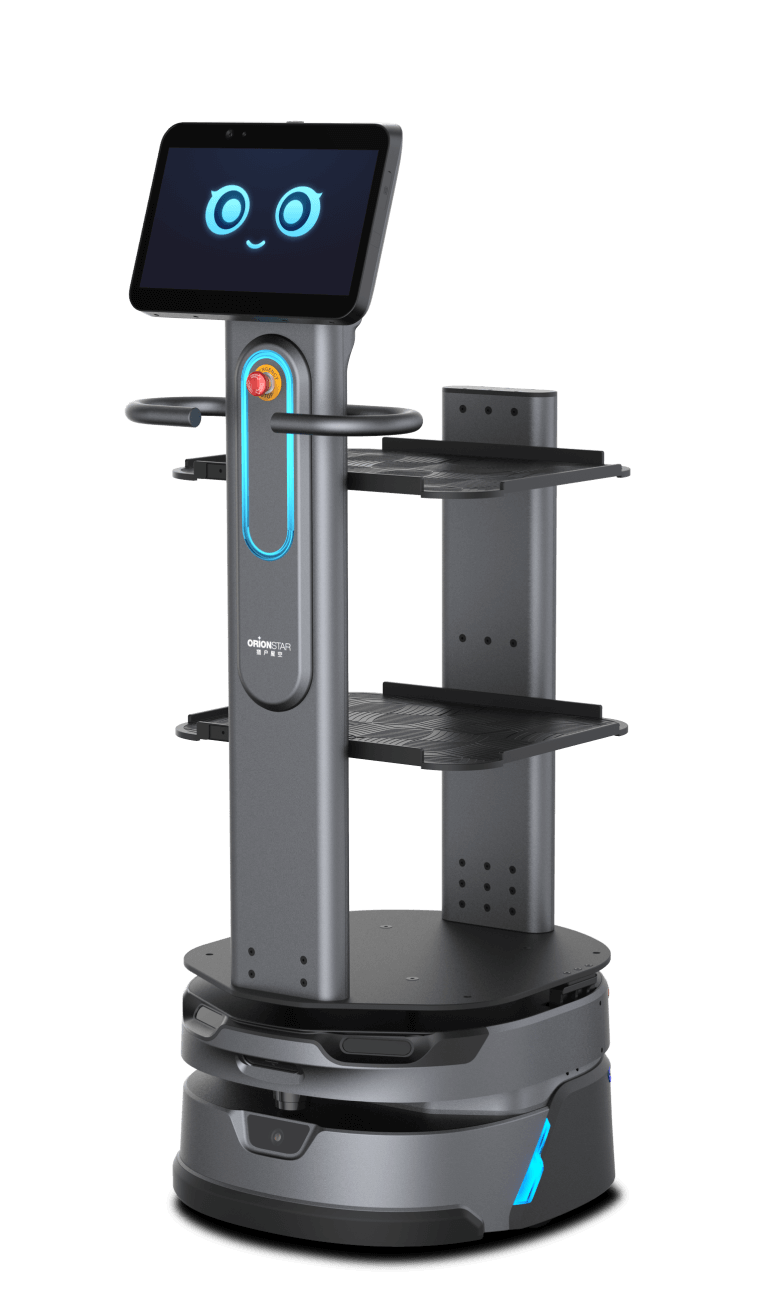
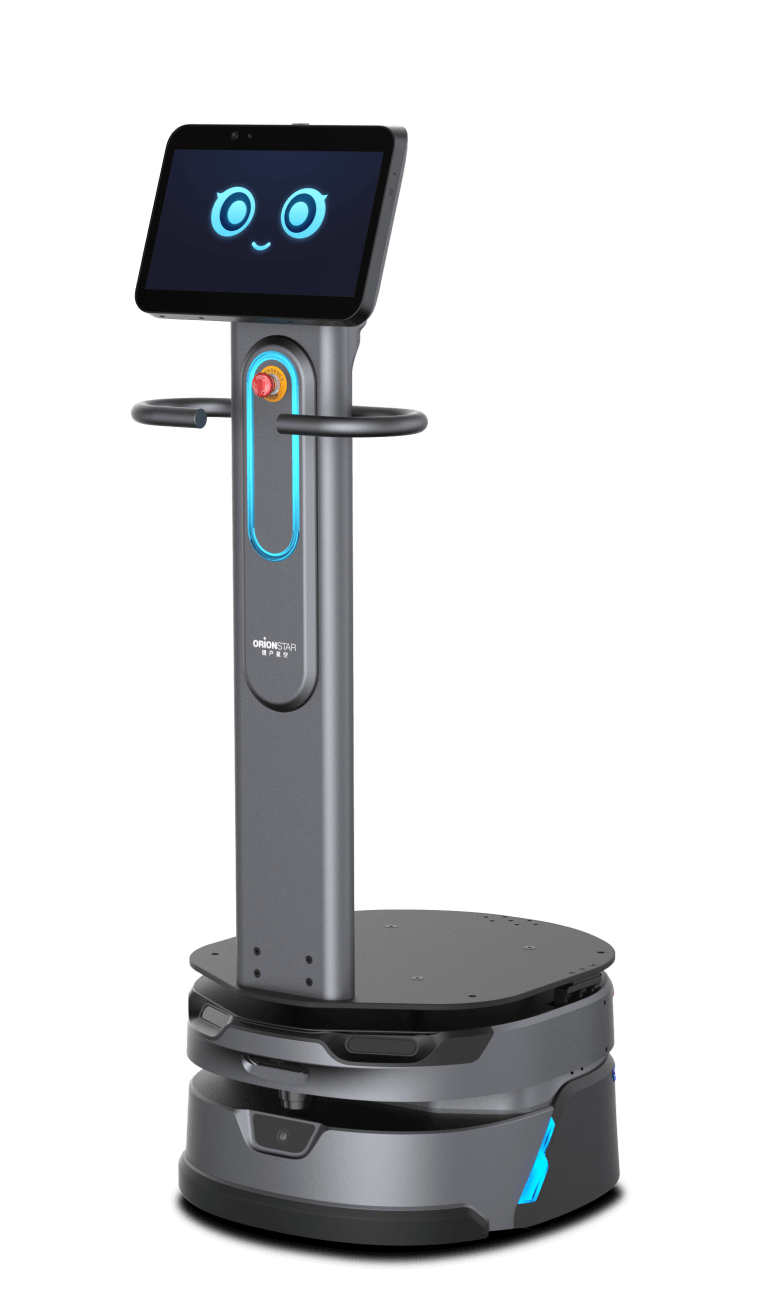
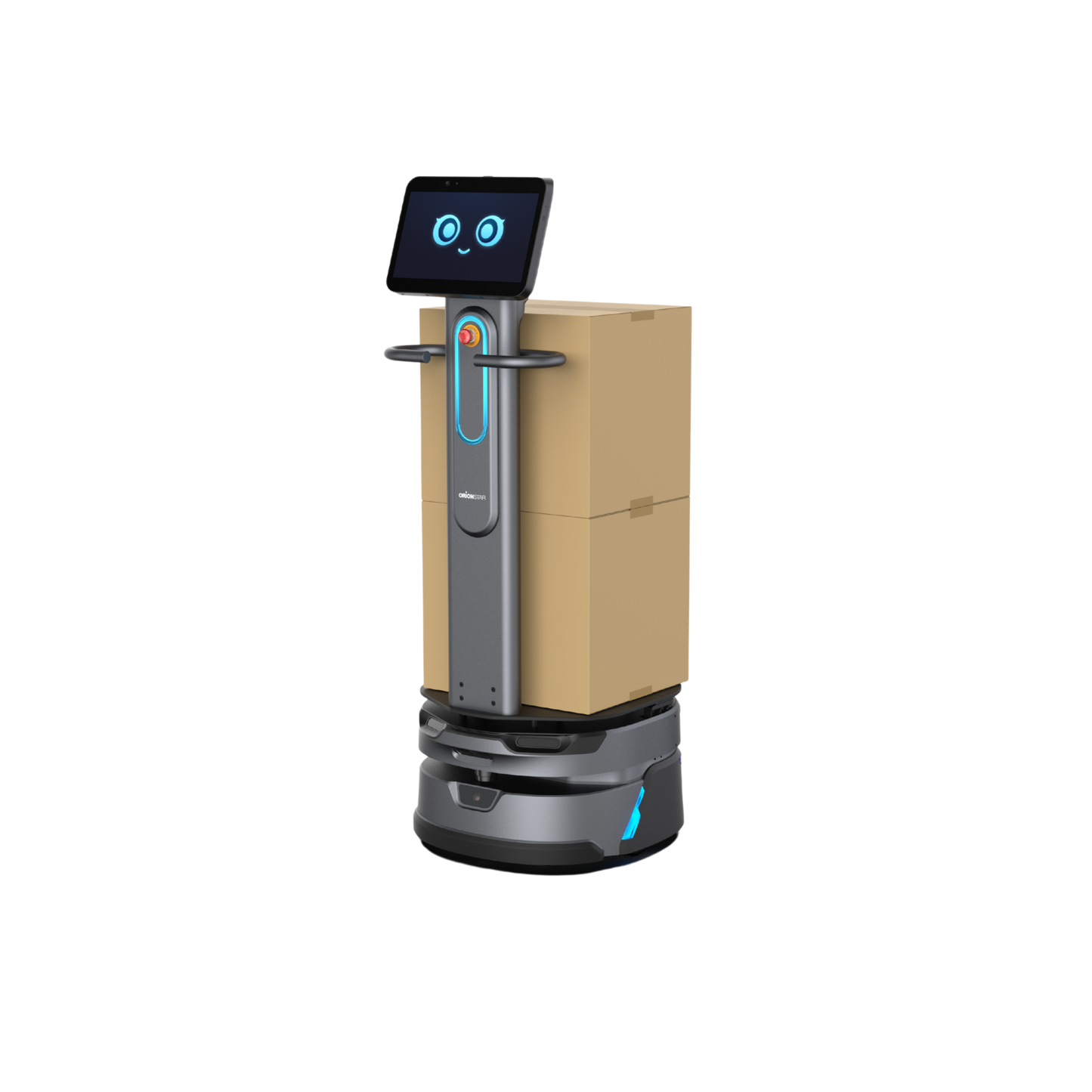
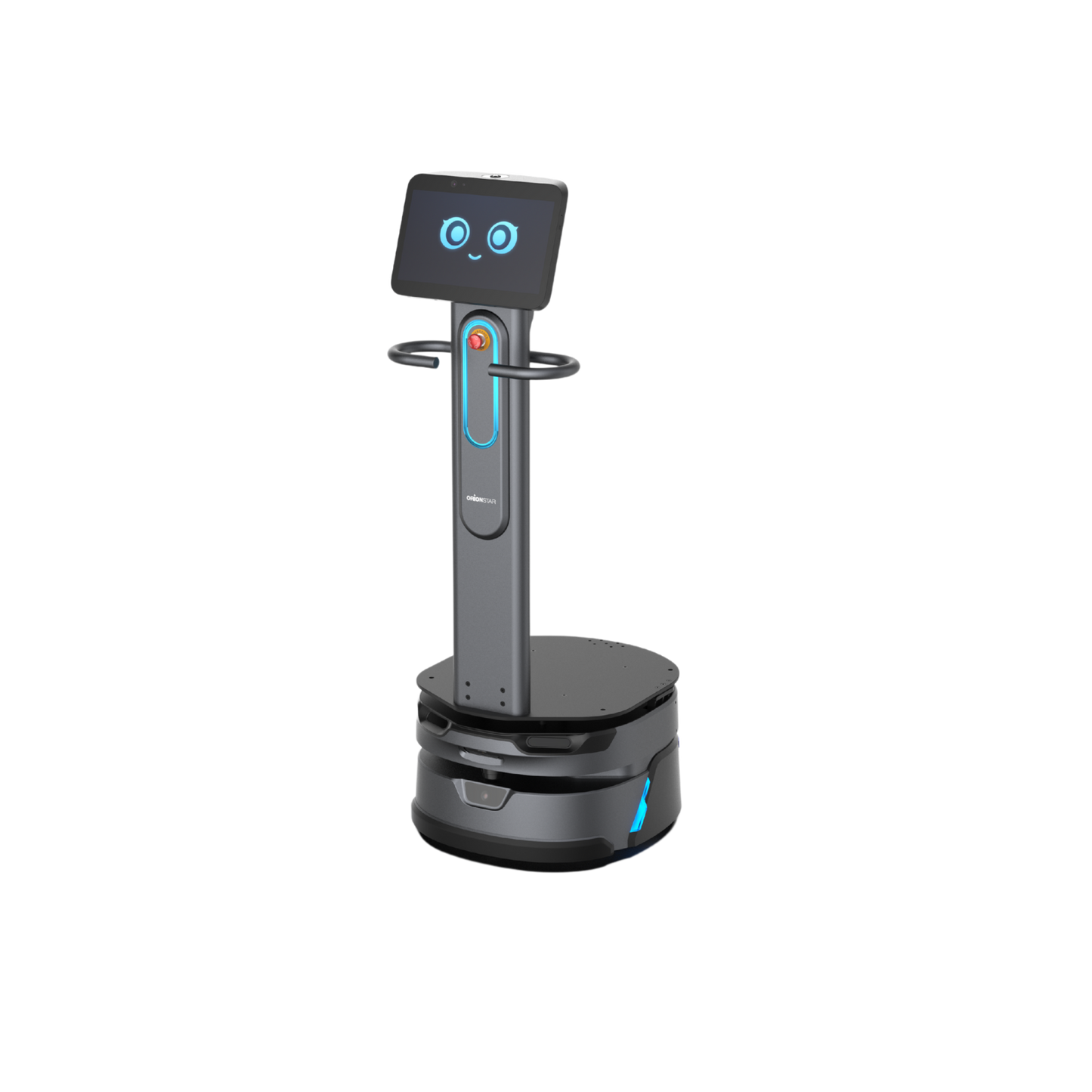
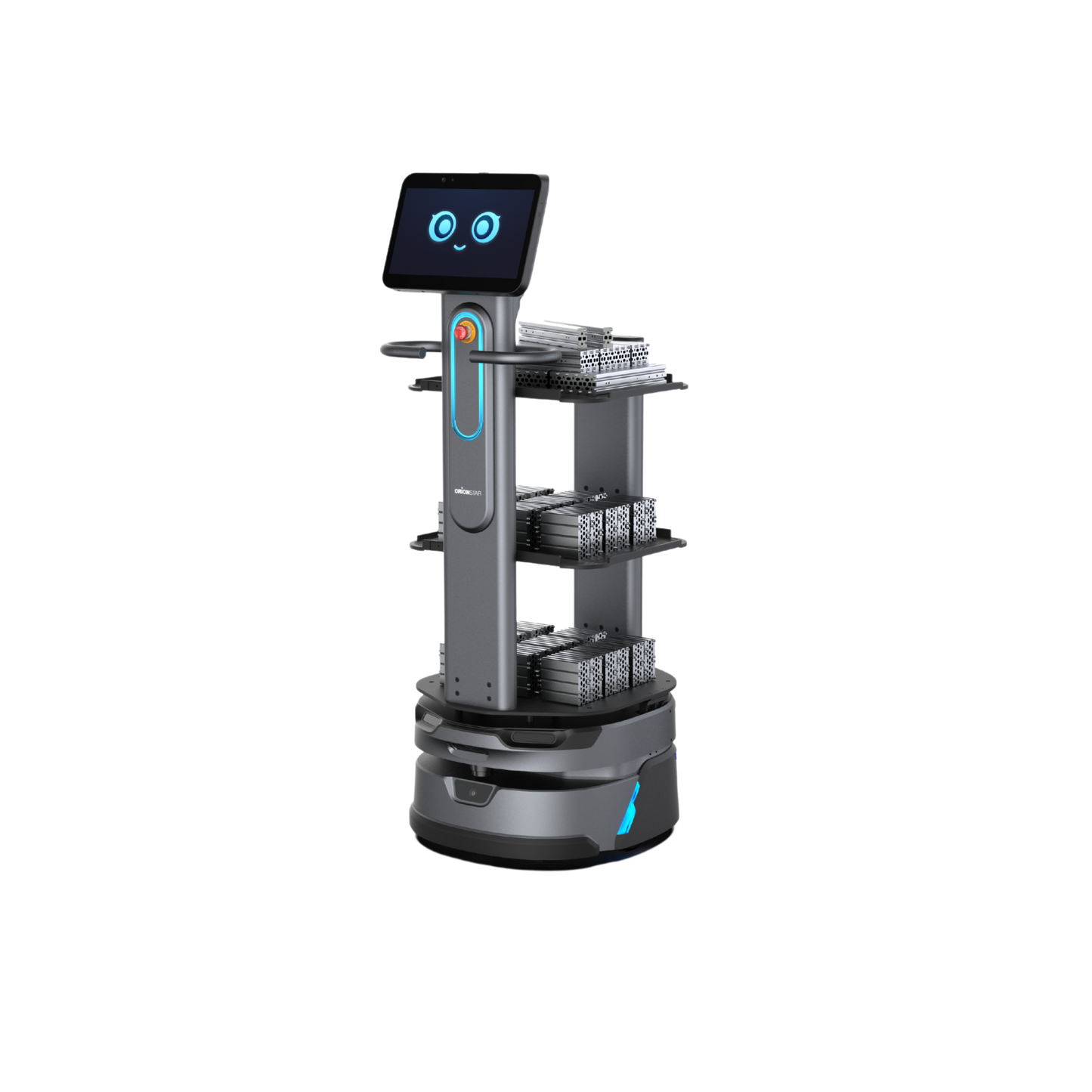
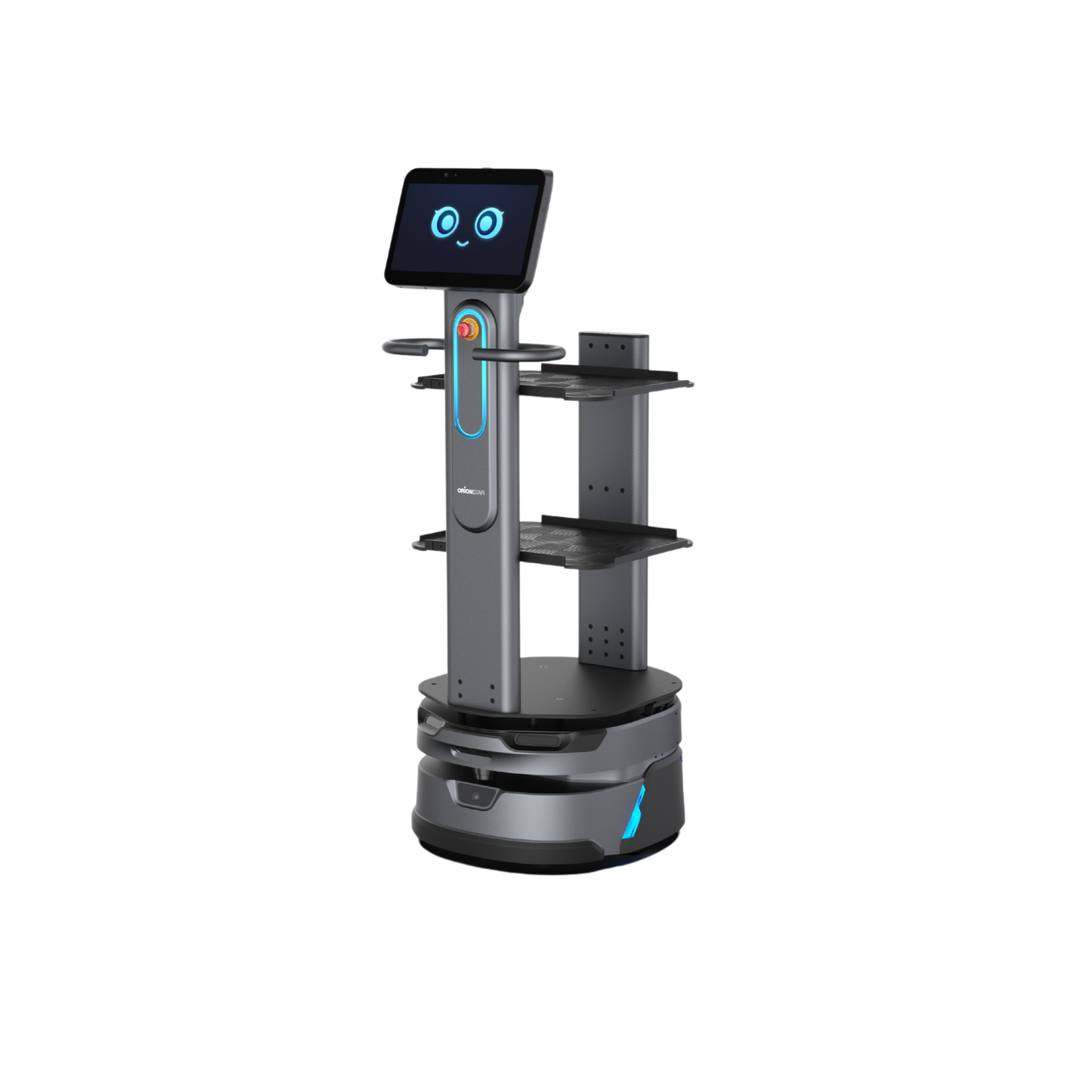
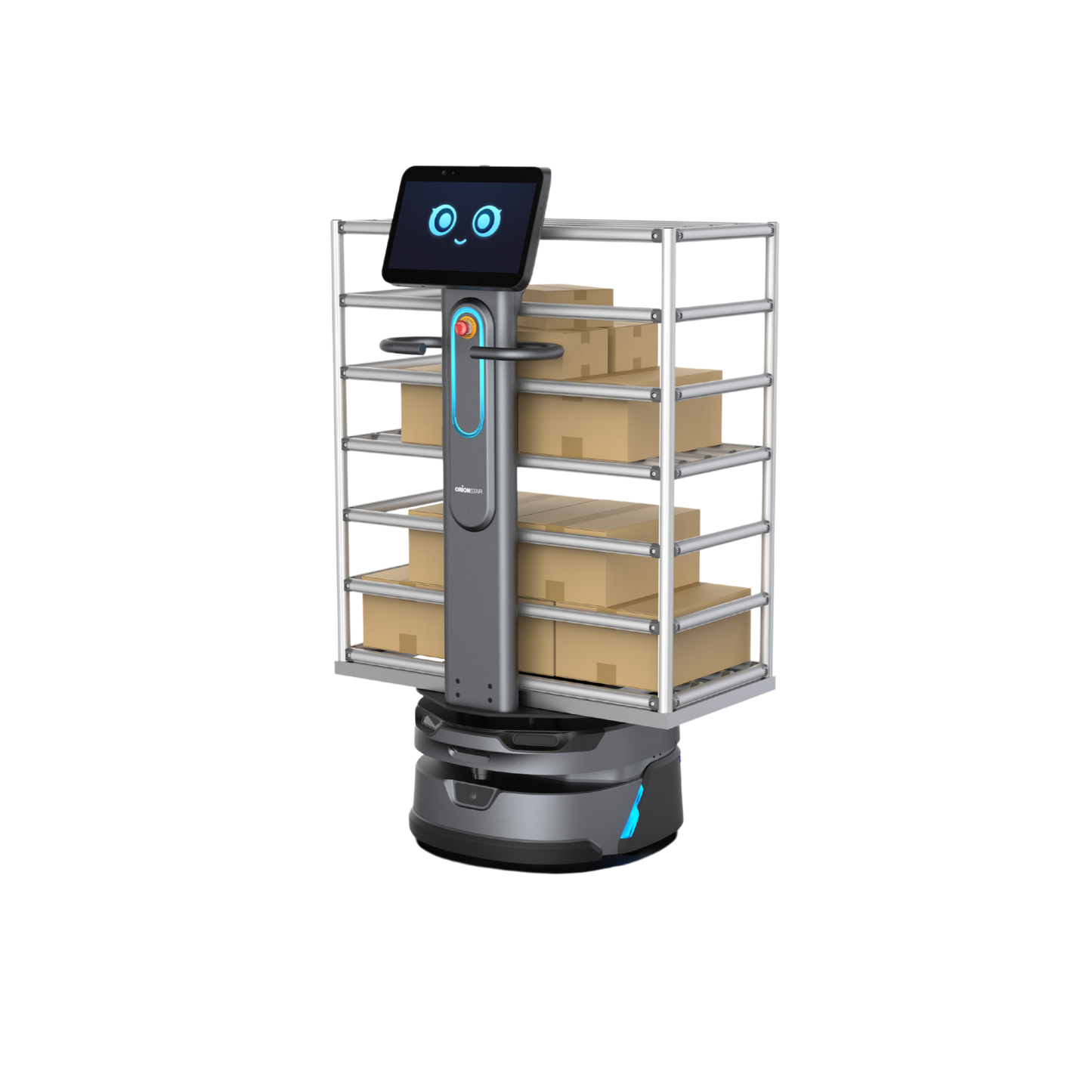
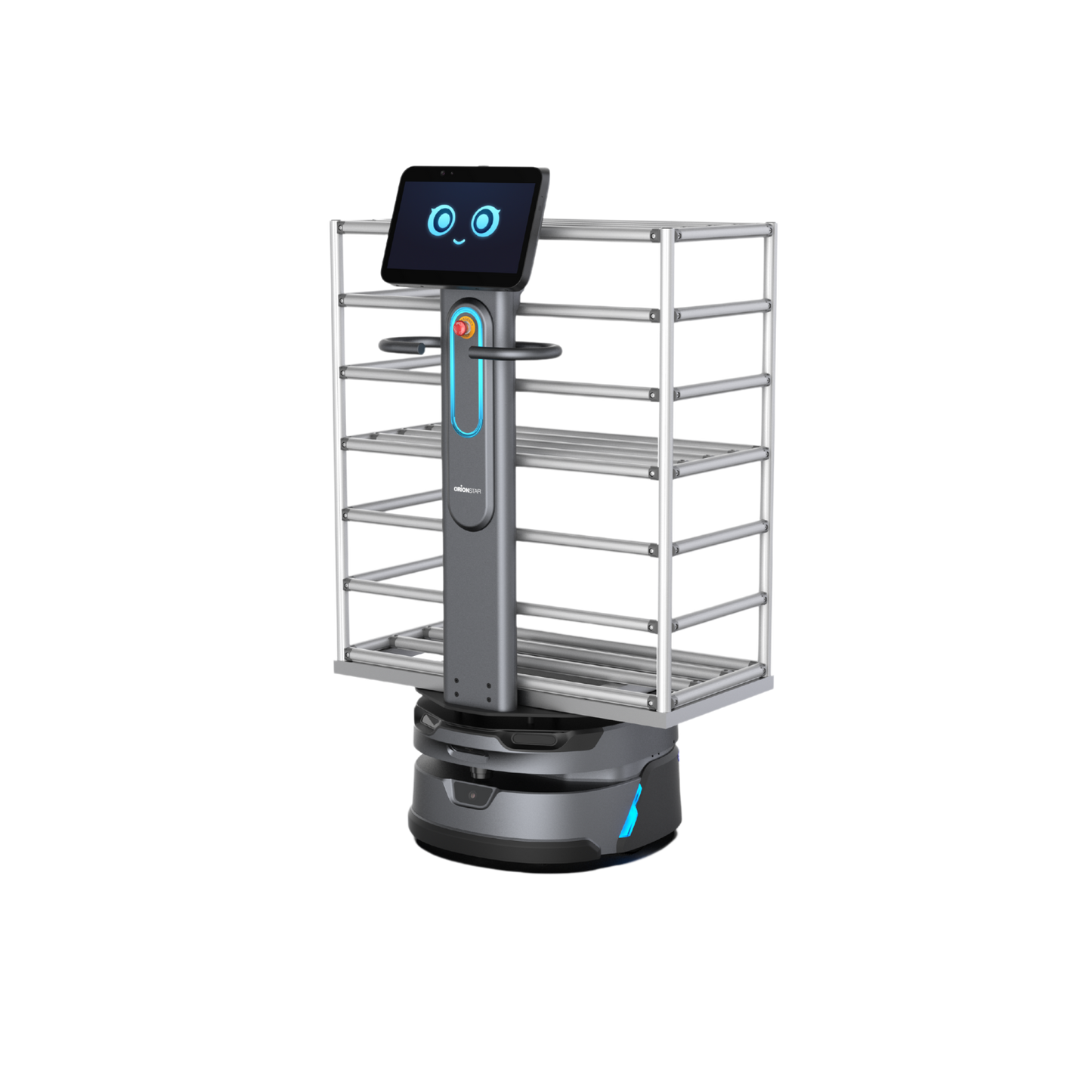
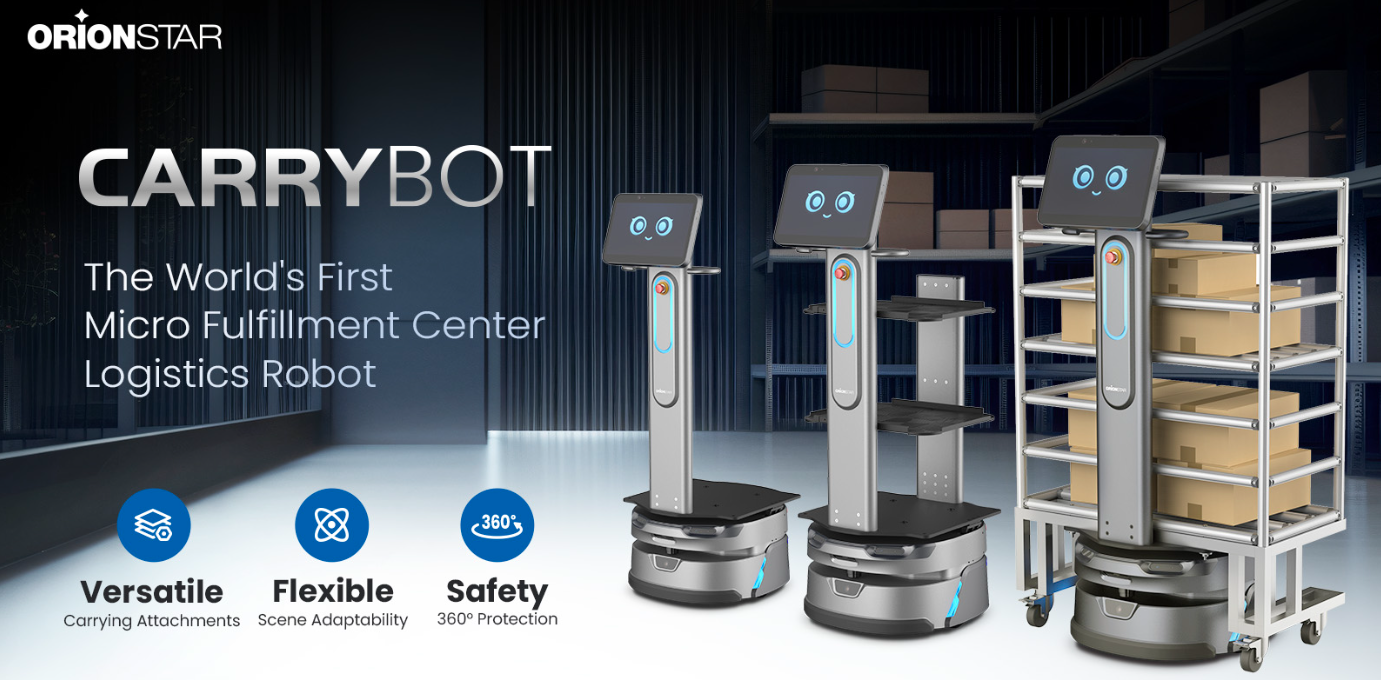
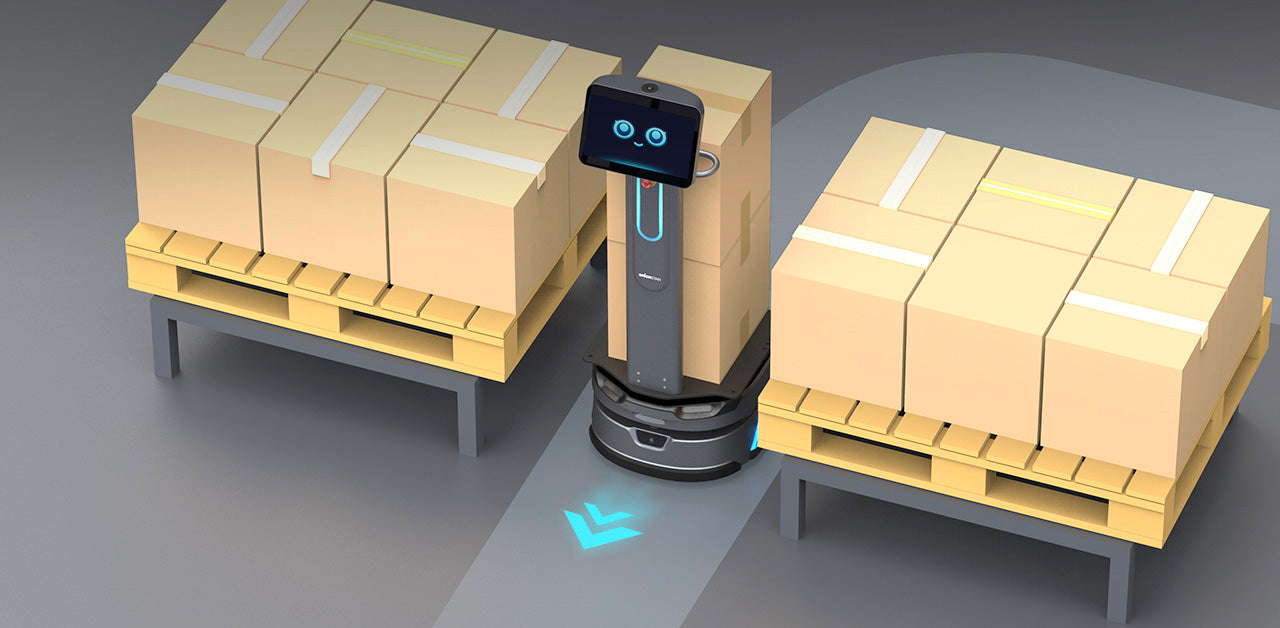
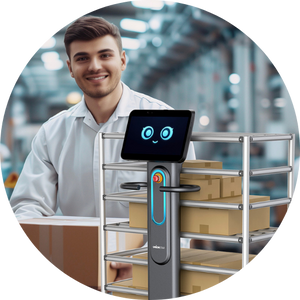
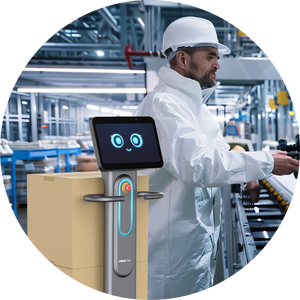
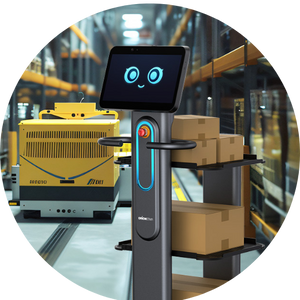
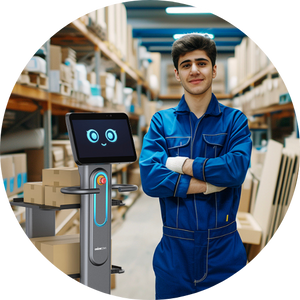
The Orionstar CarryBot 2 delivery robot is a professional autonomous mobile robot for companies looking to make internal transport processes more efficient, predictable, and ergonomic. It has been developed for use in warehouses, production environments, logistics centers, micro-fulfillment centers, shipping areas, picking zones, and industrial indoor spaces. There, it supports recurring material flows by transporting goods, components, containers, small parts, or work materials between defined points.
Unlike classic service robots for gastronomy or hospitality, the CarryBot 2 is clearly designed for intralogistics and internal material movement. It combines autonomous navigation, high transport capacity, multiple tray levels, intelligent routing, and optional fleet logic in one system. This makes it particularly suitable for companies that want to reduce manual walking distances, structure picking processes, and relieve employees of recurring transport tasks.
Especially in storage, production, and shipping, many routes are covered every day that are necessary but do not add value: parts must be brought from the warehouse to the line, containers moved between areas, picked goods transported to packing stations, or materials driven to quality control. The Orionstar CarryBot 2 addresses exactly this. It takes over defined transport routes and helps make internal processes more uniform, transparent, and scalable.
Why the CarryBot 2 is convincing in intralogistics
In many companies, internal material transport is an underestimated bottleneck. Employees spend a lot of time fetching goods, pushing containers, covering distances between storage and production, or manually bringing parts to transfer points. These activities are often physically demanding, repetitive, and tie up personnel who could be used more productively elsewhere.
The Orionstar CarryBot 2 is designed exactly for such processes. It can take over recurring trips between defined stations and thus help to reduce walking distances. Instead of employees having to transport goods themselves over and over again, they can focus more on picking, assembly, quality inspection, packaging, machine operation, or process control. The robot does not replace the skilled operative, but supports them in routine tasks that can be sensibly automated.
The CarryBot 2 is particularly strong in work environments with clear transfer points. These include picking zones, shelves, production lines, material supply areas, packing stations, outgoing goods departments, return areas, or internal service points. When routes are regular and transport tasks are plannable, the robot can make an important contribution to process stability.
High transport capacity with multiple tray levels
The Orionstar CarryBot 2 offers a typical total load capacity of up to 100 kg, with up to 30 kg provided per tray. This allows the robot to transport several containers, boxes, small parts, or material groups at the same time. The multi-level tray structure is particularly practical for picking, parts supply, and structured internal delivery processes.
In practice, the CarryBot 2 can, for example, pick up goods from several picking stations, approach different target points one after the other, or provide material for several work areas. By dividing items across several levels, articles can be organized better than on a single open platform. This facilitates clear assignment, reduces search times, and supports structured handover processes.
With its dimensions of 650 × 525 × 1377 mm, the robot remains comparatively compact despite its high transport capacity. This is particularly relevant for storage and production areas where aisle widths, shelving systems, workstations, and traffic routes are already fixed. The actual usability should always be checked on a project-specific basis, however, especially in the case of narrow aisles, frequent pedestrian traffic, or changing obstacles.
V-SLAM 2.0, LiDAR, and depth cameras for precise navigation
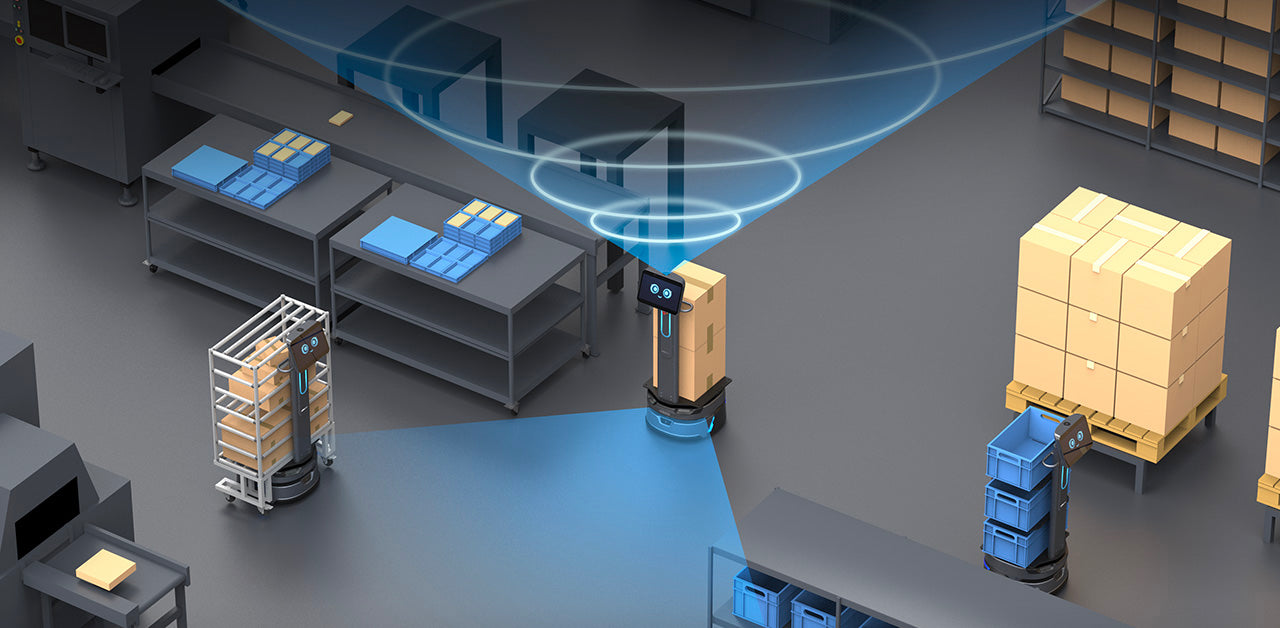
A central strength of the Orionstar CarryBot 2 is its autonomous navigation. The robot uses V-SLAM 2.0, LiDAR, and three depth cameras to orient itself in furnished indoor spaces. This combination supports precise positioning, obstacle detection, and flexible route guidance in complex warehouse and production environments.
For intralogistics, this is particularly important. Storage and production areas change frequently: pallets are temporarily in the way, employees move between stations, shelves are adjusted, packaging material blocks passageways, or layouts are changed seasonally. The CarryBot 2 is designed to travel defined routes and perform its tasks stably in such dynamic environments.
The robot can be used in complex indoor areas if the space is suitable for it. This includes appropriate floor conditions, sufficiently wide paths, clear target points, and clean mapping of the environment. The manufacturer specifies a minimum clearance of about 65 cm. For reliable planning, safety distances, encounter situations, turning radii, and intersection points should also be taken into account.
Fast deployment and flexible adaptation to existing processes
An important advantage of the Orionstar CarryBot 2 is its comparatively fast deployment. Thanks to integrated mapping software, the robot can be set up in many scenarios much faster than classic, permanently installed transport systems. This is a relevant factor, especially for companies that want to automate existing processes step by step.
The CarryBot 2 does not require large-scale structural changes if the environment is generally suitable. Instead, maps, routes, stop points, and tasks are set up digitally. This allows the robot to be integrated into existing storage, production, or shipping processes. Layout changes can be accommodated more flexibly than with rigid conveyor systems or fixed transport solutions.
This flexibility is particularly valuable for companies with changing orders, seasonal peaks, multiple storage zones, or changing production layouts. The CarryBot 2 can serve as an entry point into autonomous intralogistics and can later be expanded with additional robots, additional target points, or adapted processes.
Point-to-point delivery and multi-point transport
The CarryBot 2 supports different transport logics. Point-to-point deliveries and multi-point transports are particularly important. In point-to-point delivery, the robot travels from a starting station to a target point, for example from the warehouse to production, from picking to the packing station, or from goods receipt to the sorting zone.
With multi-point deliveries, several stop points can be combined in one route. This is particularly useful if materials are to be distributed to different stations or goods are to be collected at several points. Through defined stops, waiting times, and target areas, the robot can be integrated more strongly into existing workflows.
In picking, the CarryBot 2 can support employees by picking up or providing goods along defined picking zones. In production, it can deliver components to assembly stations. In shipping, it can bring finished packages to the outgoing goods area. In quality control, it can transport goods to inspection areas. This creates a versatile AMR solution for recurring internal material movements.
Multi-robot cooperation for scalable logistics processes
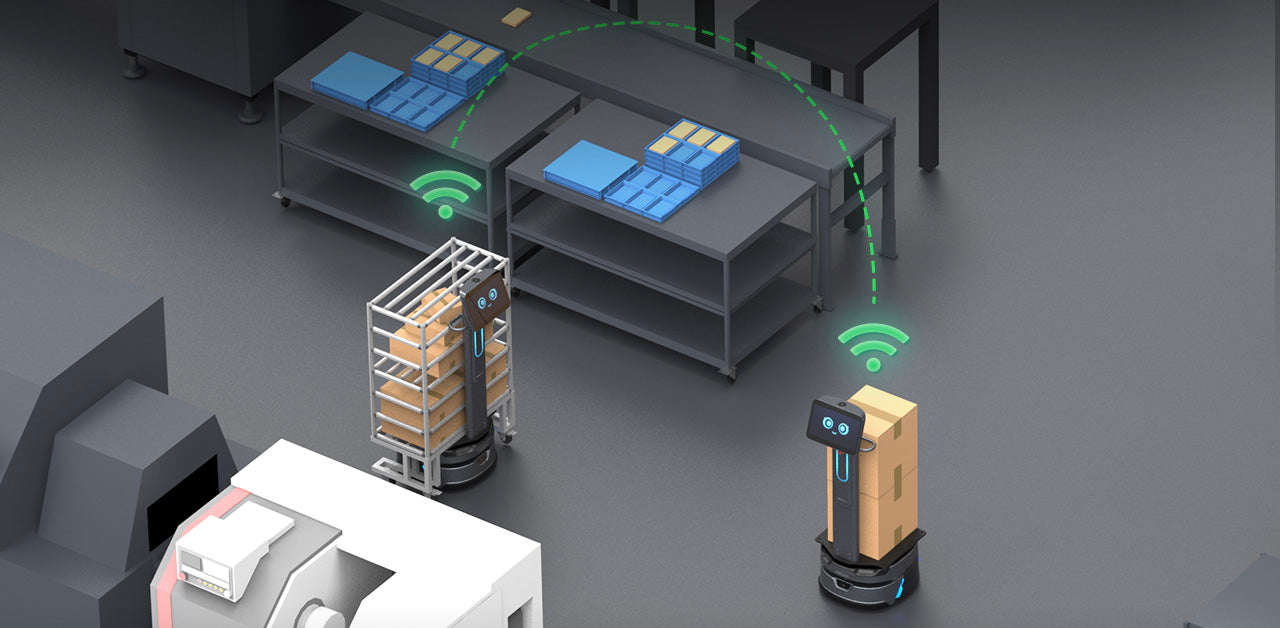
The Orionstar CarryBot 2 can also be used in scenarios where several robots work in parallel. Multi-robot cooperation supports the coordinated operation of several units in the same work area. If robots meet or paths cross, the fleet logic can support prioritized movements and avoidance behavior.
For larger warehouses, micro-fulfillment centers, production halls, or shipping areas, this is an important advantage. A single robot can support a clearly defined process. Several CarryBots, on the other hand, can serve different zones, transfer points, and routes in parallel. This makes the solution more scalable and allows it to grow with increasing requirements.
Nevertheless, multi-robot operation should be carefully planned. Fleet logic, routes, bottlenecks, priorities, charging points, and safety zones must be set up properly. The more complex the scenario, the more important a professional implementation, test runs, and a clear process structure are.
Follow-Me mode and intelligent call solutions
In addition to classic delivery trips, the CarryBot 2 also supports interactive working methods such as Follow-Me functions and intelligent call solutions. This allows the robot not only to follow fixed routes but also to accompany employees more flexibly in certain processes or to travel to a defined location on demand.
The Follow-Me mode can be particularly useful in picking, material supply, or flexible work areas. Employees can focus more on selecting, checking, or processing goods while the robot follows as a mobile transport carrier. This reduces the manual pushing of carts and can offer ergonomic advantages.
The intelligent call solution is relevant when transport needs arise spontaneously. The robot can navigate to a location to pick up goods or offer support via a call button or defined trigger. This turns the CarryBot 2 from a rigid means of transport into a more flexible building block in the operational workflow.
Safety and human-robot collaboration
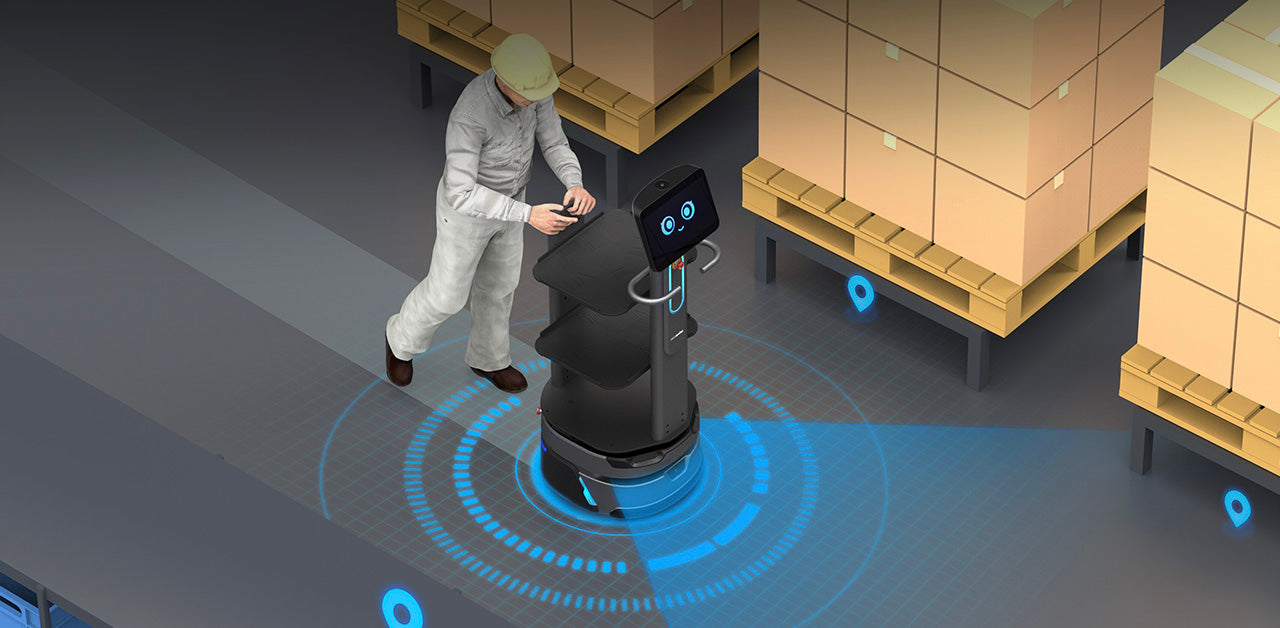
The Orionstar CarryBot 2 is designed for work areas where people and robots share the same space. To this end, it combines several safety functions and sensor levels. LiDAR, depth cameras, and other protective mechanisms support obstacle detection and help the robot to move in a controlled manner through furnished indoor areas.
In warehousing and production, this is particularly important because employees, transport carts, pallets, shelves, machines, and robots can meet there. The CarryBot 2 can detect people and obstacles and adjust its journey accordingly. In addition, operation should be secured through clear traffic rules, defined driving paths, and trained employees.
Safe AMR operation does not arise from technology alone. Process design, area inspection, risk assessment, training, and regular checks are decisive. Before productive use, intersections, bottlenecks, transfer points, emergency processes, and loading areas should be checked. In this way, the robot can be professionally integrated into everyday work.
Battery life, speed, and charging planning
The CarryBot 2 is designed for longer operational windows in professional use. The battery life under test conditions is up to 9 hours with a 100 kg load on suitable ground. The charging time is about 4.5 hours. Depending on the setup, the robot can be charged via an automatic charging station or cable.
The movement speed is in the range of 0.3 to 1.0 m/s, although a conservative speed is recommended for practical operation. The actual driving performance depends on the load, floor, stops, distance, pedestrian traffic, route logic, and charging planning. Therefore, deployment planning should not be based solely on maximum values.
For companies, it is crucial how the robot is integrated into shift models, picking windows, material supply, or shipping peaks. In some companies, one robot is sufficient for fixed routes. In other scenarios, several robots, defined charging windows, or additional charging points may make sense. Proper planning ensures that the CarryBot 2 fits reliably into the operational workflow.
Areas of application: Warehouse, production, shipping, and micro-fulfillment
Warehouse and material transport
In the warehouse, the CarryBot 2 can transport containers, boxes, small parts, or goods between shelves, transfer zones, packing stations, and sorting areas. Especially with recurring routes, it helps to reduce manual walking distances and structure the flow of goods.
Picking and picking zones
In picking zones, the robot can be used as a mobile transport carrier. Employees can pick up items and place them sorted on the tray levels. This makes the picking process more ergonomic and structured, especially with multiple target areas or small to medium-sized items.
Production and assembly supply
In production, the CarryBot 2 can bring components, tools, material containers, or semi-finished goods to assembly stations. This supports continuous material supply and can help to reduce waiting times at workstations.
Shipping and outgoing goods
In shipping, the robot can transport finished packages, containers, or goods from packing stations to the outgoing goods area. Especially with recurring routes between picking, packaging, and shipping, the CarryBot 2 can stabilize processes.
Micro-fulfillment and logistics centers
In micro-fulfillment centers and logistics centers, the CarryBot 2 can connect several zones with each other. It supports flexible, scalable transport processes and can be expanded into a larger AMR fleet with additional robots.
Efficiency and process benefits
The economic efficiency of the Orionstar CarryBot 2 results from the combination of fewer manual walking distances, higher process stability, ergonomic relief, and more predictable material flows. The robot is particularly interesting where many recurring transport tasks occur daily and these can be clearly defined.
For a sound assessment, companies should check how many trips are generated per day, what loads are transported, which routes are traveled particularly frequently, and where waiting times or bottlenecks occur today. Physical strain, search times, material availability, and picking performance should also be considered.
The CarryBot 2 unfolds its benefits especially when used regularly and in a structured manner. Individual spontaneous trips can be helpful, but the greatest effect occurs with firmly integrated processes: material supply, picking, goods transfer, shipping logistics, or internal cycles. The clearer the use case, the better the benefits can be measured and optimized.
Service, implementation, and introduction with Terra-Robotics
An autonomous transport robot only unfolds its benefits when technology, space, and process match. Before introduction, transport routes should be analyzed, target points defined, loads checked, handover rules established, and employees trained. Charging points, safety zones, traffic routes, priorities, and responsibilities should also be clearly regulated before the productive start.
Terra-Robotics provides support with consulting, implementation, technical setup, training, and project planning. This is particularly important because successful intralogistics automation consists of more than just hardware. It is crucial whether the CarryBot 2 fits into the real everyday work life and whether employees can use it easily, safely, and sensibly.
A sensible start is made with a clearly defined use case. For example, the robot can first transport goods between the picking zone and packing station, supply material to an assembly line, or take over recurring routes in the warehouse. After the first missions, routes, stop points, charging cycles, and processes can be further optimized. In this way, a scalable AMR solution for modern intralogistics is created step by step.
Conclusion: CarryBot 2 as a flexible delivery robot for smart material flows
The Orionstar CarryBot 2 delivery robot is a powerful solution for companies that want to automate internal material transports and set up their intralogistics more flexibly. With a total load of up to 100 kg, multiple tray levels, V-SLAM 2.0, LiDAR, three depth cameras, a 14-inch FHD display, multi-robot cooperation, a Follow-Me function, intelligent call solutions, and an automatic charging option, it is particularly suitable for warehouse, production, picking, shipping, and micro-fulfillment applications.
The CarryBot 2 is not a simple transport cart, but an autonomous mobile robot for structured material flows. If planned and introduced correctly, it can reduce walking distances, relieve employees, stabilize material flows, and make processes in warehouse and production more efficient. For companies looking to modernize their internal transports, the Orionstar CarryBot 2 offers a flexible and scalable entry point into autonomous intralogistics.