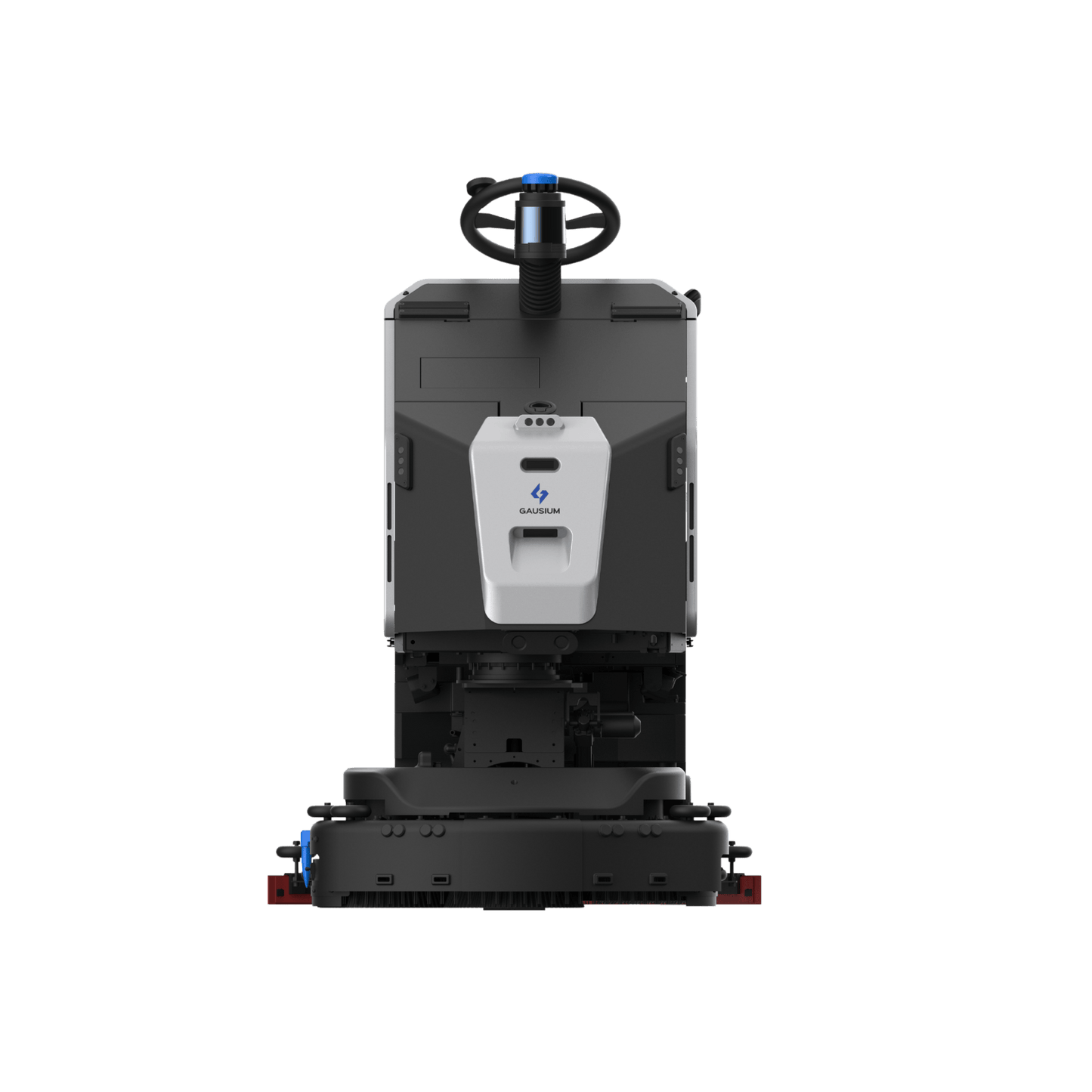
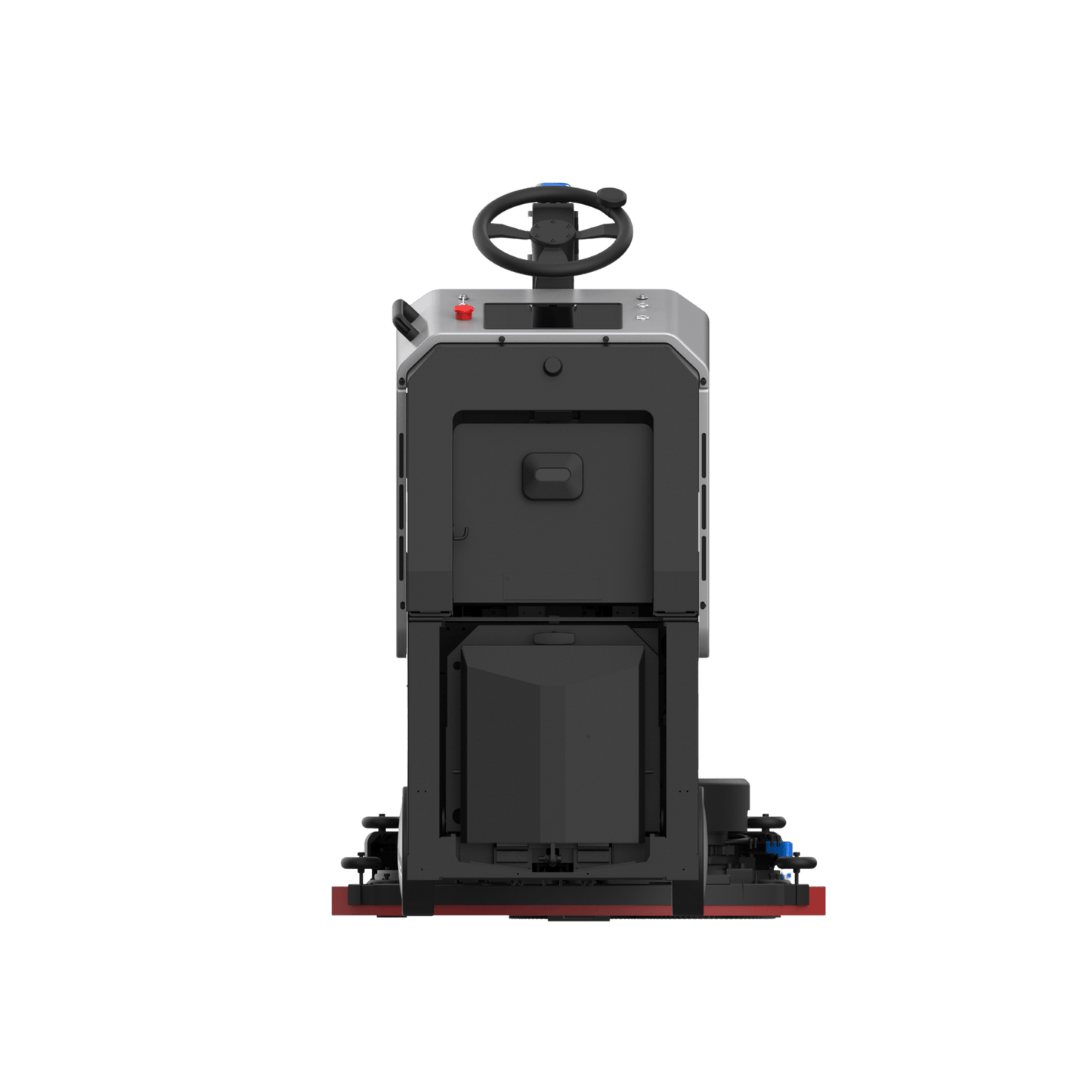
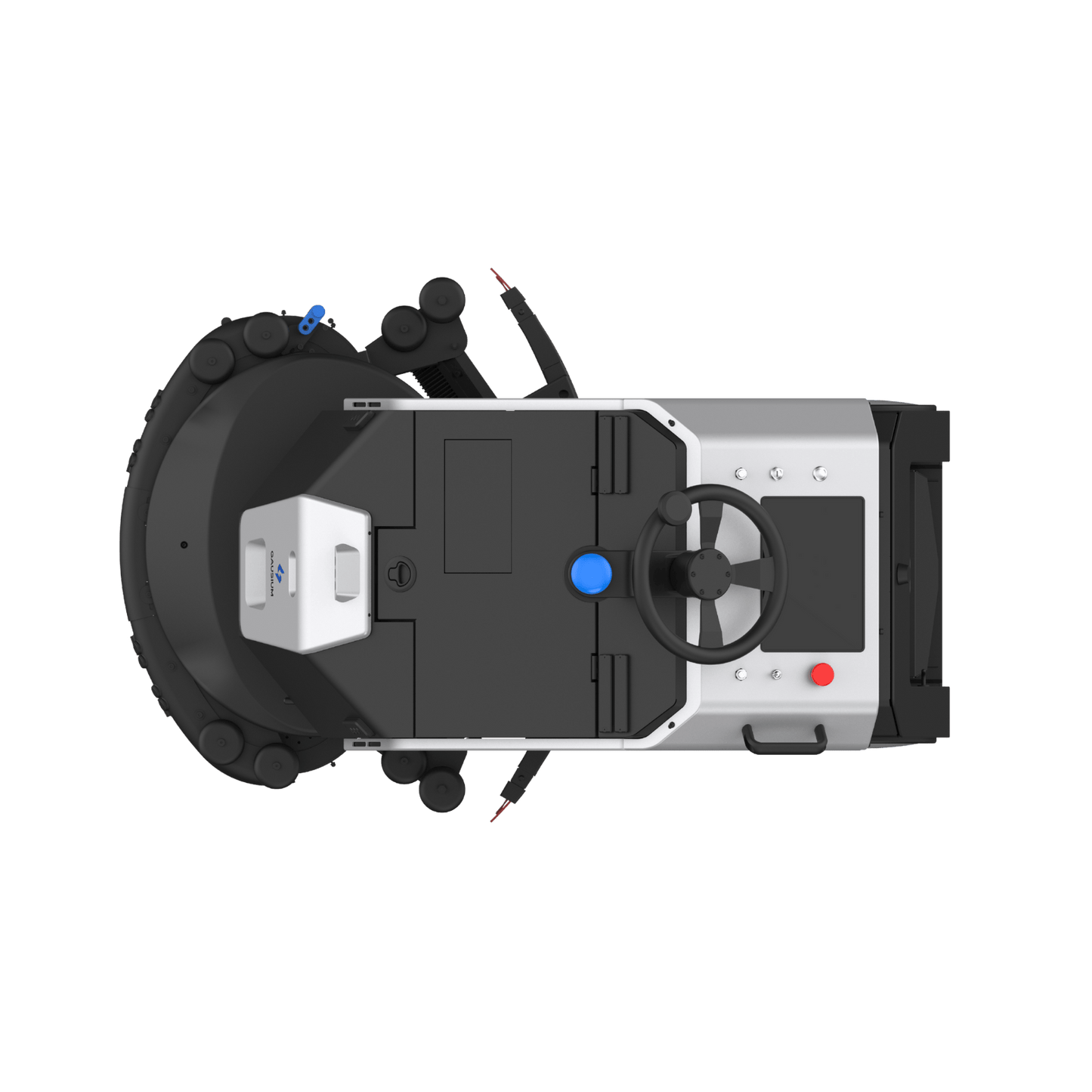
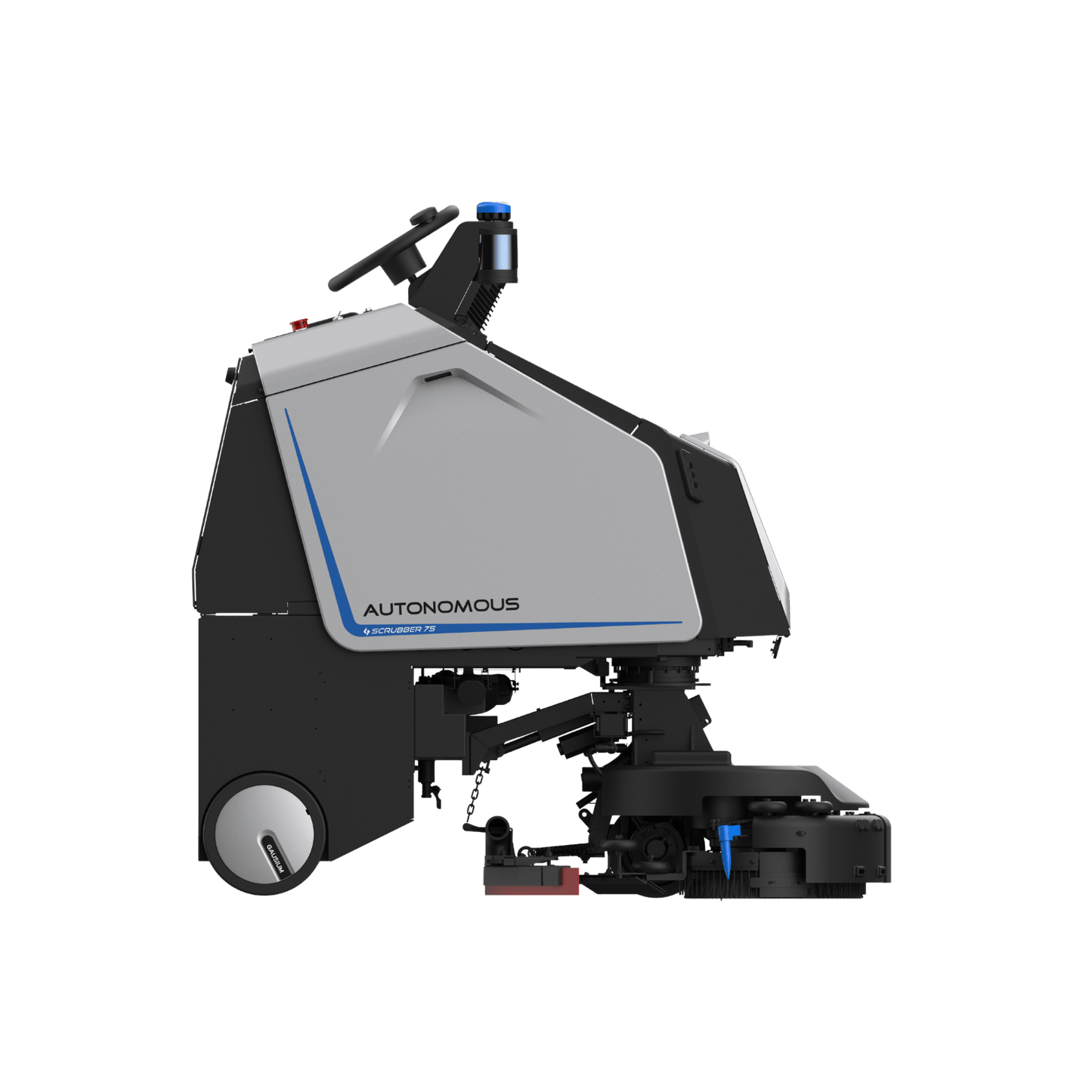
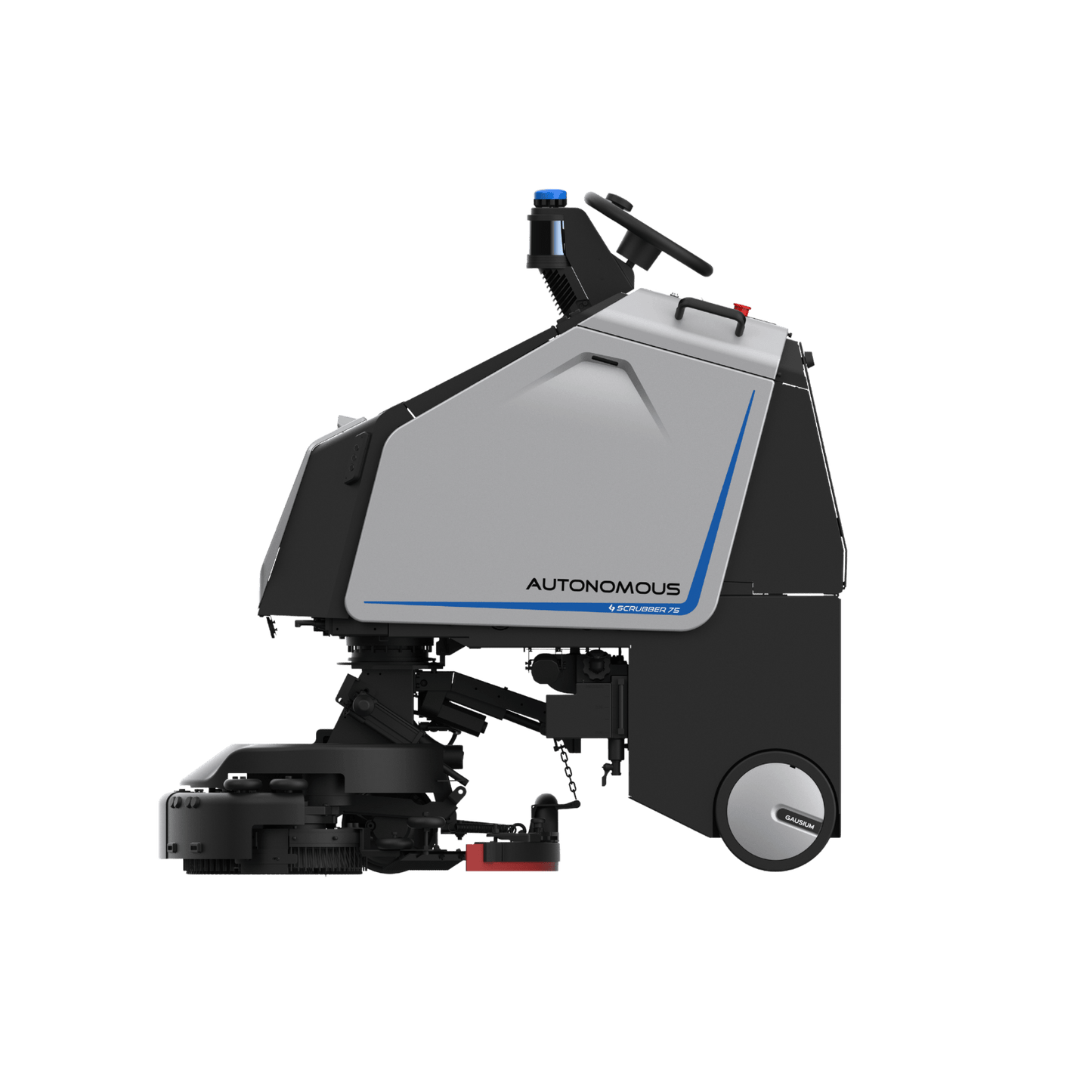
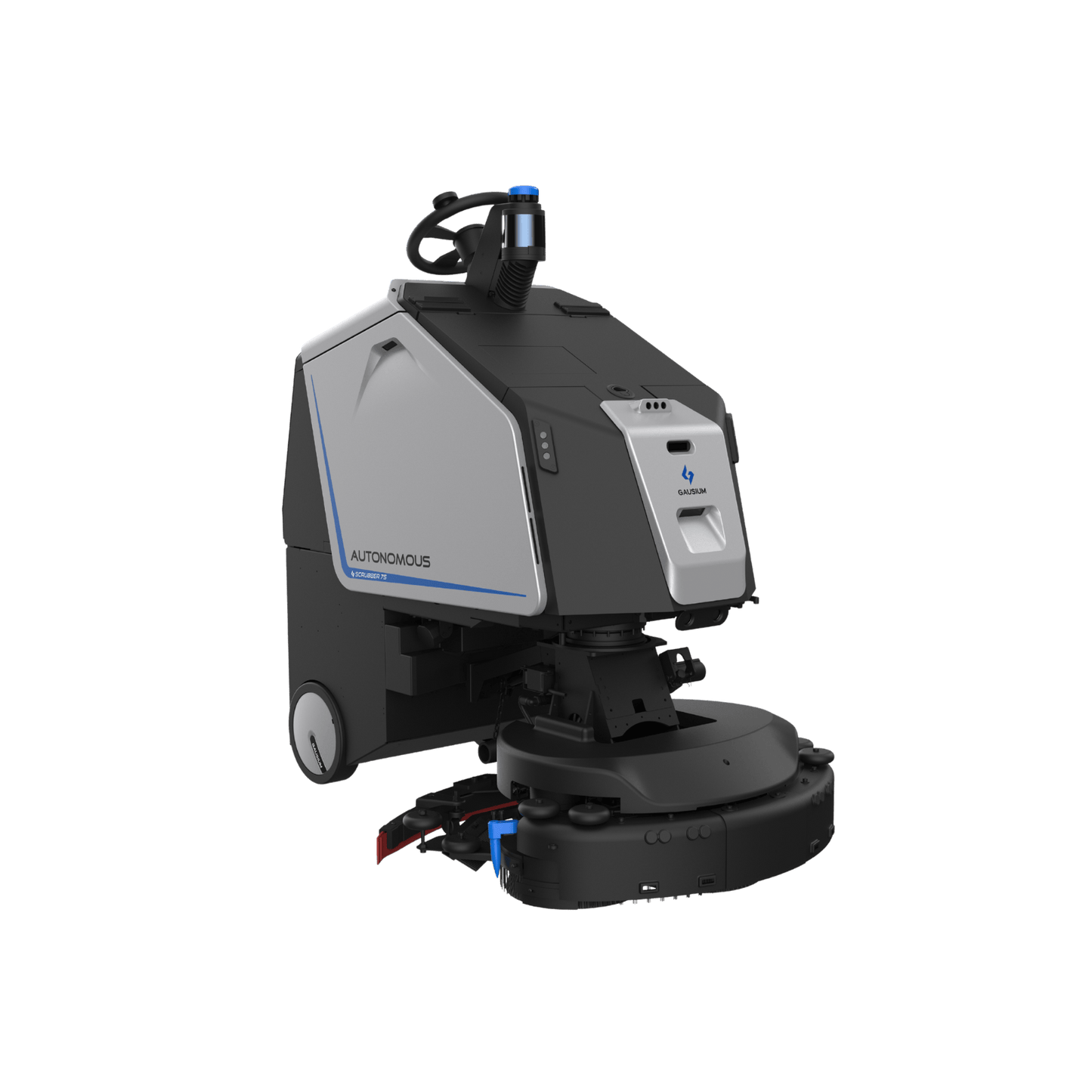
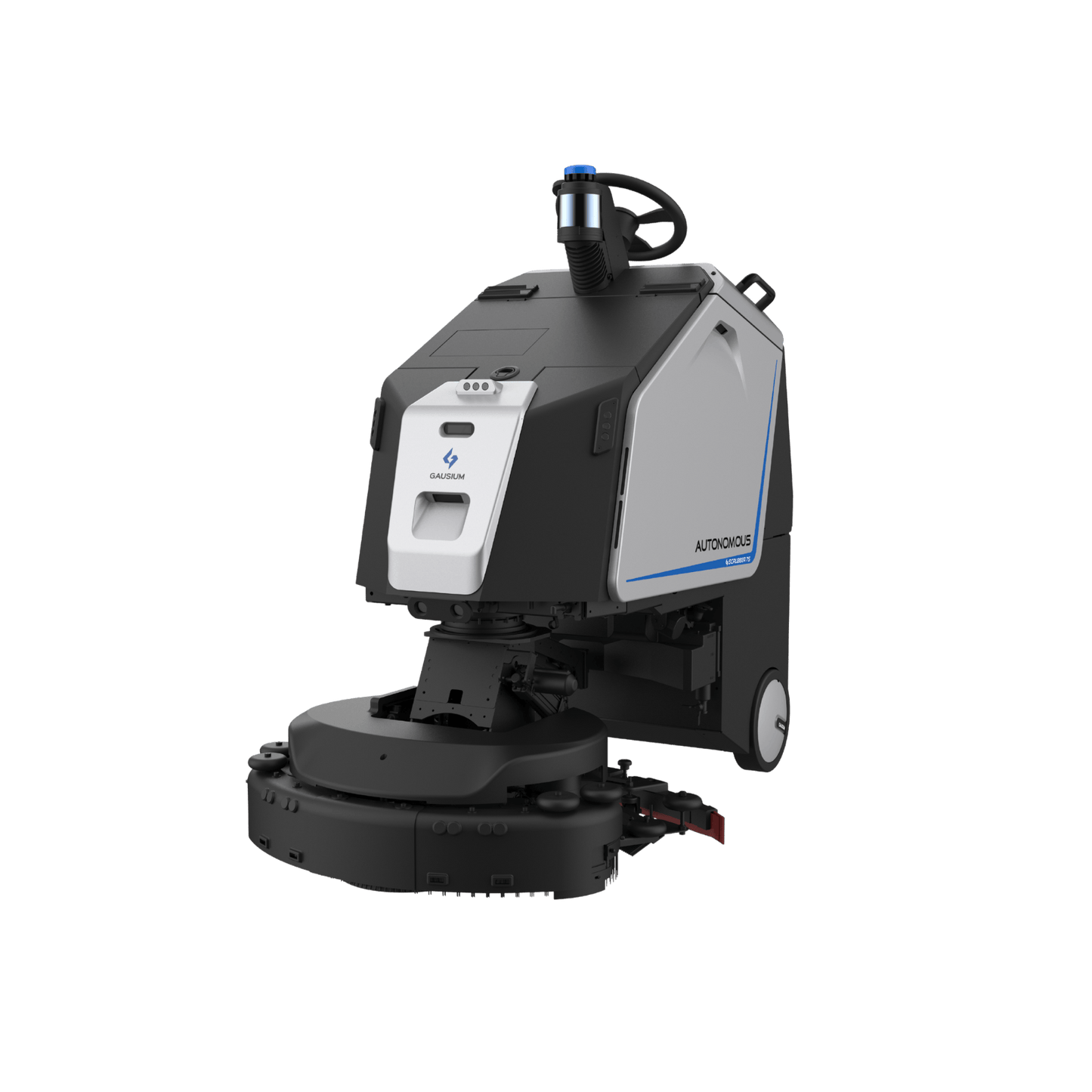
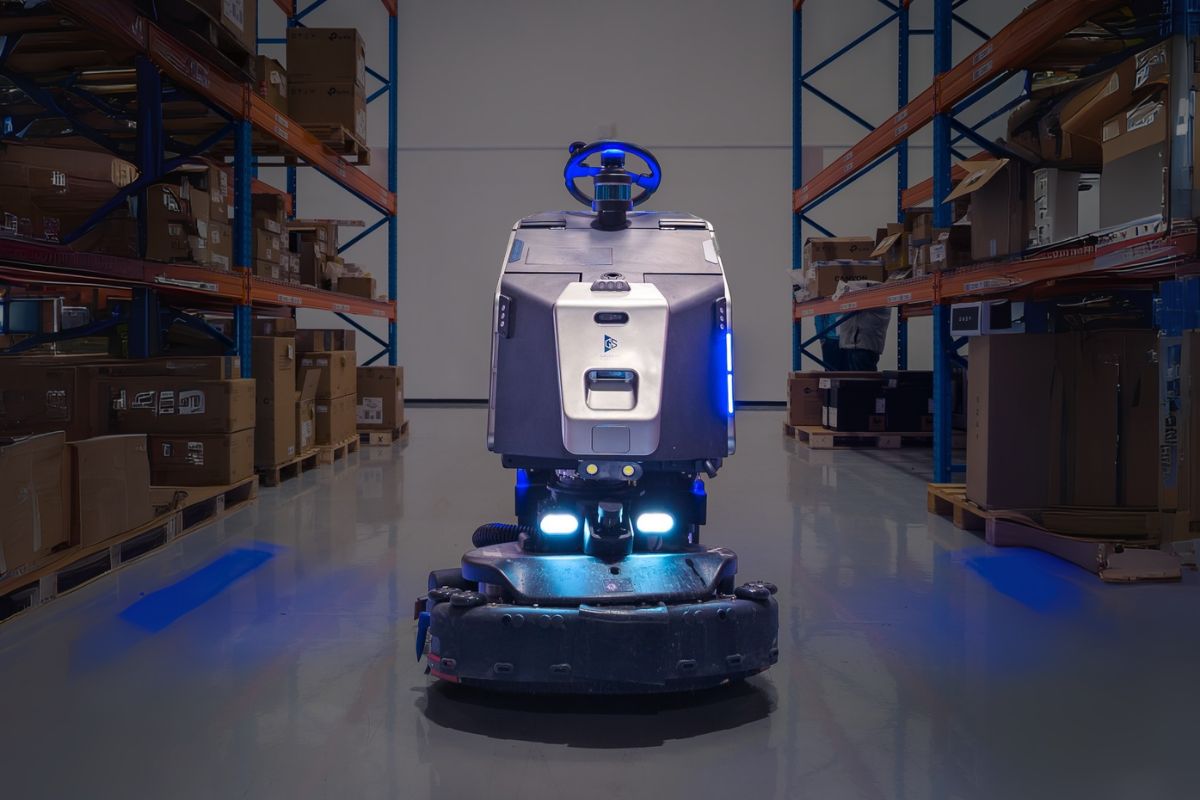
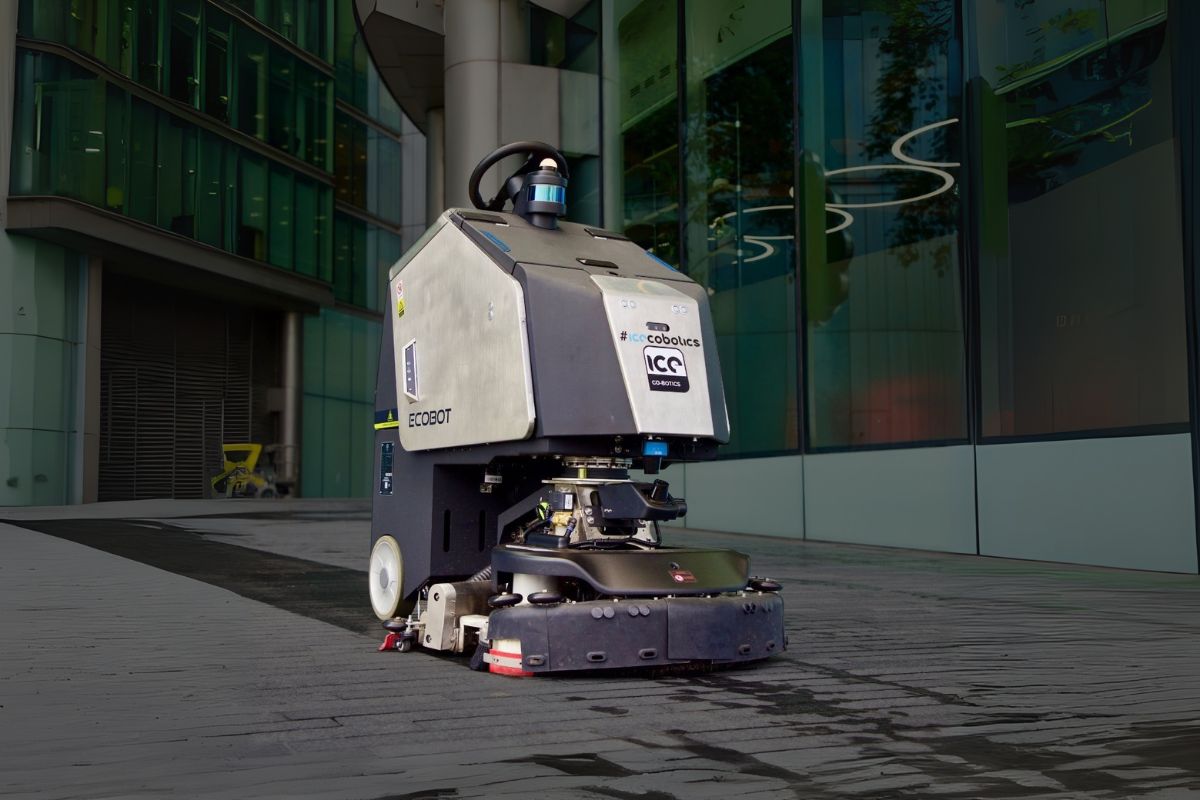
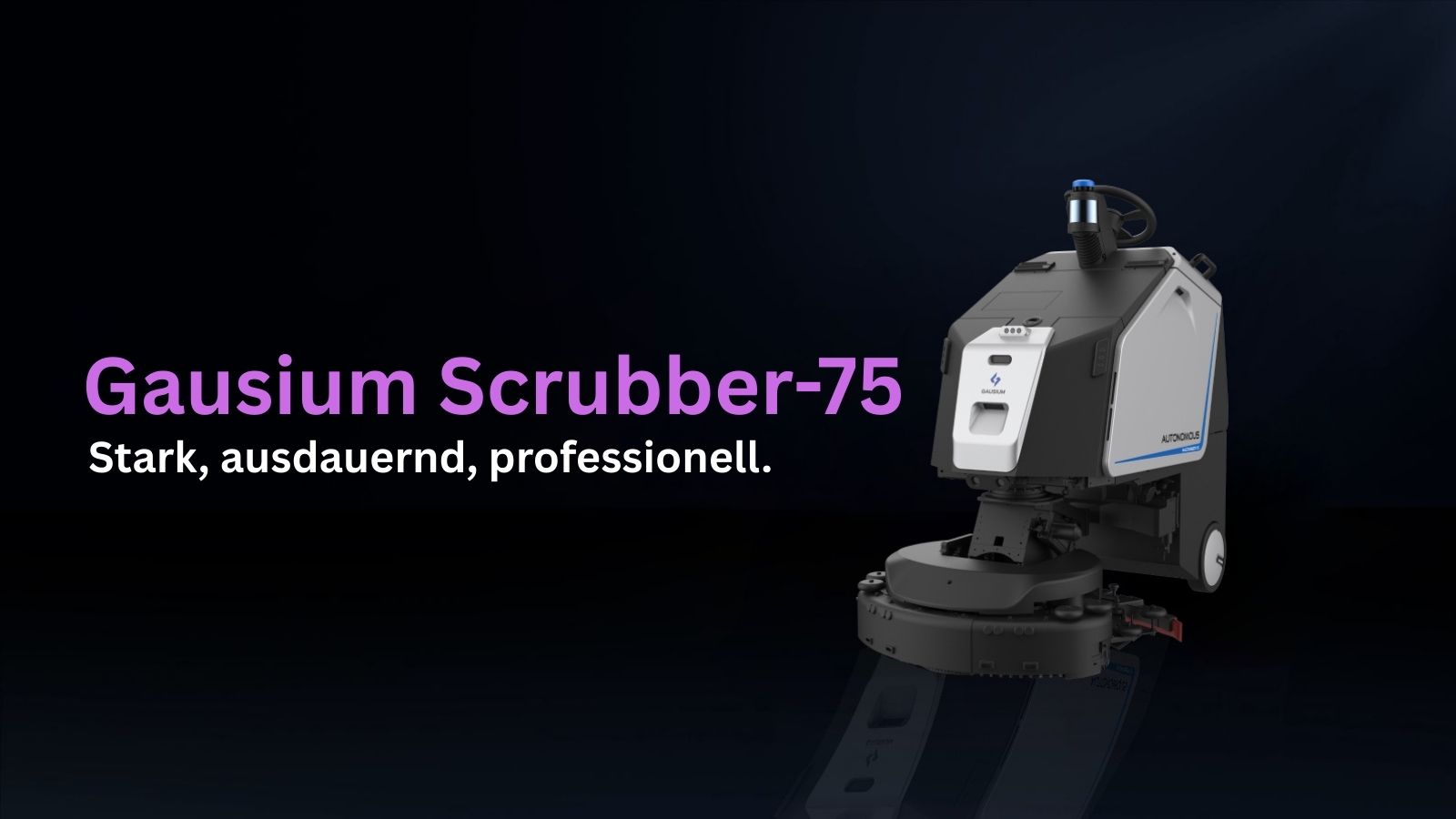
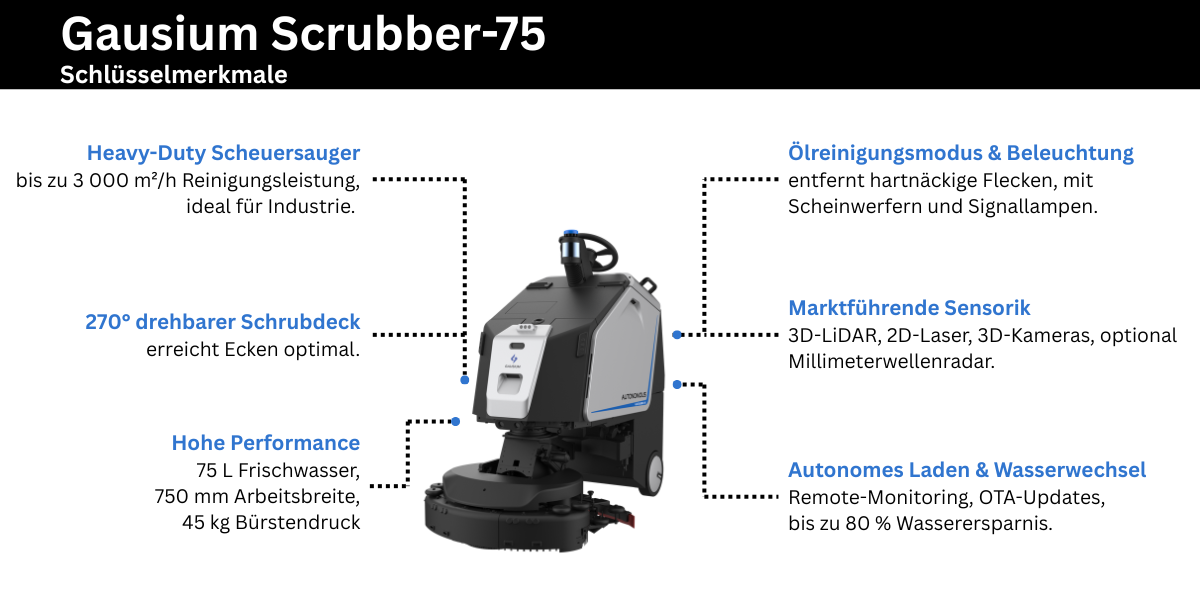
The Gausium Scrubber 75 is a high-performance autonomous cleaning robot designed for large professional spaces, industrial indoor areas, logistics facilities, parking garages, shopping centers, train stations, airports, production halls, and public facilities. It was developed for demanding floor cleaning tasks where high area coverage, powerful scrubbing, reliable navigation, and plannable cleaning processes are essential. With its wide cleaning path, high brush pressure, large fresh water tank, and intelligent sensor technology, the Scrubber 75 is particularly suitable for companies looking to clean large hard-floor areas more efficiently, consistently, and automatically.
Unlike smaller cleaning robots, the Gausium Scrubber 75 is clearly designed for large and high-traffic areas. It combines autonomous driving, scrubbing, suction, obstacle detection, and digital control into one professional system. This allows it to take over recurring cleaning tasks, relieve cleaning teams, and support consistent results across large areas. The Scrubber 75 is especially effective in areas with long routes, high levels of dirt, or a requirement for regular cleaning.
The robot is not a simple scrubber-dryer, but an autonomous cleaning solution for professional continuous use within planned cleaning cycles. It helps to organize surface cleaning in a more structured, transparent, and efficient manner. It does not replace quality control by trained personnel; rather, it takes over recurring surface work, allowing staff to focus more on edges, special cleaning tasks, inspection, rework, or other value-adding activities.
Why the Scrubber 75 is convincing for professional large-area cleaning
Large-area cleaning is a significant time and cost factor in many operations. In logistics halls, parking garages, shopping centers, train stations, production areas, or public buildings, floors must be cleaned regularly without unnecessarily disrupting operations. Manual cleaning is often too slow and physically demanding on such surfaces. Traditional ride-on machines require personnel for the entire duration of the operation. This is exactly where the Gausium Scrubber 75 comes in: It automates recurring cleaning runs and can process large areas according to defined routes.
The robot is particularly strong where cleaning is plannable. Night or off-peak hours, recurring hall areas, parking levels, logistics aisles, retail spaces, or transit zones can be defined as cleaning areas and processed regularly. This creates greater reliability in the cleaning process. The surface is not just cleaned "by feel," but according to planned zones, routes, and tasks.
For facility management teams, this results in a clear operational advantage. The Scrubber 75 can clean large areas autonomously while staff handle other tasks in parallel. This reduces monotonous driving times, improves predictability, and supports more uniform surface coverage. Especially for large-scale properties with high cleaning requirements, this can be an important building block for more efficient building cleaning.
High area coverage with 750 mm cleaning width
A central feature of the Gausium Scrubber 75 is its wide cleaning performance. With a cleaning width of 750 mm, the robot can process large areas in a comparatively short time. The theoretical cleaning performance is up to 3,000 m² per hour. In practice, the actual area coverage depends on the route, level of dirt, obstacles, driving speed, floor condition, water flow, and the operating environment.
For operators, this distinction is important. Maximum values show the performance potential but do not replace project-specific planning. In an empty hall, the robot can work faster than in a busy shopping center or a parking garage with vehicle traffic. Nevertheless, the wide cleaning surface offers a clear advantage over smaller systems: the larger and more regular the area, the more the Scrubber 75 can leverage its productivity.
It is particularly suitable for wide aisles, hall areas, driveways, parking garage surfaces, terminal areas, logistics zones, production spaces, and other hard-floor areas with high cleaning demands. There, the robot can drive long paths and process recurring routes efficiently.
Strong brush pressure for intensive scrubbing
The Scrubber 75 was developed for demanding dirt. With a brush pressure of up to 45 kg, it can process floors much more intensely than smaller cleaning robots or simple manual methods. This scrubbing power is particularly relevant for stubborn dirt, scuff marks, industrial residues, dust, abrasion, oily contaminants, or high-traffic floors.
In logistics and industry, dirt often arises from tire abrasion, dust, packaging material, production residues, or tracked-in dirt particles. In parking garages, there are also oil traces, moisture, tire abrasion, and road dirt. In shopping centers, train stations, and public buildings, scuff marks and high frequency are the central challenge. The Scrubber 75 is designed to thoroughly process such surfaces and recover the dirty water.
The actual cleaning effect always depends on the floor covering, degree of soiling, cleaning agent, brush type, driving style, and maintenance status. Suitability should be checked in advance for special floors or sensitive surfaces. Properly configured, however, the Scrubber 75 can be a very powerful solution for intensive, recurring hard-floor cleaning.
75-liter fresh water and 50-liter waste water tank for long cleaning cycles
For large areas, tank size is crucial. The Gausium Scrubber 75 has a 75-liter fresh water tank and a 50-liter waste water tank. This allows the robot to perform longer cleaning cycles before water needs to be refilled or dirty water emptied. This is especially important in environments where large areas are to be cleaned efficiently and with as few interruptions as possible.
The separate water management supports controlled floor cleaning: fresh water is used specifically for the cleaning process, while dirty water is recovered. Compared to purely manual methods, this can contribute to more consistent results and improve the walkability of the surface. Especially in public areas, parking garages, or logistics halls, this is important because wet or unevenly cleaned surfaces can cause operational risks and quality problems.
Depending on the operating environment, water volume, dirt, and cleaning mode, the duration of a tank cycle varies. For optimal planning, area size, cleaning intensity, water consumption, and refill points should be considered together.
270° rotatable scrubbing deck for better edge and corner cleaning
A special feature of the Gausium Scrubber 75 is the 270° rotatable scrubbing deck. This allows the robot to better reach less accessible areas and perform cleaning paths more flexibly. Especially with large machines, edge and corner cleaning is often a challenge. The Scrubber 75 reduces this problem through its flexible scrubbing technology.
In practice, this means: The robot can not only clean large open areas but also work closer to edges, walls, columns, or structural elements. This is particularly relevant in parking garages, logistics areas, production halls, or shopping centers where pillars, shelving systems, ramps, wall areas, or traffic islands interrupt the surface.
Nevertheless, realistic expectations remain important. No large-area robot completely replaces every detail or edge cleaning task. Very tight corners, heavily cluttered areas, or complex marginal zones may still require manual rework. The advantage of the Scrubber 75 lies in the fact that it efficiently handles the large main area and can cover edge zones better than many rigid systems.
Sensor technology, LiDAR, and intelligent obstacle detection
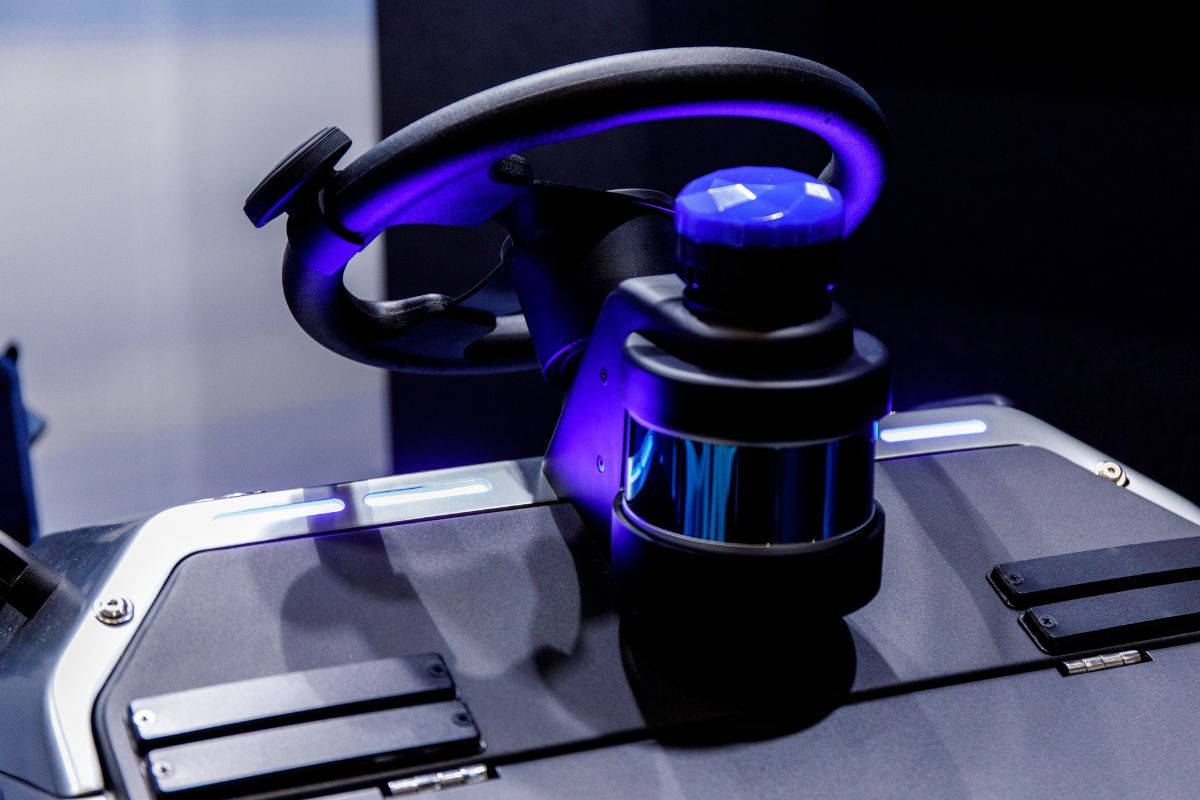
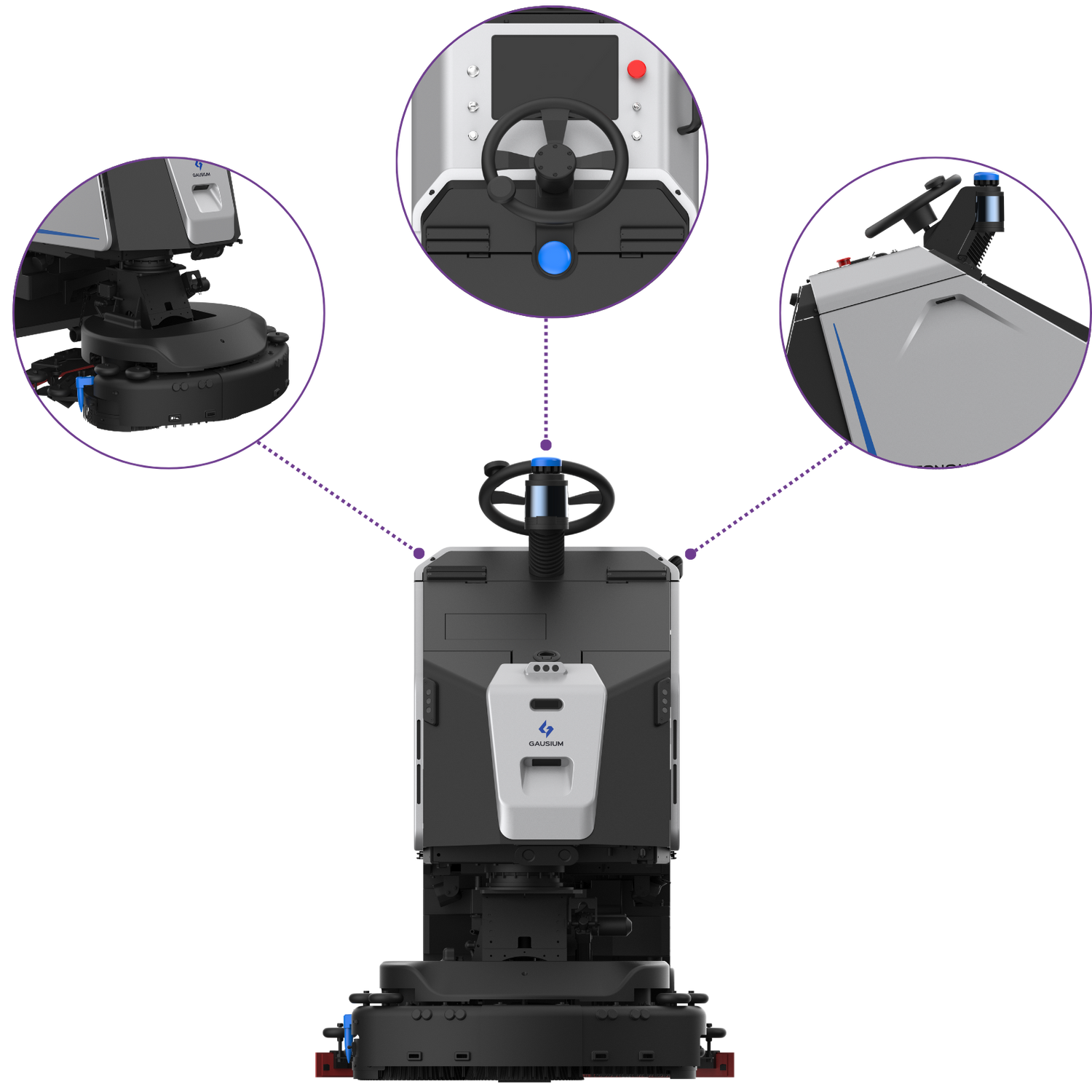
The Gausium Scrubber 75 is equipped with extensive sensor technology. This includes 3D LiDAR, 2D LiDAR, a 3D camera, collision protection, and anti-drop functions. These sensors help the robot perceive its surroundings, detect obstacles, and orient itself in mapped indoor areas.
In professional cleaning environments, this is crucial. Surfaces are constantly changing: pallets are temporarily in the way, vehicles park differently than planned, customers move through shopping centers, staff cross hall areas, or cleaning zones are temporarily blocked. The Scrubber 75 can perceive environmental changes and adjust its route accordingly.
However, deployment should be planned carefully. Autonomous navigation works best when areas are cleanly set up, maps are created, cleaning zones are defined, and typical obstacles are taken into account. Bottlenecks, ramps, pedestrian traffic, open edges, floor thresholds, and highly variable objects should be checked in advance. In this way, modern sensor technology becomes a reliable part of everyday cleaning processes.
Parking garage cleaning with Scrubber 75 P
For parking garages, the Scrubber 75 is particularly interesting because large-scale, robust, and frequently soiled floors need to be cleaned there. Tire abrasion, oil traces, dust, moisture, leaves, road dirt, and high traffic frequency place special demands on cleaning. In the Scrubber 75 P variant, the robot is specifically designed for parking garage environments.
Depending on the configuration, the Scrubber 75 P can be equipped with additional components such as millimeter-wave radar and enhanced lighting. These features are particularly relevant in dynamic environments where vehicles, pillars, ramps, and changing light conditions play a role. Additionally, an oil-cleaning mode can be used to treat stubborn oily contaminants more specifically.
Again, the following applies: The specific suitability depends on the parking garage. Floor covering, ramps, gradients, bottlenecks, traffic flow, cleaning times, and security concepts should be checked in advance. When properly planned, however, the Scrubber 75 can be a very powerful solution for professional parking garage cleaning.
Autonomous operation and optional workstation
The Gausium Scrubber 75 is designed for autonomous cleaning processes. It can follow cleaning routes, detect obstacles, use maps, and execute tasks digitally. With an optional workstation, functions such as automatic charging, water refilling, and waste water discharge can be supported, depending on the equipment. This can reduce the manual service effort and integrate the robot more strongly into recurring cleaning cycles.
For large properties, this is especially valuable. If the robot can return to the station independently to charge and support water processes, longer cleaning windows can be better planned. This is relevant for shopping centers, airports, train stations, logistics halls, or production areas where cleaning must take place regularly and reliably.
However, the workstation should be planned on a project-specific basis. Location, water connection, waste water drainage, charging infrastructure, accessibility, and the safety area must fit the facility. The greatest benefit is achieved when the robot, station, and cleaning plan are considered as a total system.
App control, remote access, and reporting
Modern cleaning processes require transparency. The Scrubber 75 can be monitored and managed via digital control and app functions. This allows cleaning tasks to be planned, started, checked, and evaluated. For facility management teams, this is particularly relevant because cleaning quality should not only be executed but also documented in a traceable manner.
Through digital evaluations, processed areas, task status, and operational histories can be made more transparent. This supports quality control, internal audits, and the optimization of cleaning schedules. If certain areas are regularly skipped, blocked, or too heavily soiled, routes and time windows can be adjusted.
Especially in large properties with multiple floors, zones, or cleaning teams, this transparency is an important advantage. Cleaning becomes more predictable and less dependent on purely manual control. The robot thus becomes not just a machine, but a digital component of facility management.
Application areas: Industry, logistics, retail, transport, and public buildings
Industry and production
In production halls, the Scrubber 75 can remove dust, abrasion, residues, and scuff marks on large hard-floor surfaces. It supports regular maintenance cleaning and can help keep work areas cleaner and more structured.
Logistics and warehousing
In logistics halls, shipping centers, and warehouse areas, dirt is regularly created by forklift traffic, packaging material, dust, and tire abrasion. The Scrubber 75 is suitable for wide traffic routes, hall areas, and defined cleaning zones.
Parking garages and underground parking
Parking garages have special cleaning requirements. The Scrubber 75 can support large parking areas, driveways, and ramp areas. In the Scrubber 75 P parking garage variant, additional sensor and lighting functions can be relevant.
Shopping centers and retail
In shopping centers and large-scale retail environments, clean floors are an important part of the customer experience. The Scrubber 75 can regularly process large foot traffic zones, aisles, and transit areas, relieving cleaning teams.
Train stations, airports, and public facilities
Transport hubs and public buildings have high visitor frequency and large areas. The Scrubber 75 supports plannable cleaning cycles and can help organize cleanliness better, even with intensive use.
Runtime, charging time, and operational planning
The Scrubber 75 uses a 200 Ah lithium iron phosphate battery and is designed for professional cleaning cycles. The runtime is approximately 4 to 6 hours, depending on the usage profile. Charging time is approximately 5 hours. These values depend on the cleaning mode, brush pressure, driving speed, floor, dirt, water management, and environment.
For operators, it is crucial how the robot is integrated into the cleaning plan. In some properties, one deployment window per day is sufficient. In other scenarios, several cleaning cycles, charging windows, or a workstation make sense. Especially for very large areas, it should be planned in advance which areas are cleaned per cycle, when water changes take place, and when the robot is charged.
Solid planning avoids unrealistic promises of continuous operation. The Scrubber 75 is designed for long professional cleaning tasks, but the actual availability always depends on the property, infrastructure, and cleaning strategy.
Economic efficiency and benefits in facility management
The economic efficiency of the Gausium Scrubber 75 results from automated surface cleaning, reduced manual driving times, higher process stability, and more consistent cleaning results. Especially with large areas, the robot can significantly relieve cleaning teams because it autonomously processes monotonous main areas. Staff can simultaneously concentrate on inspection, edge areas, special soiling, or other tasks.
For a well-founded ROI analysis, companies should examine how large the area to be cleaned regularly is, how often it is cleaned, how much staff time is currently tied up, and what quality is expected. Water consumption, cleaning agents, rework, documentation, and operating times should also be considered. The Scrubber 75 is particularly sensible when used regularly and predictably.
The greatest benefit is not achieved with occasional single cleanings, but with recurring large-area tasks. These include daily hall cleaning, regular parking garage cleaning, night shifts in shopping centers, cleaning cycles in airports, or maintenance cleaning in logistics centers.
Service, implementation, and introduction with Terra-Robotics
An autonomous cleaning robot only unfolds its benefits when the area, process, and technology match. Before introduction, cleaning zones should be defined, floor types checked, routes mapped, obstacles evaluated, and cleaning times planned. Water logistics, charging points, maintenance, training, and responsibilities should also be clarified early on.
Terra-Robotics provides support with consulting, implementation, training, and project planning. As a result, the Gausium Scrubber 75 is viewed not just as an individual device, but as part of a professional cleaning concept. Especially in large properties, this planning is crucial so that the robot works reliably and the cleaning team can integrate it sensibly into everyday life.
A sensible start is made with clearly defined areas and measurable goals: Which areas should be cleaned? Which times are suitable? Which types of dirt occur regularly? How is quality controlled? After the first operations, maps, routes, cleaning modes, and schedules can be further optimized.
Conclusion: Gausium Scrubber 75 as a strong cleaning robot for demanding large areas
The Gausium Scrubber 75 is a professional solution for companies that want to clean large hard-floor areas automatically, thoroughly, and predictably. With a 750 mm cleaning width, up to 3,000 m²/h theoretical cleaning performance, 45 kg brush pressure, 75-liter fresh water tank, 50-liter waste water tank, 270° rotatable scrubbing deck, extensive sensor technology, and optional workstation, it is particularly suitable for industry, logistics, parking garages, shopping centers, transport hubs, and public facilities.
It is not a small all-round robot for narrow side rooms, but a high-performance autonomous large-area cleaner for demanding professional environments. Properly planned and introduced, the Scrubber 75 can relieve cleaning teams, increase area coverage, make processes more transparent, and stabilize the quality of floor cleaning on large surfaces. For companies looking to automate their professional cleaning and organize it more efficiently, the Gausium Scrubber 75 is a strong solution for modern, autonomous large-area cleaning.