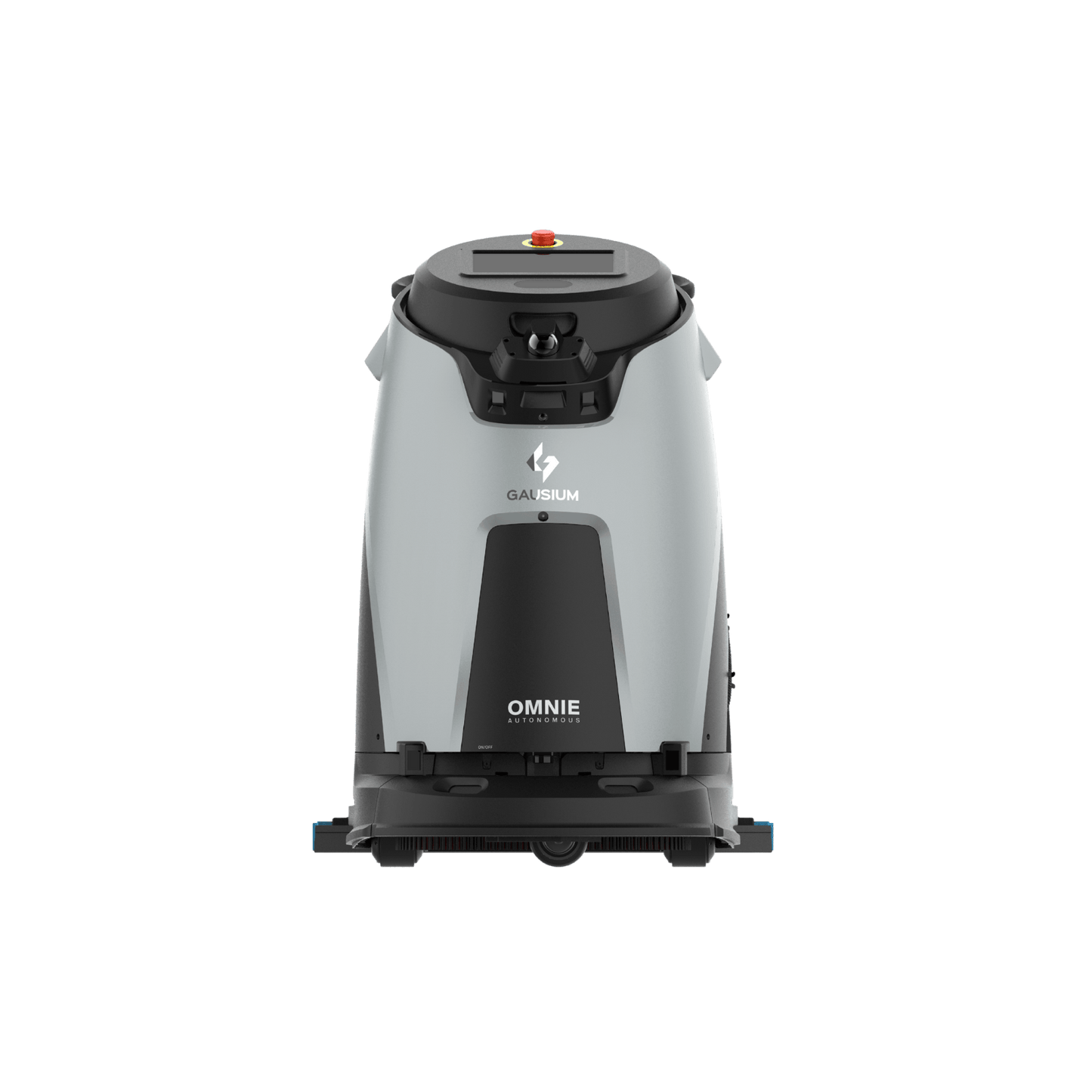
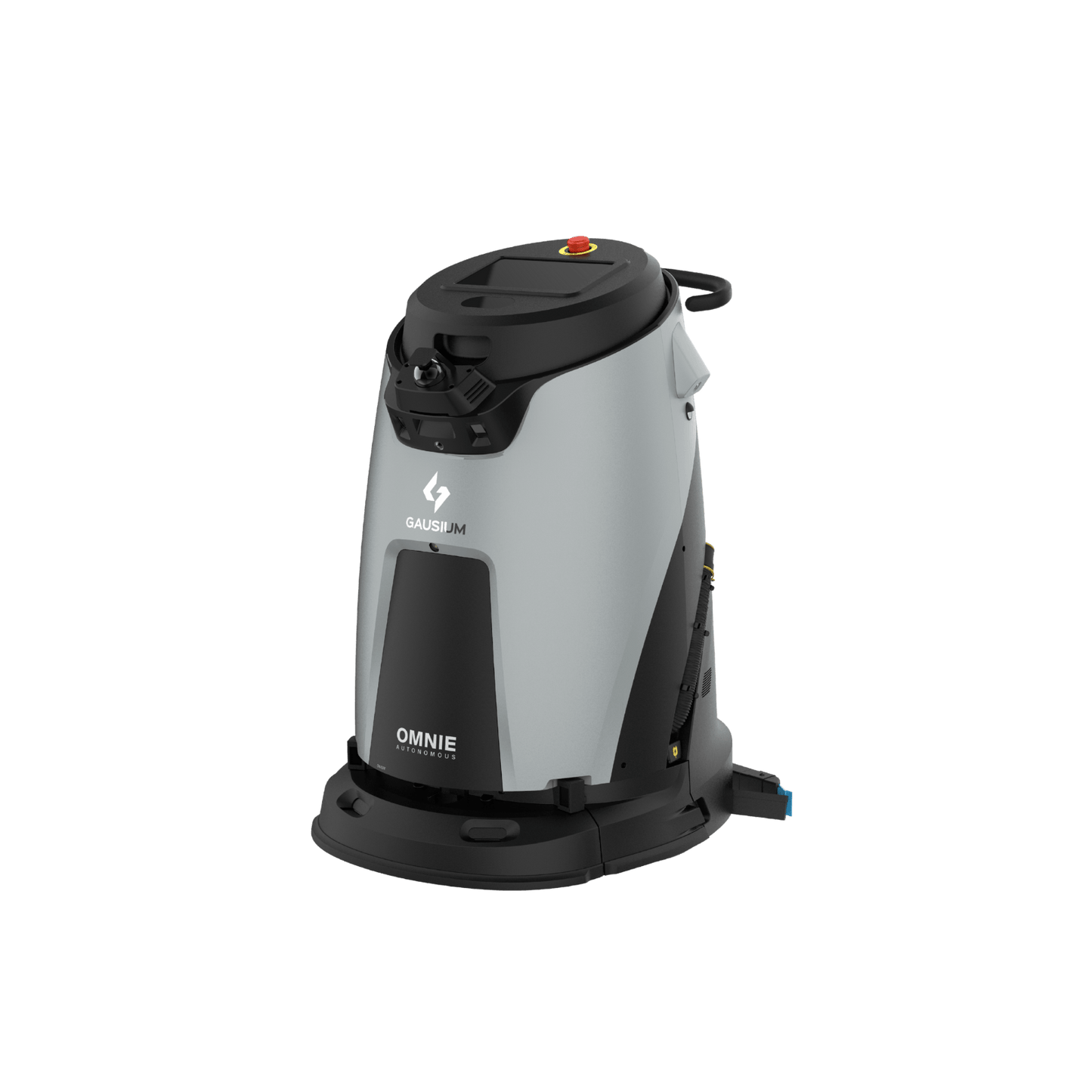
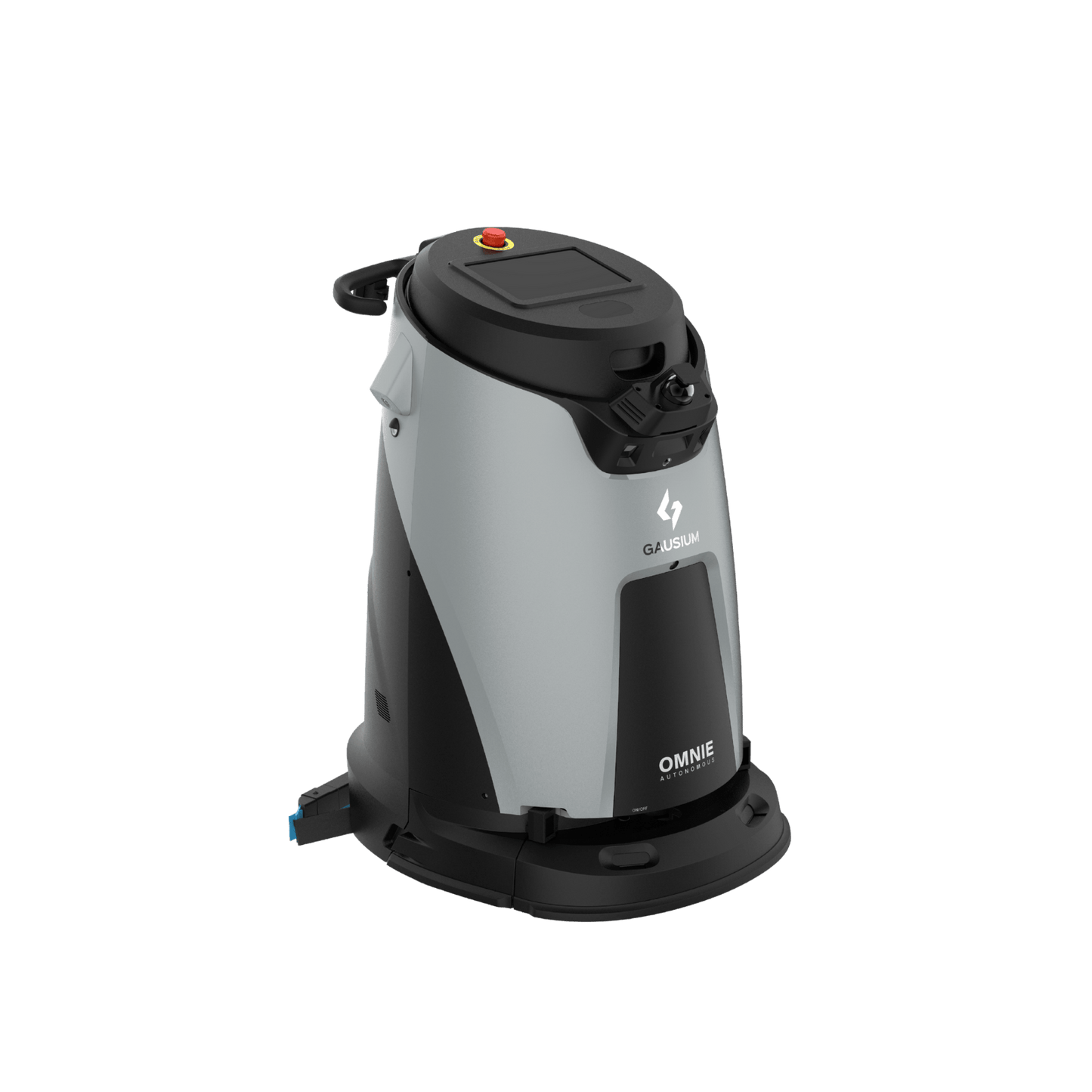
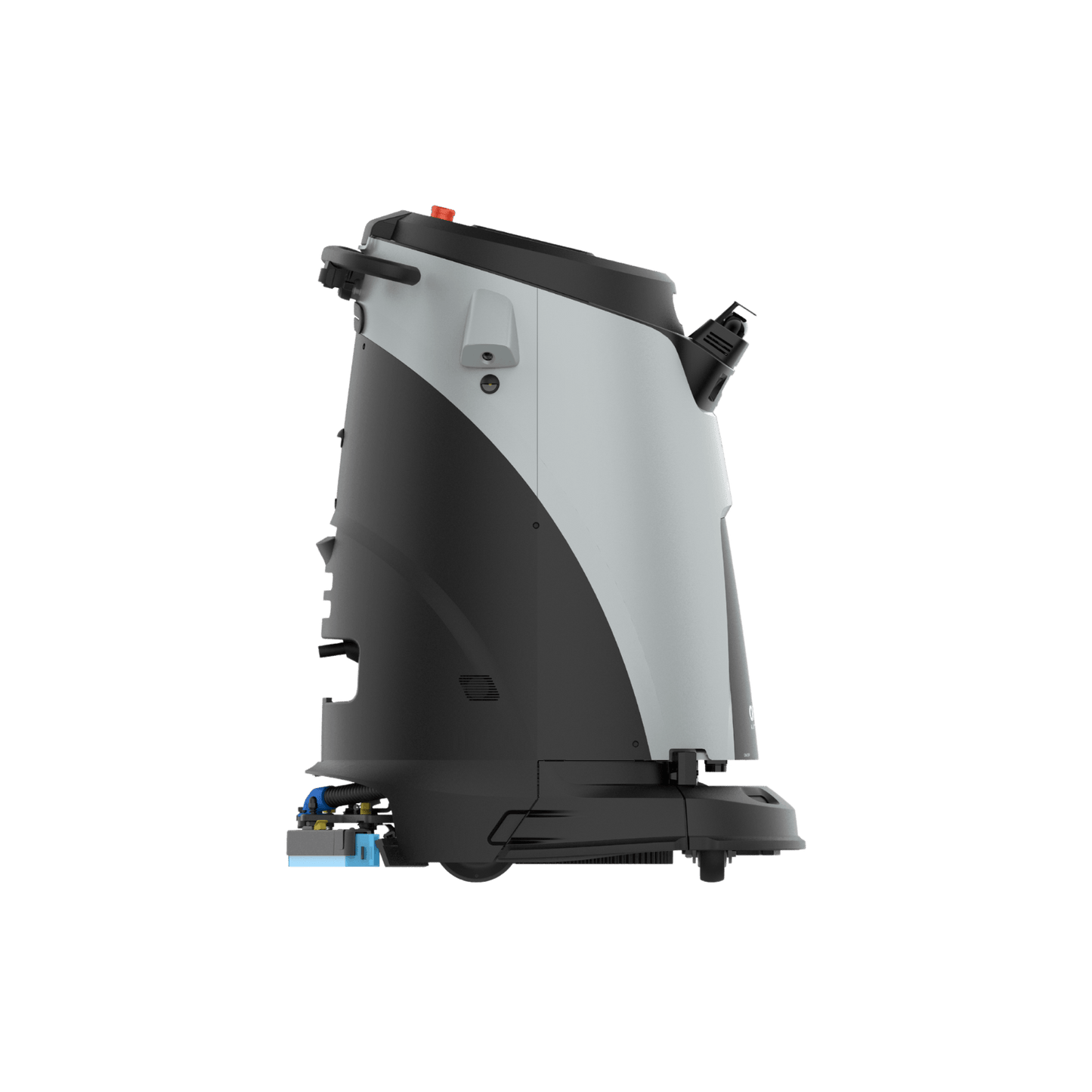
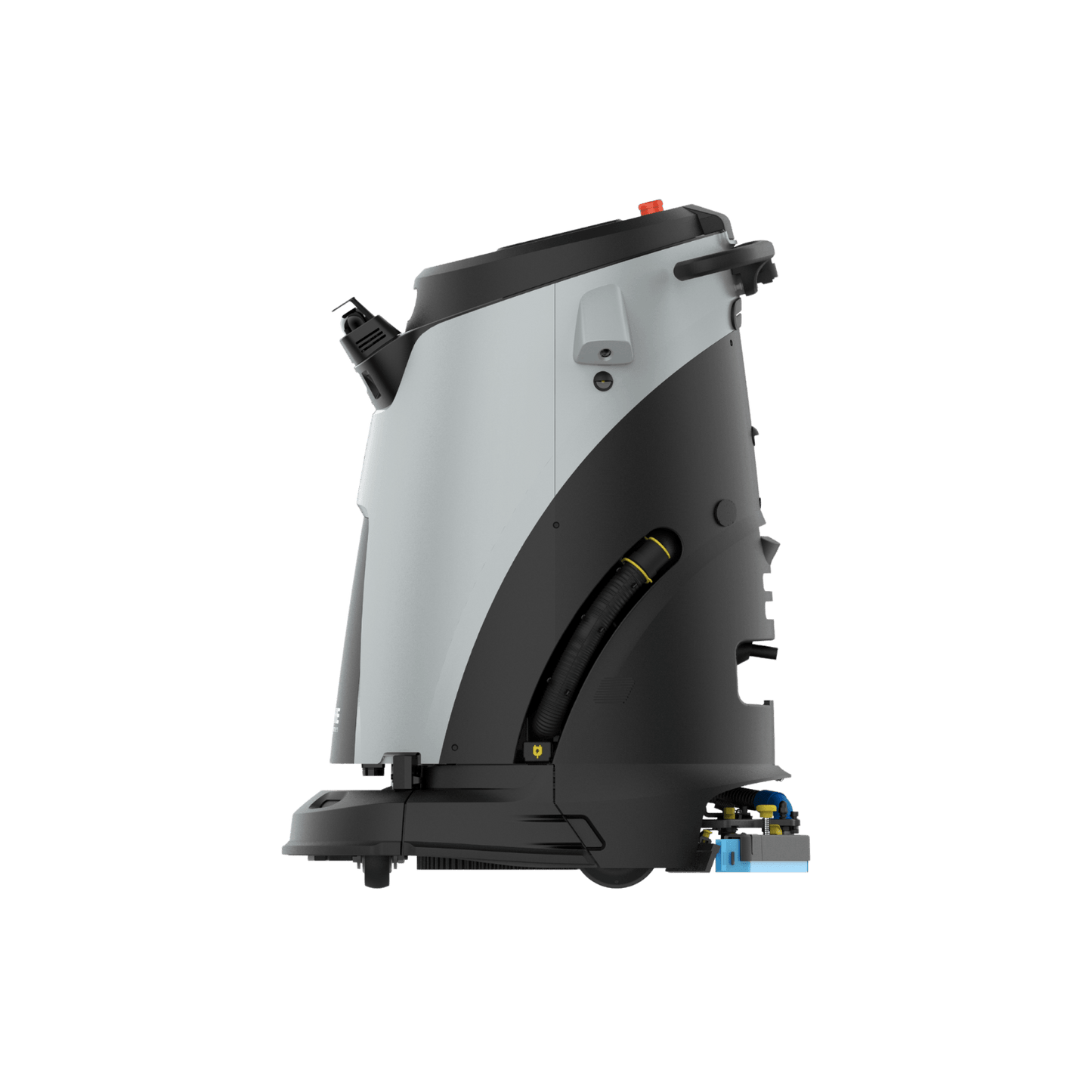
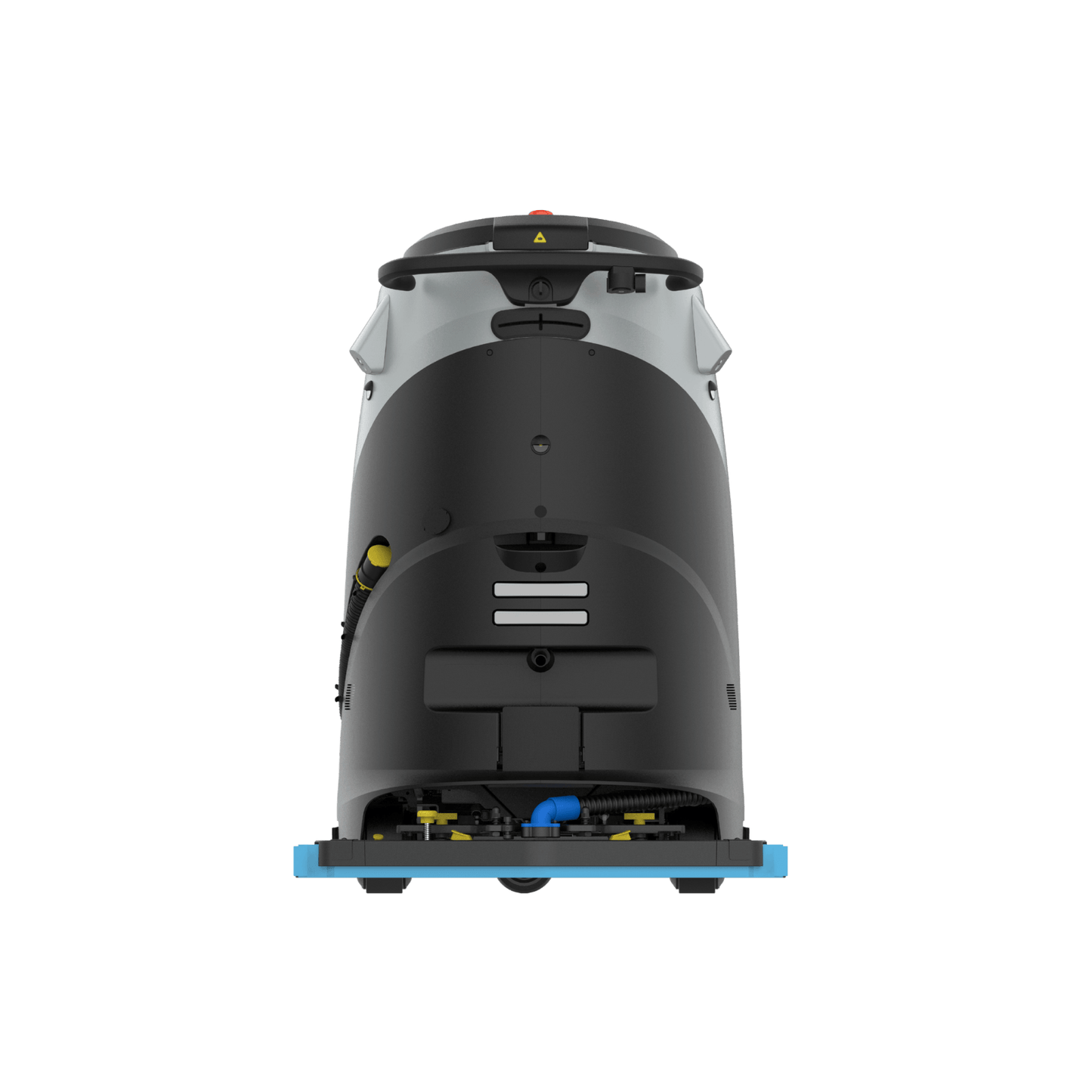
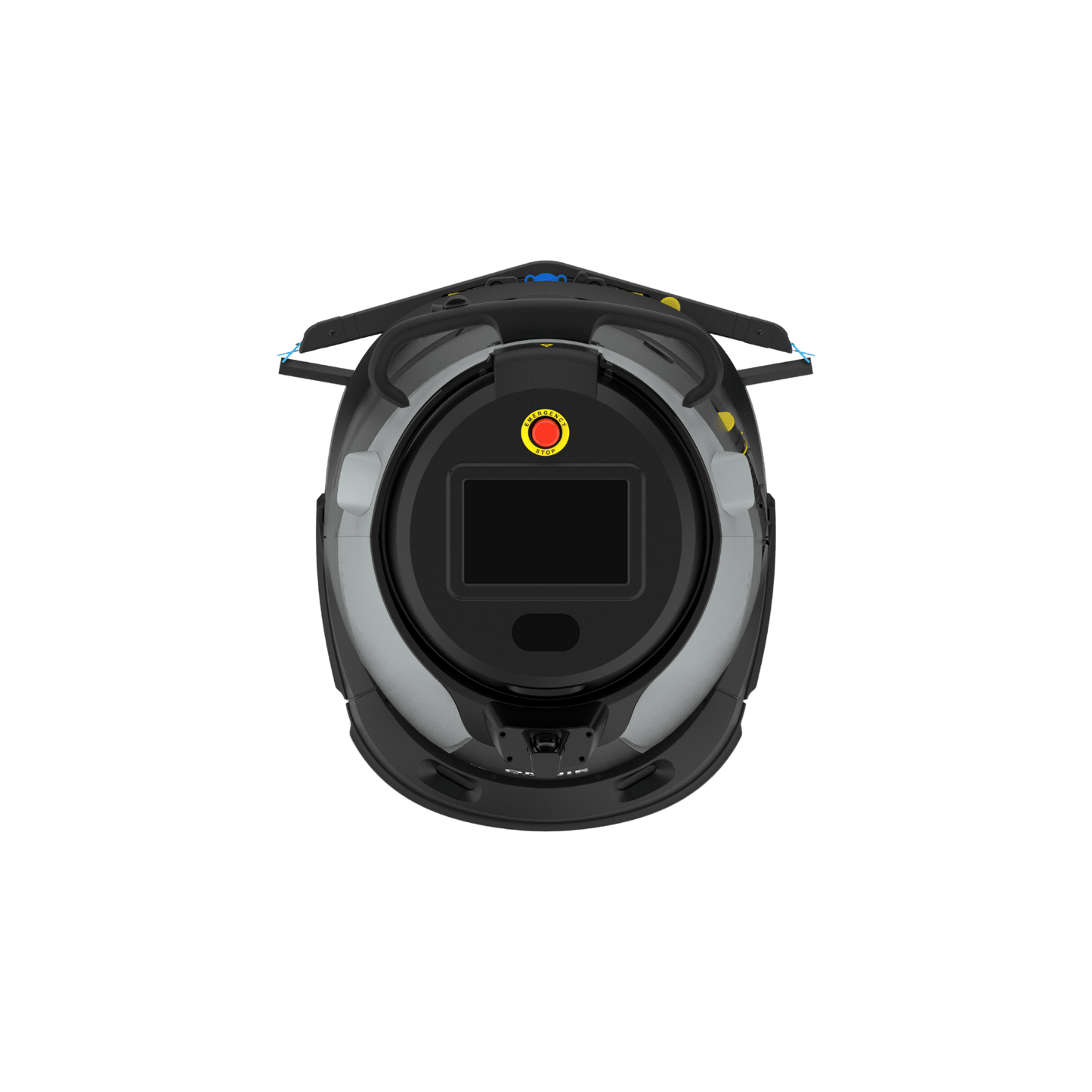
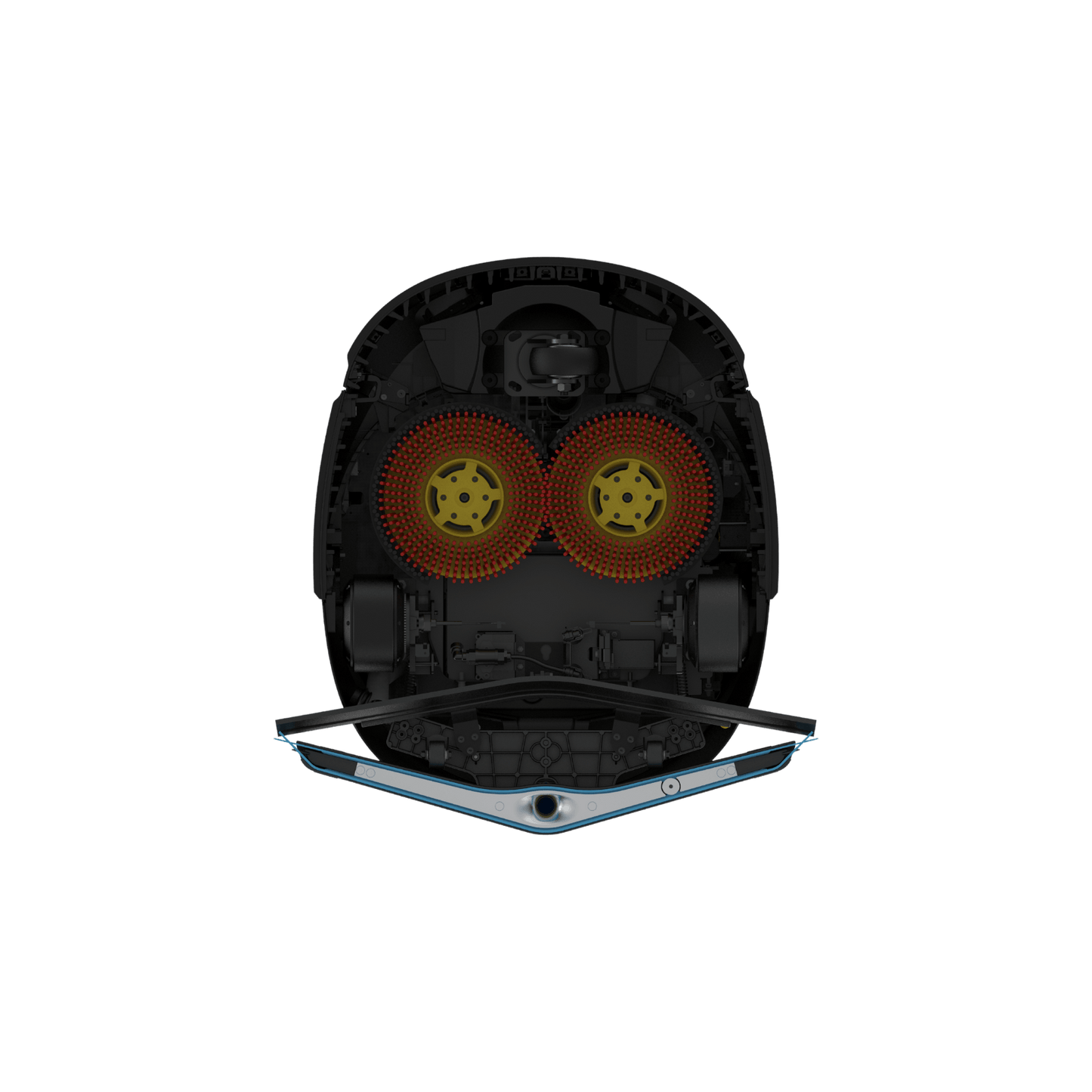
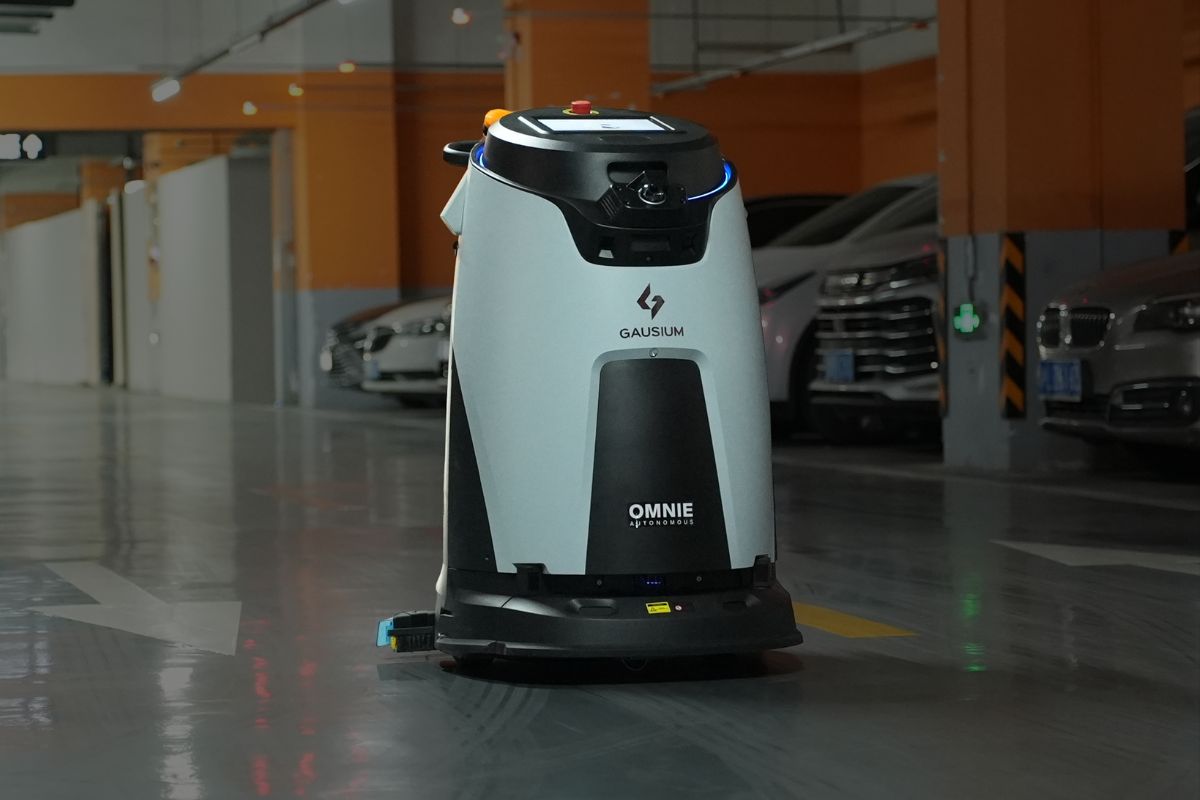
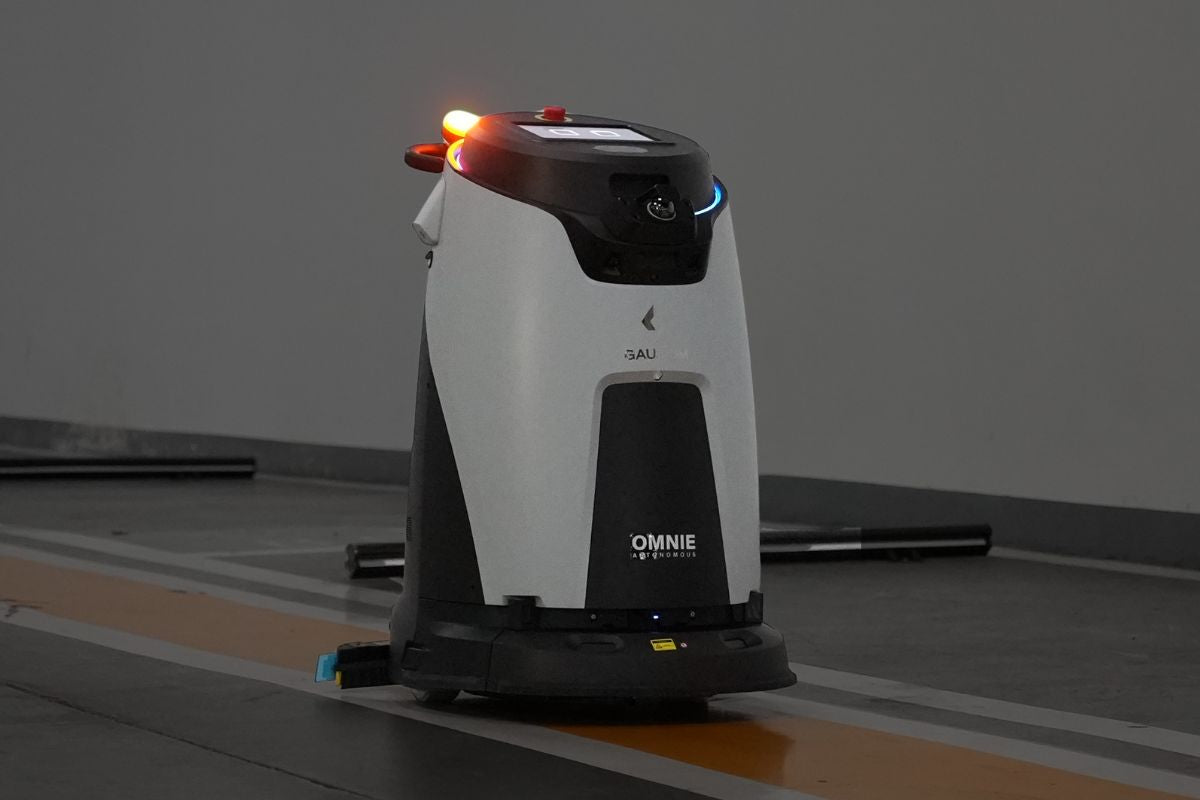
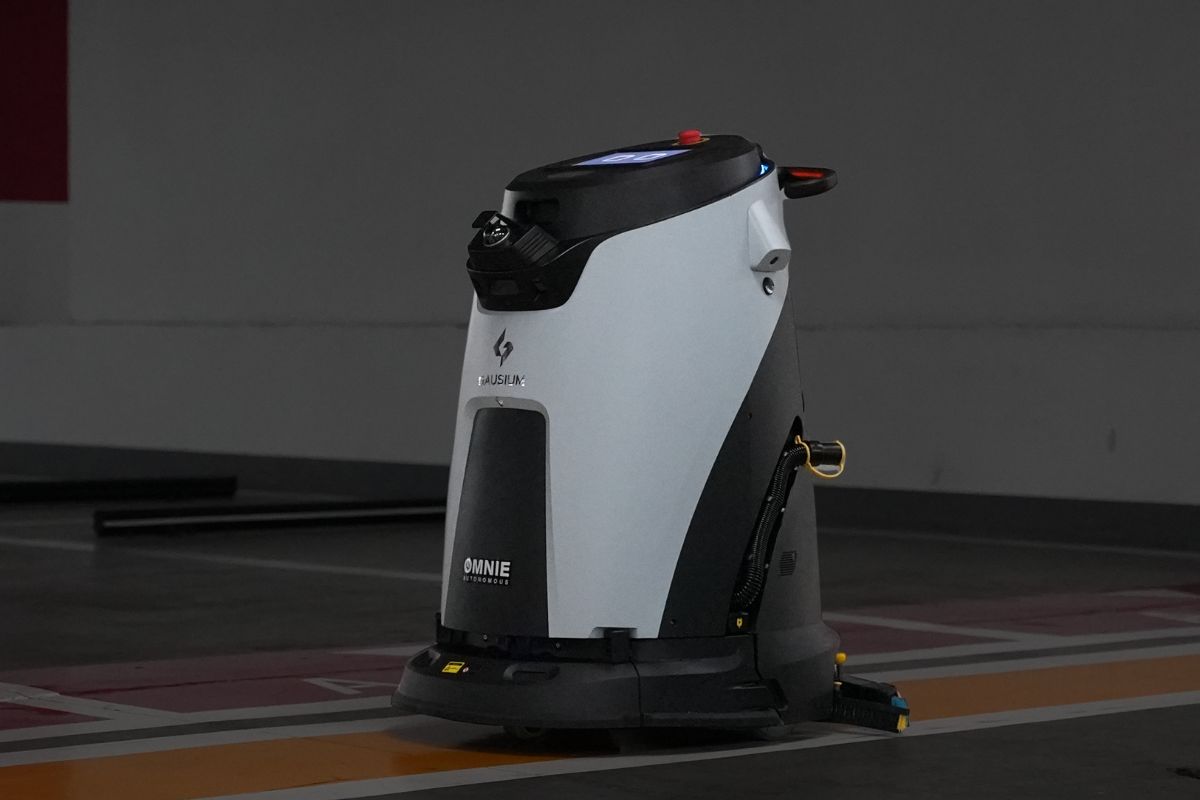
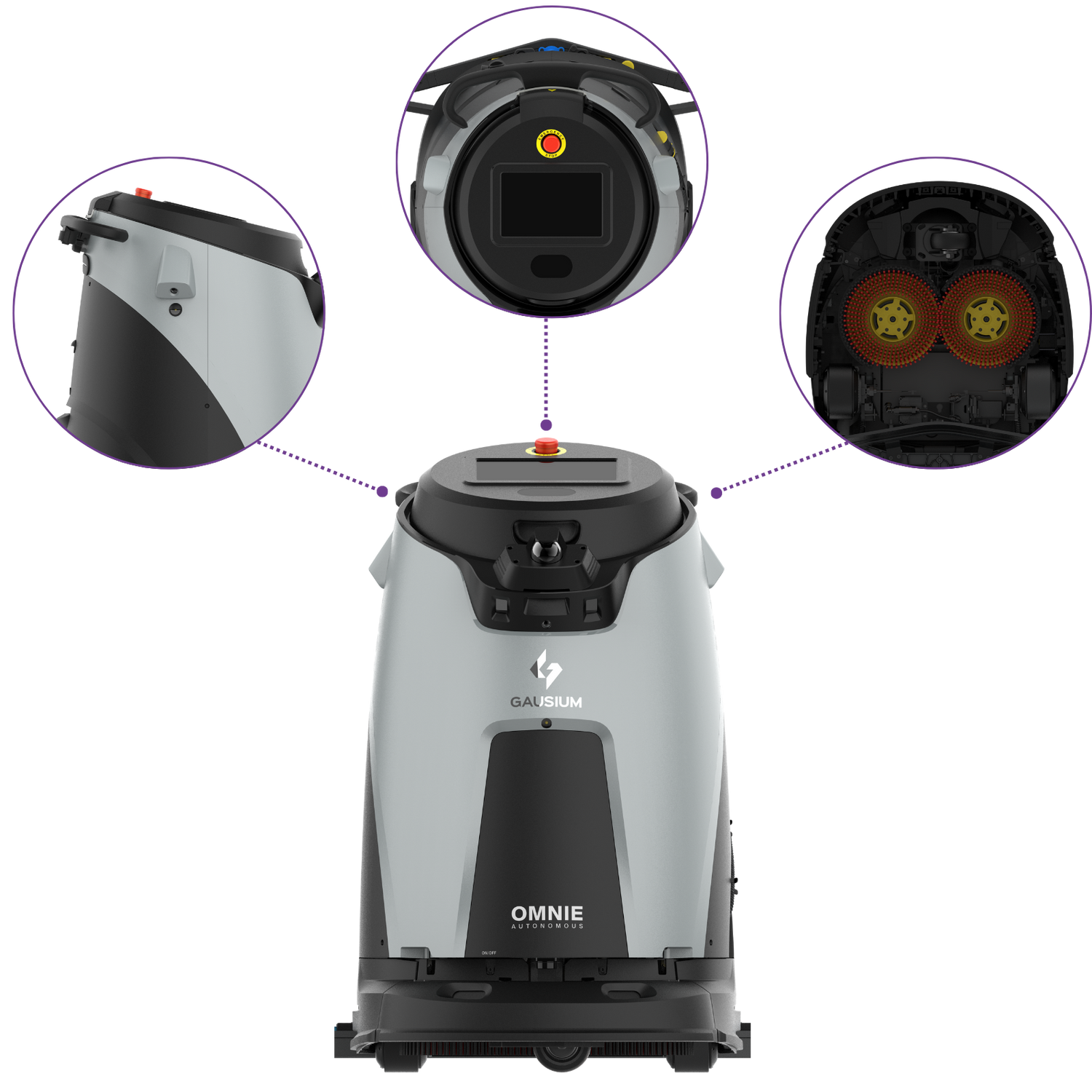
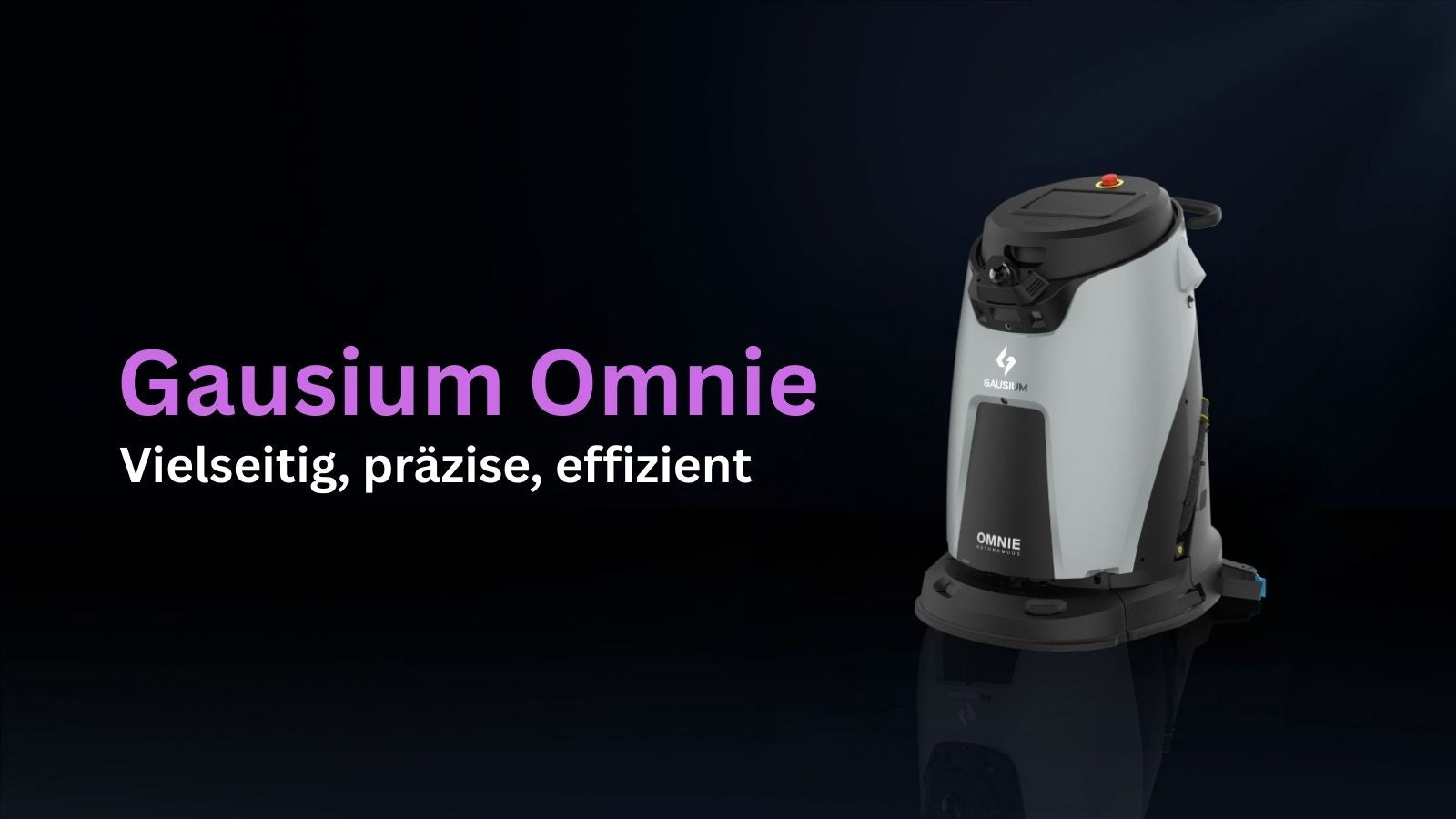
The Gausium Omnie is a high-end cleaning robot for companies that want to automate their floor cleaning while achieving consistently clean results in high-traffic, constantly changing environments. Whether in a logistics center, industrial hall, shopping mall, train station, or large-scale retail space, the Omnie is designed to improve cleaning quality, safety, and predictability in facility management—without cleaning teams having to manually trace every route. As an autonomous scrubber-dryer robot, the Omnie combines high-performance wet scrubbing with intelligent features that can also specifically address dry debris.
Especially in areas with high foot traffic or changing layouts (pallets, roll containers, customer flows), it is not just cleaning performance that counts, but the ability to navigate safely and precisely. The Omnie positions itself exactly in this segment: maximum productivity with high situational awareness—for cleaning processes that can be integrated into ongoing operations.
Variants & Configurations: Disc Brush or Cylindrical Brush, Optional IEC
The Omnie is available in various versions so that the robot fits the respective floor type, type of dirt, and safety requirements. This is important for operators because it means cleaning robots can be used not just "somehow," but specifically tailored to processes in warehouse, production, or retail environments.
Disc Brush Version: Focus on Efficient Scrubbing
The disc brush version is designed for wet scrubbing of large areas and is particularly suitable for smooth industrial and commercial floors, where high scrubbing performance and uniform cleaning are the priority.
Cylindrical Brush Version: Scrubbing plus Sweeping/Wiping Option for Mixed Dirt
The cylindrical brush version combines scrubbing with an additional sweeping width, which also covers scenarios where, in addition to wet dirt, dry debris (dust, packaging remnants, granulate) occurs regularly. This is particularly interesting for logistics areas, entrances, transitional zones, or retail areas with changing dirt accumulation.
With IEC (Optional): Alignment with Standard/Safety Requirements
Depending on the application, an IEC-compliant variant may be useful. In practice, this configuration can affect parameters such as travel speed, climbing ability, and sensor sensitivity—relevant for operators who must meet defined safety or compliance requirements.
Cleaning Performance for Large Areas: Productive, Predictable, and Measurable
In everyday life, surface performance counts—in a way that makes it predictable during operation: which zones are cleaned when, how long does a run take, and how constant does the result remain? The Omnie is designed for high cleaning performance and achieves a maximum cleaning capacity of up to 3,600 m²/h depending on the setup. This makes the robot suitable for large indoor areas where conventional manual cleaning quickly becomes too expensive or too irregular.
Scrubbing Width and Working Profile Depending on Version
- Disc brush: Scrubbing width 520 mm
- Cylindrical brush: Scrubbing width 406 mm, additional sweeping width 780 mm
Intelligent Technologies: AI Spot Cleaning and Targeted Dirt Detection
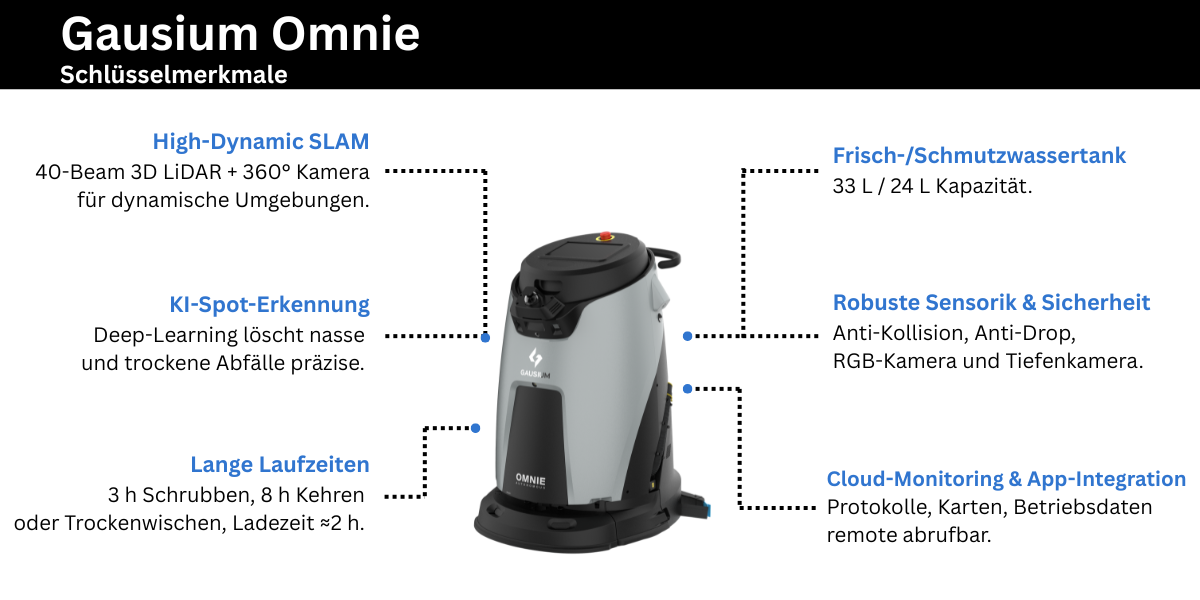
A major difference between standard automation and modern AI cleaning is the ability to react precisely. The Omnie supports AI-based object recognition to specifically identify and perform spot cleaning on both dry and wet dirt. This is especially valuable in highly dynamic areas where dirt is not evenly distributed but occurs as "hotspots": entrances, checkout areas, packing stations, transitions between indoor and outdoor areas, or high-traffic walkways.
For operators, this means: less unnecessary double cleaning, better prioritization of critical zones, and a cleaning logic that is more closely aligned with real dirt patterns. This turns the cleaning robot not just into a "surface machine," but into a system that actively ensures quality.
Navigation & Safety: 3D/2D LiDAR, 360° Cameras, and Multimodal SLAM
In complex environments, navigation determines success or frustration. The Omnie uses 3D/2D LiDAR and cameras, supplemented by 360° situational awareness and multimodal SLAM technology. This supports precise orientation, reliable obstacle avoidance, and stable route guidance—even when lighting conditions are difficult or the environment is constantly changing.
Strong Practical Advantages in Dynamic Buildings
- Reliable navigation with changing layouts (e.g., pallet zones, temporary displays)
- Safe movement in areas with public traffic and internal transports
- Precise obstacle avoidance through all-around perception instead of "tunnel vision"
This makes the Omnie particularly well-suited for search terms like "cleaning robot with LiDAR," "autonomous floor cleaning robot SLAM," "cleaning robot for shopping mall," "cleaning robot train station," or "cleaning robot logistics center."
Everyday Operation: Compact Passageways, Short Charging Times, and Stable Availability
For real-world use, dimensions, maneuverability, and charging windows are decisive. The Omnie is designed to remain operational even in narrow passages: a minimum passage width of 800 mm and a minimum turning circle of 1,100 mm support use in typical building structures, e.g., between shelves, in corridors, or in transitional areas.
Depending on the configuration, the Omnie operates with a LiFePO₄ battery (60 Ah, 24 V). The runtime is up to 3 hours in scrubbing mode; with sweeping/wiping profiles (cylindrical-based), longer operating times of up to 8 hours are possible. The charging time is approx. 2 hours, which makes the system easy to integrate into shift models and cleaning windows—such as cleaning outside peak times and recharging during quiet intervals.
Typical Areas of Application: Where the Omnie Shows Impact Particularly Quickly
The Omnie is particularly strong when areas are large, the environment changes frequently, and cleaning must reliably "keep up." Typical fields of application:
- Industry & Production: Hall areas, transitions, traffic routes, machine surroundings
- Logistics & Warehouse: Picking aisles, packing zones, entrances, hotspot cleaning
- Retail & Shopping Malls: Walkways, entrances, checkout areas, high-frequency zones
- Transport Facilities: Train stations, terminals, large public buildings with public traffic
The benefit arises not only from fewer manual hours, but from stability: clean standards, less risk of slipping, less dust/dirt spread, and a cleaning quality that does not depend on the day's conditions or staffing situation.